
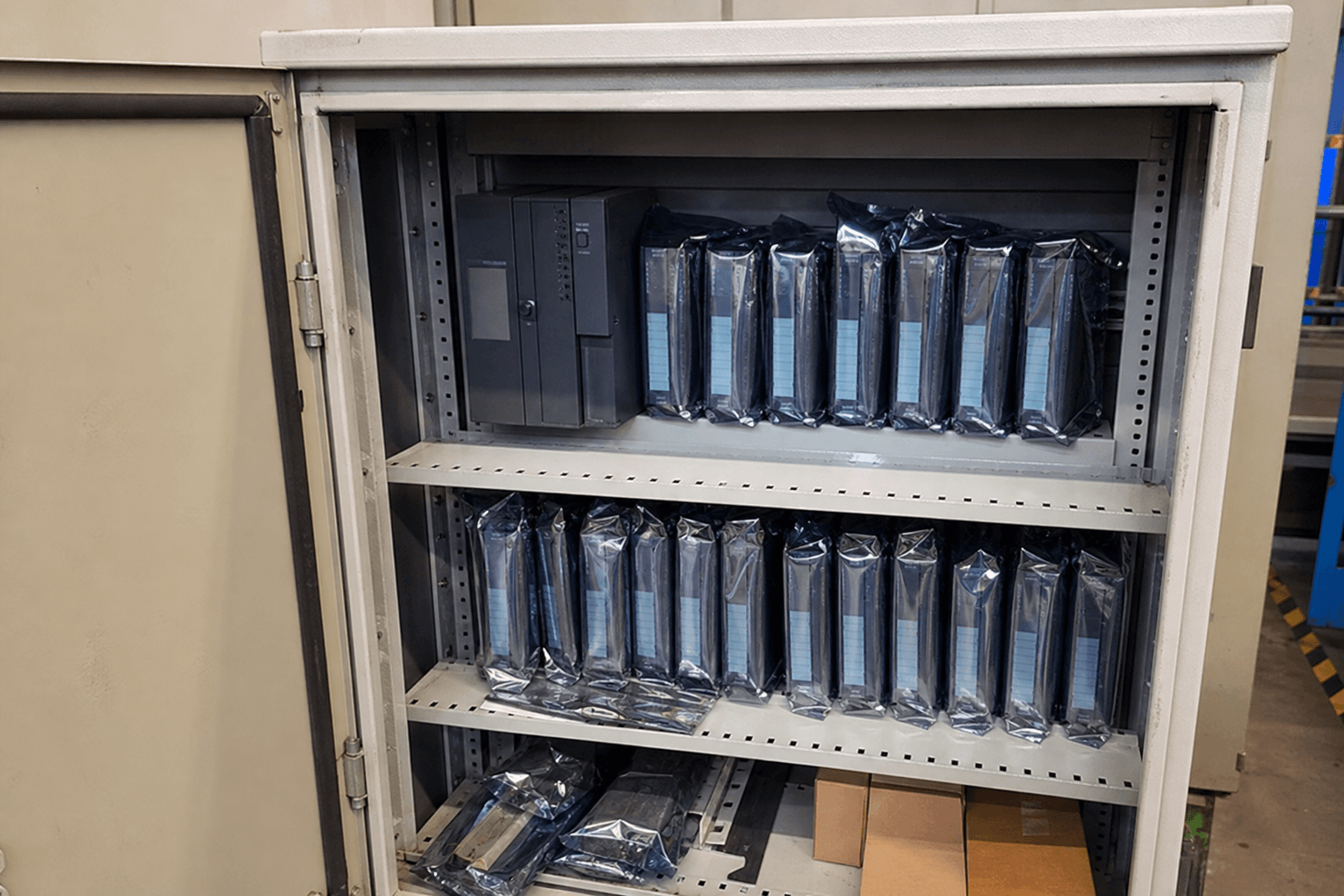
Open the spare cabinet before you open a migration budget. The bin already wrote the risk register—you just have not read it.
This brief is a spare-bin autopsy: evidence pulled from drawers, labeled bags, and “temporary” cardboard boxes under the engineering desk. It is not a vendor migration brochure.
Specimen 1 — The unlabeled CPU
Found: one CPU module in an ESD bag with a faded Sharpie date from four years ago. No firmware sticker. No test log. No matched I/O family note.
Verdict: not a spare. A rumor.
Action: quarantine until bench-tested against a golden image; else scrap.
Specimen 2 — The “compatible” clone
Found: third-party output card in OEM packaging that was not OEM. Purchasing saved thirty percent once.
Verdict: counterfeit-risk + support void + silent timing differences under load.
Action: ban from critical loops; document which non-critical skids still host clones.
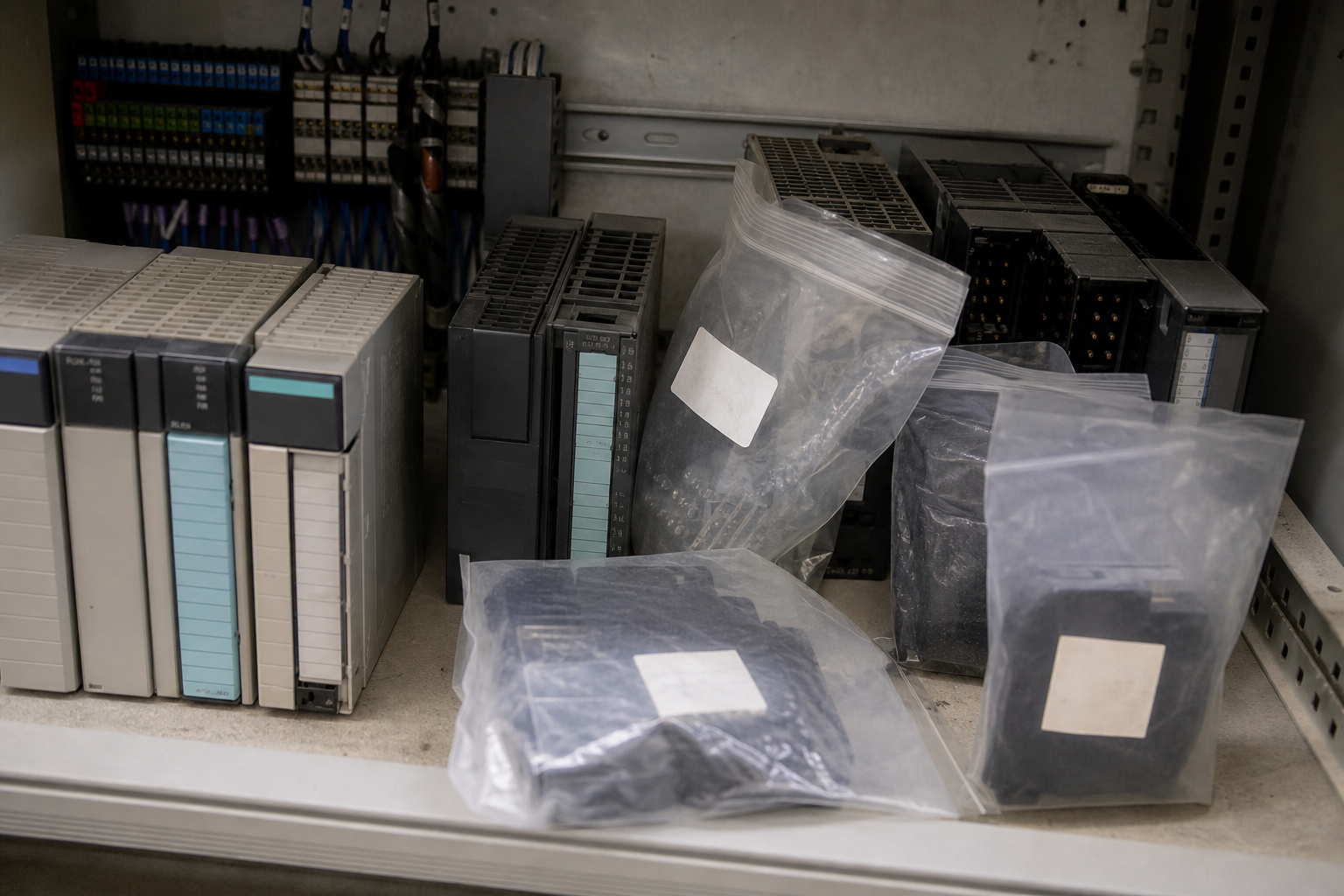
If the bag has no firmware string, the plant has no spare.
Specimen 3 — Orphan I/O after a partial upgrade
Found: racks of digital input cards for a CPU family you no longer buy. The line still runs on two remaining CPUs. Spares exist for the wrong generation.
Verdict: classic stranded-asset pattern—migration half-done, risk fully concentrated.
Action: either finish the family cutover or buy a sealed OEM last-time-buy with a dated burn-in protocol.
Specimen 4 — Engineering laptop as “the spare”
Found: no rack spare; “we image from the laptop.” Laptop belongs to a contractor who left. Image unsigned.
Verdict: recovery time = hiring time.
Action: plant-owned golden images in escrow; hashed; restore-tested quarterly.
Specimen 5 — Safety-related vs general-purpose confusion
Found: mixed bins. A safety PLC power supply sitting beside a packaging PLC card with the same form factor joke.
Verdict: human-error time bomb.
Action: physically segregated cabinets + different key locks + CMMS location codes that cannot autocomplete across families.
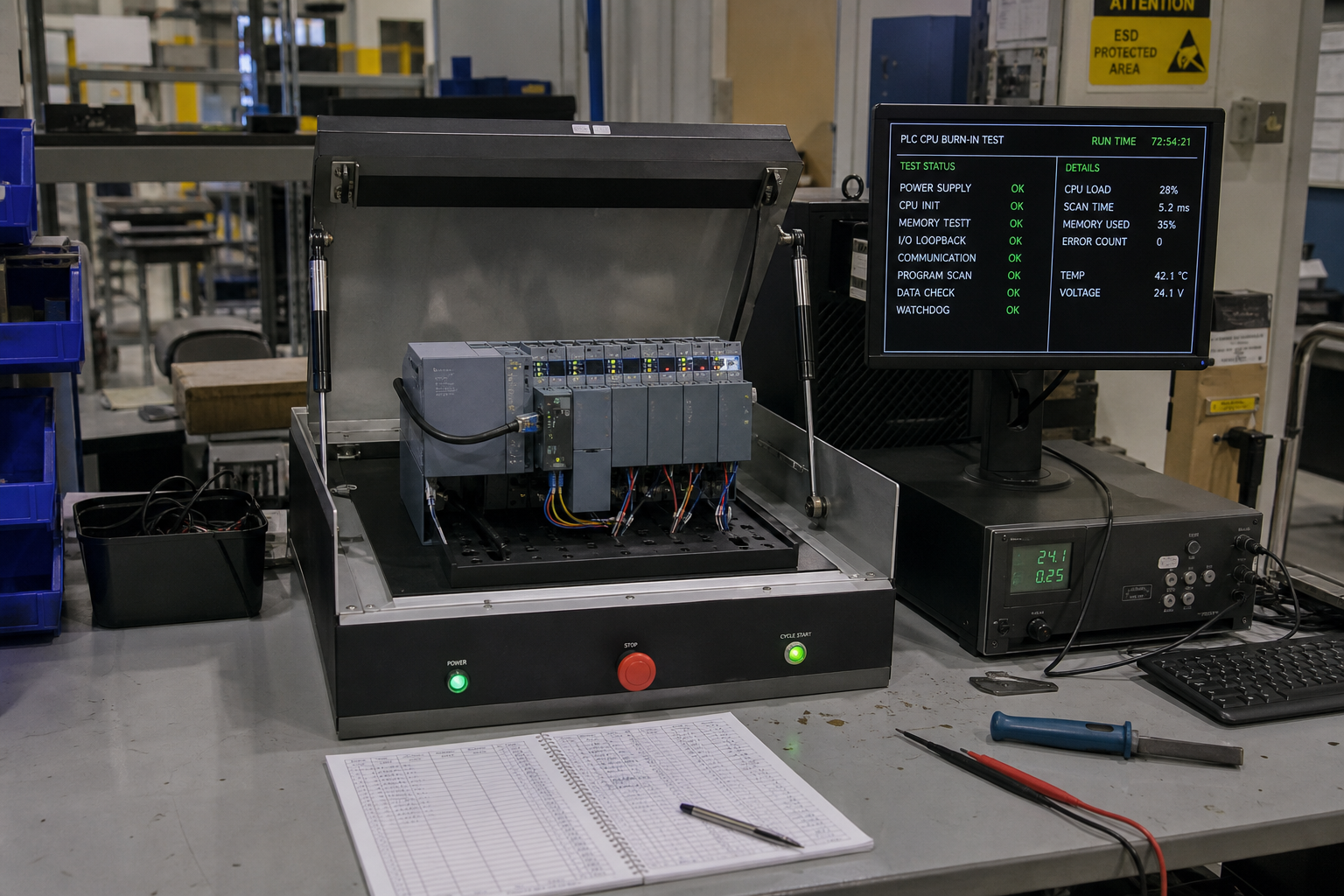
A spare that never powered on is inventory fiction.
Autopsy table (fill on your site)
| Specimen | On hand (qty) | Firmware known? | Last power-on test | Critical loops served | Migration action | | --- | --- | --- | --- | --- | --- | | CPU family A | | | | | | | I/O digital | | | | | | | I/O analog | | | | | | | Comm modules | | | | | | | Safety PSU | | | | | |
If more than two rows say “unknown,” you do not have a migration plan—you have a prayer.
Runway math (portable)
True recovery hours ≈ find spare + confirm firmware + bench test + install + force check + process release
Brochure MTTR ignores the first three terms. The bin does not.
Adjacent fences
Passive OT asset inventory owns network talkers and cabinets-as-truth. OPC UA / fieldbus briefs own communication standards. MES–QMS orchestration owns business workflows. SIS lifecycle digitization owns proof-test records. None of them own spare-bin honesty and last-time-buy discipline for PLC families. Do not fund a protocol upgrade and expect obsolete CPUs to resurrect.
Close
Migration runway is measured in tested twins on the shelf, not in slide decks titled Phase 2. Autopsy the bin this week—or let the next failed CPU autopsy the plant for you.