
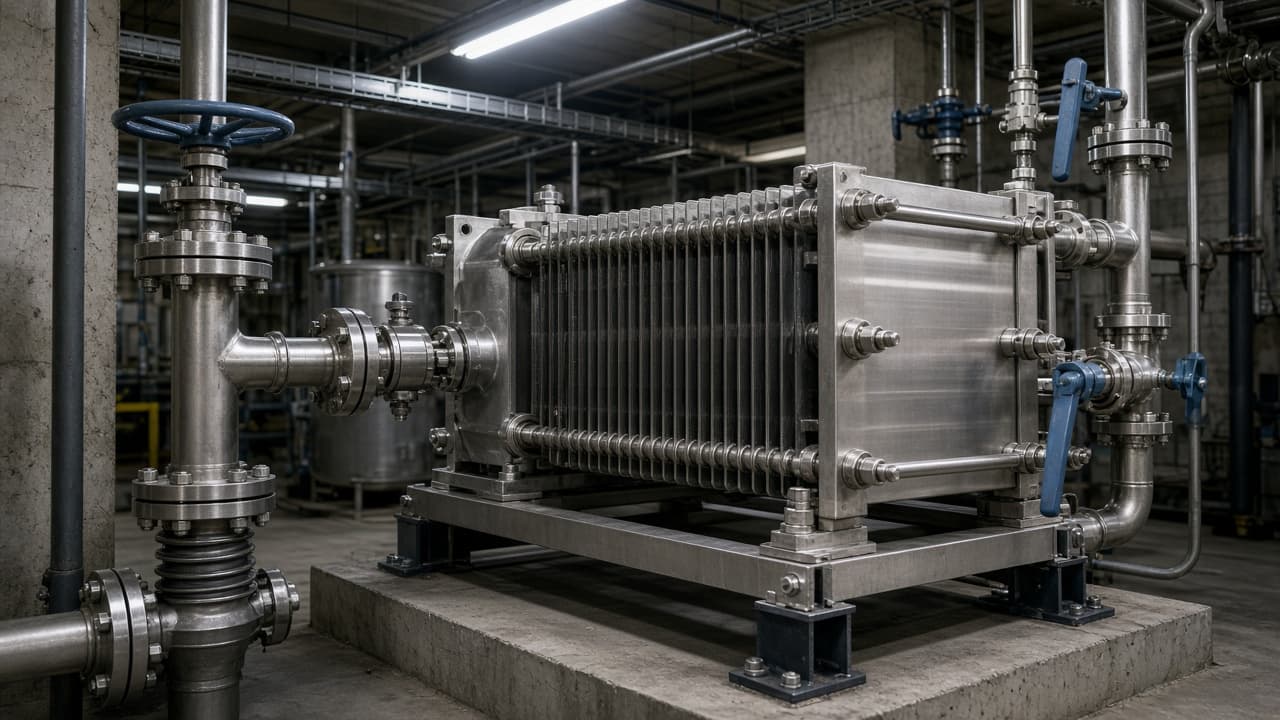
A gasketed plate heat exchanger packs a lot of duty into a short footprint. That density is also why small failures look large: one failed elastomer, one fouled channel pair, and the cold stream leaves warmer than the energy balance promised.
Shell-and-tube tube leaks and cooling-tower fan gearboxes are different tickets. This note is about plate packs, gaskets, and ΔP across the frame.
What the ΔP is telling you
Clean plates have a predictable pressure drop at a known flow. When ΔP climbs while flow is held, channels are narrowing—scale, biofilm, product residue, or gasket extrusion into the flow path. When ΔP falls while duty collapses, fluid may be bypassing through a blown gasket or a poorly compressed pack. Operators who only watch outlet temperature chase the symptom; the frame differential is the earlier signal.
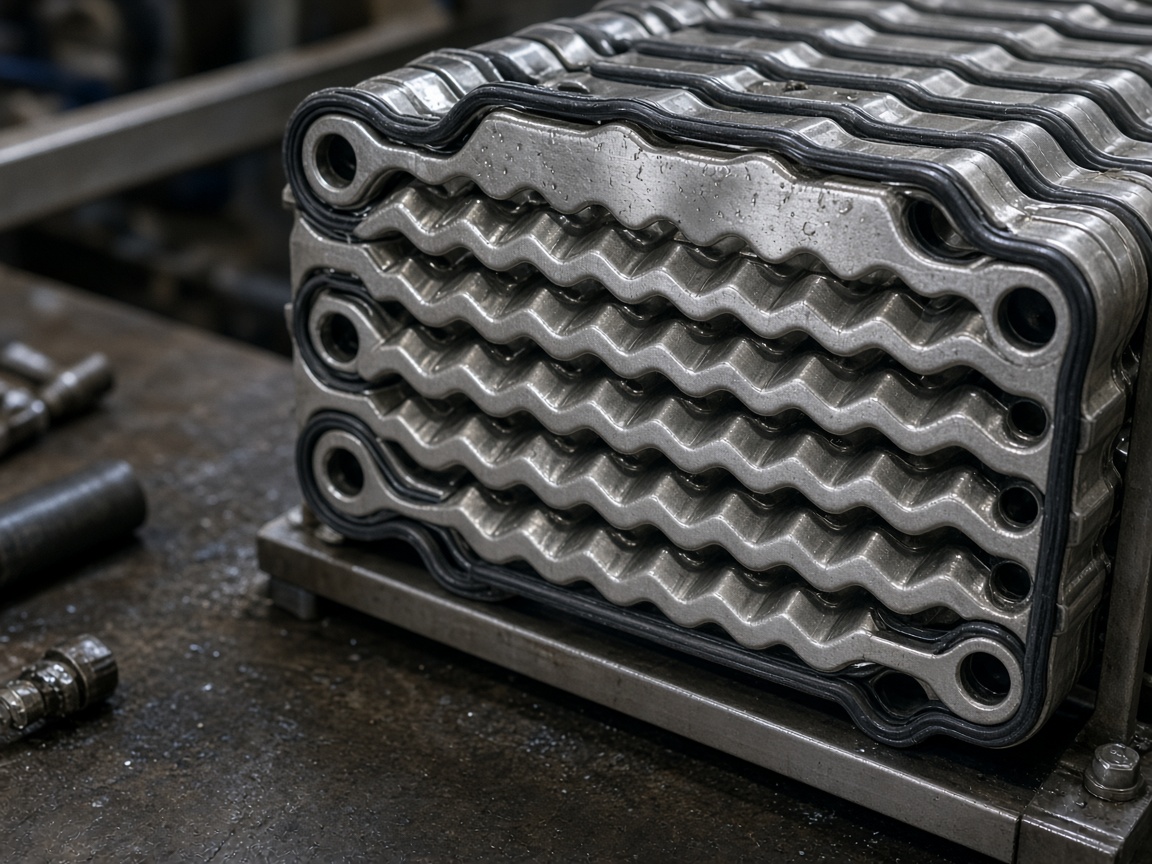
Gaskets are a materials decision
Nitrile, EPDM, Viton, and specialty compounds are not interchangeable “rubber.” Temperature, oil content, and cleaning chemicals rewrite life. A gasket that survived years on glycol can harden or swell after a CIP chemistry change. Clip or glue patterns matter: a plate hung wrong creates a leak path that looks like a process upset on the trend.
Opening the pack without rewriting the duty
Label the plate sequence before unbolting. Photograph the dirty side pattern—fouling is rarely uniform from port to port. Regasket with the correct compound and torque the frame to the vendor sequence; over-torque cracks plates, under-torque weeps. After restart, compare ΔP and approach temperature to the last clean baseline, not to a nameplate from the original project file.
A PHE that “still looks stainless” can already be a bypass or a fouled wall. Trust the frame differential and the elastomer, not the walkdown shine.