

Historian data quality catches flat and stale tags. Digital MOC gates engineering changes. Soft sensors estimate hard-to-measure qualities. What still decides whether a reading is legally and technically trusted is calibration: intervals, reference standards, and what happens when a device fails as-found.
Calibration management systems—CMMS-linked or dedicated—are becoming living plant programs with overdue KPIs, not binders that reopen only before an audit.
The industrial point is unbroken traceability from field device to reference standard. A certificate PDF nobody can find during an incident is not a metrology system.
When the tag is live and the cert is fiction
A familiar pattern: operations trusts a critical flow or analyzer; the calibration due date passed six weeks ago; the as-found was already out of tolerance last cycle and “adjusted” without impact assessment. Plants that run metrology seriously publish overdue % and OOT (out-of-tolerance) rates for critical loops, and they link OOT events to quality or safety review—not only a sticker update.

As-found data is the evidence; the sticker is only the reminder.
An anonymized pharma-adjacent utilities area cut investigation time after analyzer drifts by forcing every critical calibrator and master gauge onto a single schedule with recall lists. When an OOT hit, the system already knew which batches and interlocks had consumed that measurement window.
What calibration management actually owns
- Interval and criticality — Not every gauge deserves the same cadence.
- Standards chain — Working standards recalled before they expire.
- OOT disposition — Product/process impact assessed, not only “tweaked and returned.”
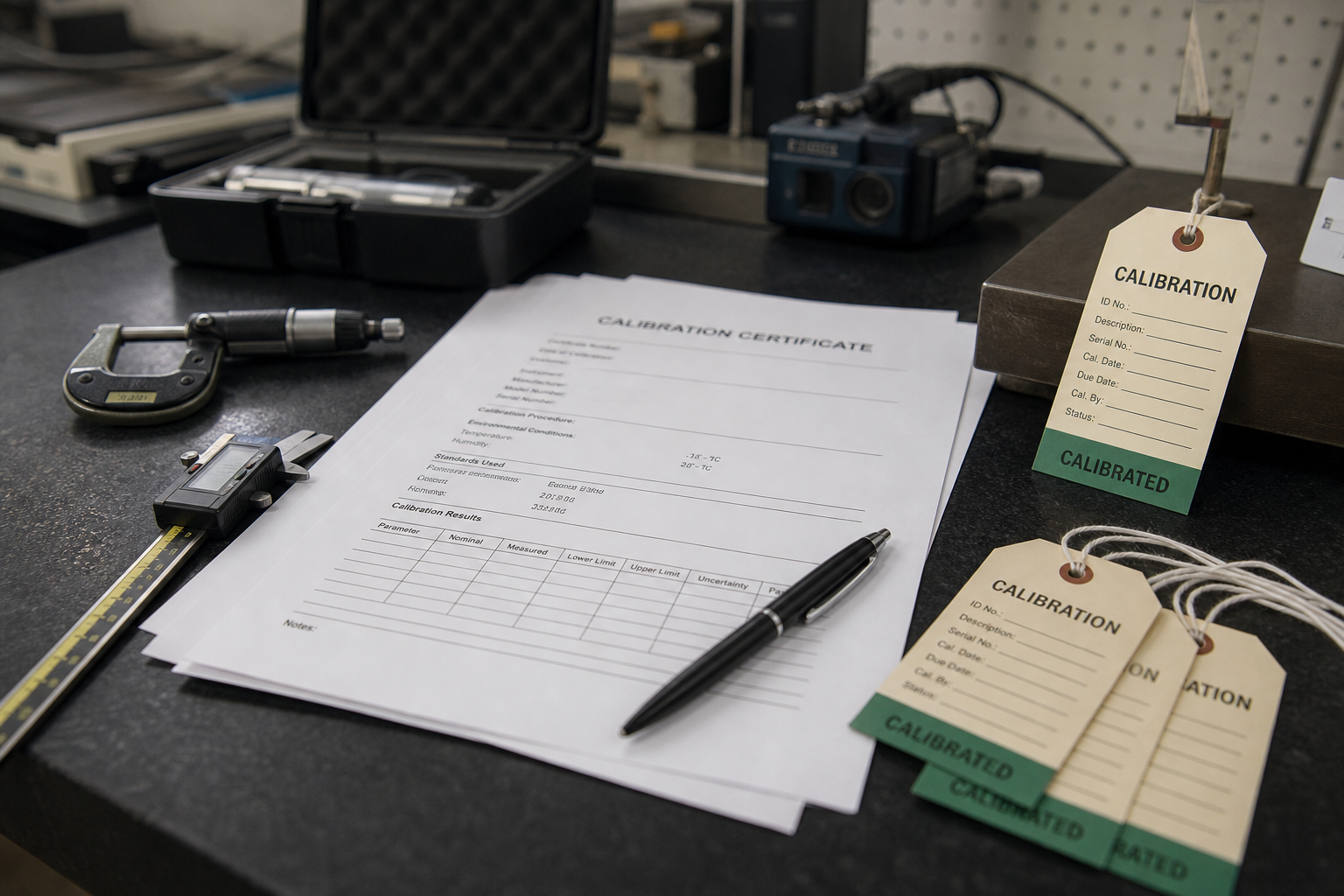
Traceability is a chain of records—not a drawer of paper.
Failures that still fail audits
Calibrating only what is easy to reach. Letting contractor certs orphan from the asset ID in CMMS. Confusing this with historian bad-actor analytics or with ePTW isolation. Using soft sensors to paper over chronically overdue critical instruments.
This is not SIS proof-test digitalization alone, not ISA-18.2 alarms, not UNS naming, and not PPE vision. Those protect other layers.
What to watch before the next quality or PSM review
- Overdue and OOT trends on the critical list—owned and falling.
- Whether OOT events open linked investigations automatically.
- Mobile workflows that capture as-found/as-left in the field without retyping.
Buyer checklist (short)
- Critical instrument list — Exists and matches safety/quality loops?
- Recall of standards — Masters scheduled, not tribal?
- CMMS link — Asset ID equals certificate ID?
- Impact rule — OOT always triggers a documented disposition?
Historian DQ asks if the tag is lying now. Calibration management asks whether you ever had the right to trust it.