
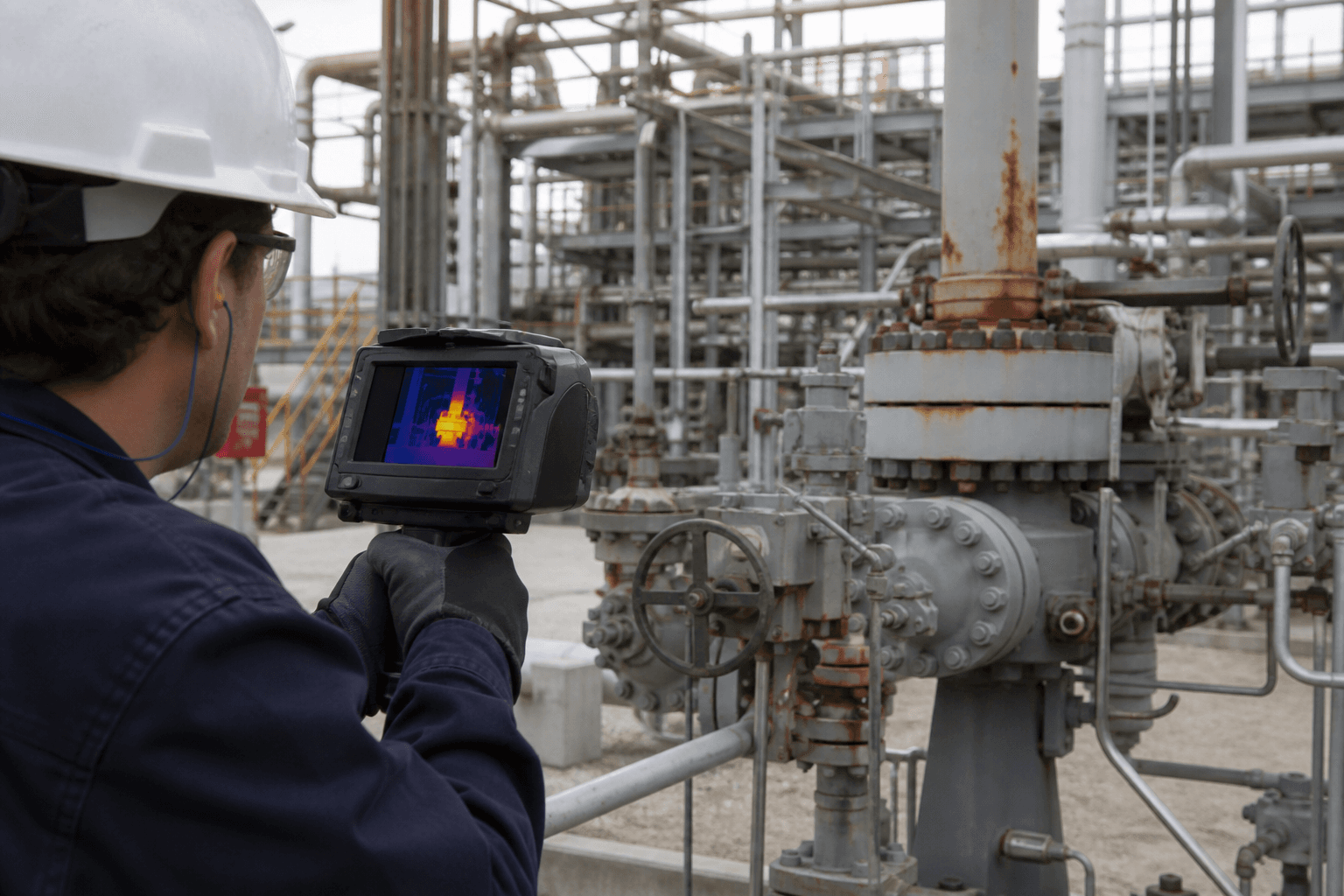
Fixed toxic-gas detection protects people from acute exposure at planned heads. Compressed-air ultrasonic programs chase utility waste. Neither is a substitute for a hydrocarbon LDAR campaign that must prove which flanges, valves, and packing glands actually leak—and which repairs closed.
Optical gas imaging (OGI) cameras make plumes visible that a soap bottle and a tired route list miss. They also create a new failure mode: spectacular videos with no work order, no retest, and no owner.
Campaign anatomy that survives audit
| Step | Done looks like | Failure mode | | --- | --- | --- | | Route definition | Tagged components in CMMS / LDAR database | Walking “whatever looks oily” | | Survey | OGI clip + component ID + wind/conditions note | Untagged video dump | | Repair | Work order linked to tag | “Tightened somehow” | | Retest | Second OGI or Method 21 result filed | Closed on hope |
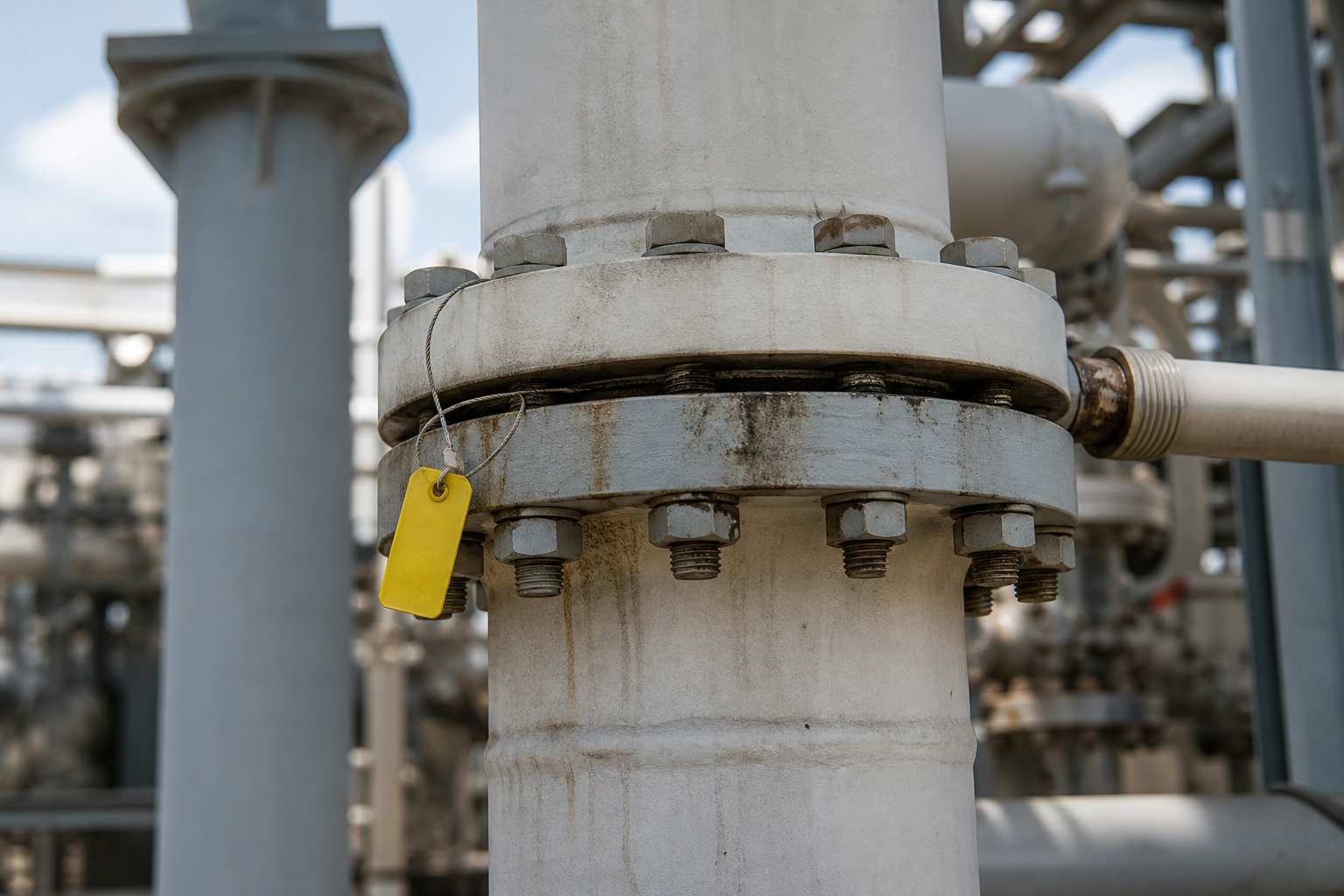
If the tag is missing, the repair never happened in the system of record.
What OGI is good at—and what it is not
Good at: finding live fugitive plumes on accessible piping, prioritizing crews, teaching operators that “we always smell something here” can be a measurable leak.
Not good at as a lone method: quantifying every mass-emission rate for every regulatory regime, replacing personal gas monitors in confined space, or substituting for fixed detection where life-safety SIL logic applies.
Rules that keep cameras honest
- Every find gets a component ID before the camera powers down.
- Repair and retest are the KPI—not hours of footage.
- Wind, background, and camera settings live in the record; otherwise comparisons across seasons lie.
- Chronic leakers escalate to engineering change (packing, seal, valve class)—not endless temporary clamps.
Toxic-gas lifecycle briefs own head placement and bump tests. Air-leak ultrasonic briefs own compressed-air waste. Permit forms own job authorization. This page owns fugitive hydrocarbon evidence as a closed loop. Do not buy an IR camera and skip the retest.