
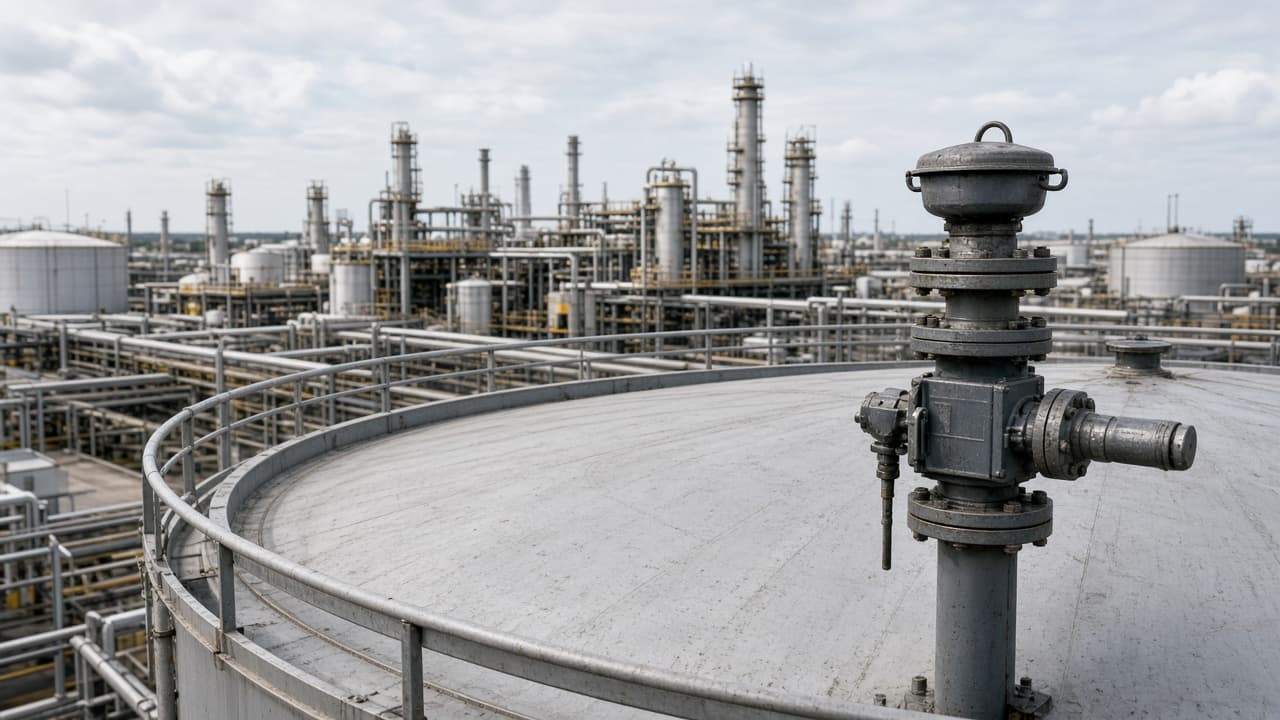
Blanketing puts an inert gas—almost always nitrogen—into a tank’s vapor space at a slight positive pressure so air cannot freely enter as liquid is pumped out or as temperature falls. Typical control bands sit in inches of water column, not barg. A blanketing regulator admits N₂ when pressure drops; a conservation vent relieves when filling or solar heating raises pressure. Miss the supply, freeze the sense line, or leave the vent stuck, and the next fast withdrawal is an air ingest event dressed as “normal operations.”
Compressed-air leak programs own plant air waste. Analyzer sample-system honesty owns measurement loops. Knockout demister notes own vessel carryover. This page is nitrogen blanketing hardware integrity on atmospheric and low-pressure storage.
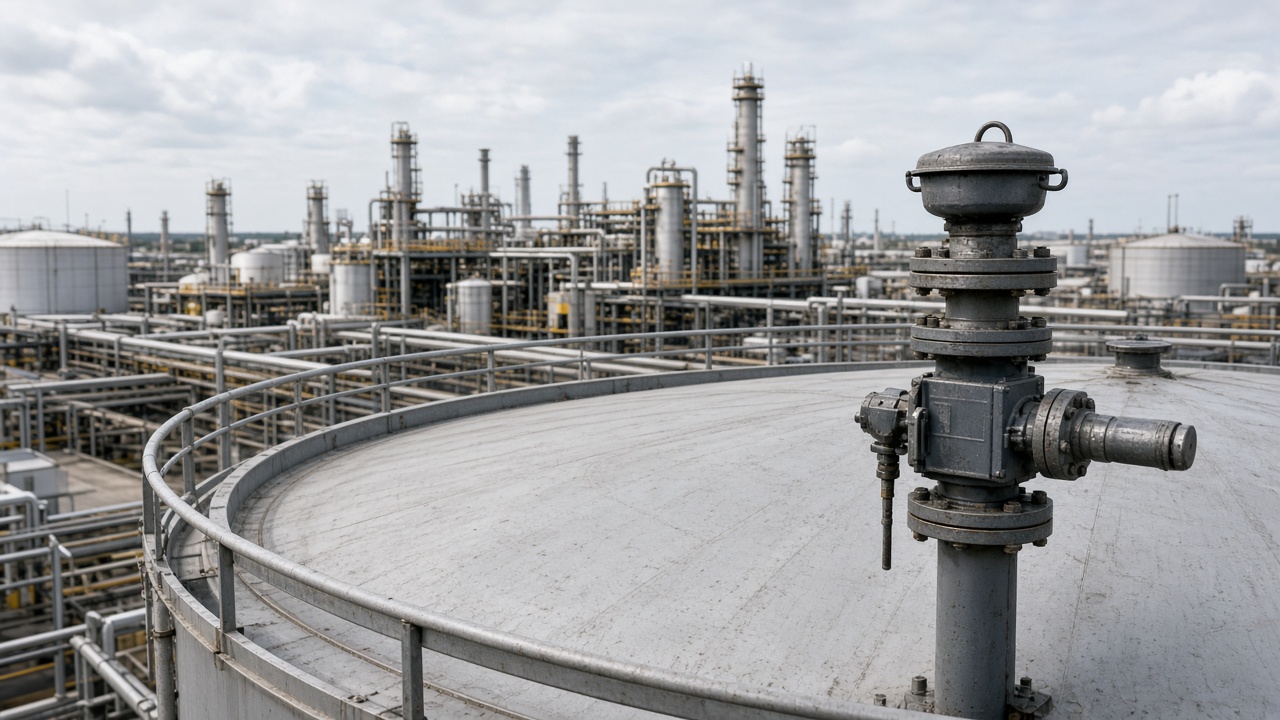
Prove the pad: nitrogen source capacity for the maximum pump-out rate, blanketing setpoint vs. vent settings with enough margin, sense-line heat tracing where condensation or freeze is possible, and periodic function checks of valve and vent. For flammable or oxygen-sensitive products, oxygen or pressure trending in the vapor space beats a yearly glance at the regulator. After any tank outage, confirm blanketing is restored before the first large withdrawal. A MoC that changes pump-out rate without resizing N₂ make-up is a safety MoC whether anyone labeled it that way.
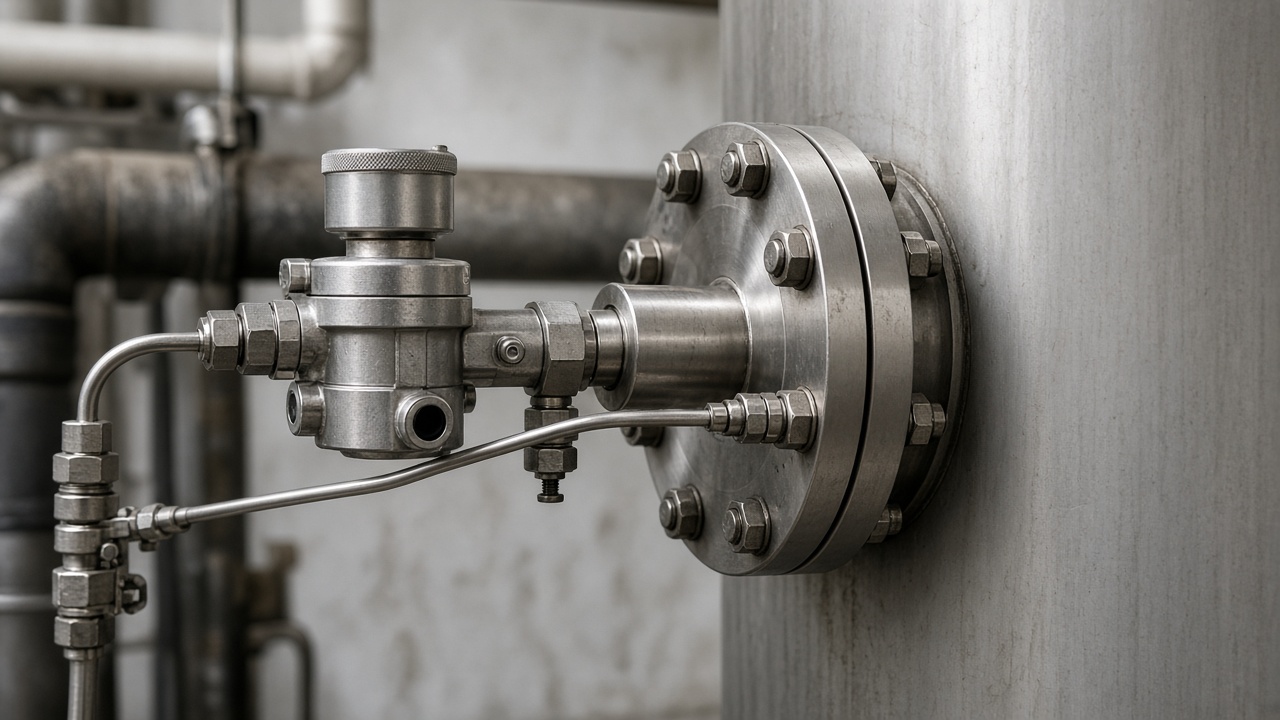
If the board only trends liquid level, the vapor space is unsupervised. Blanketing is not a sticker on the P&ID—it is a living pressure story. Keep it alive on every shift that moves product.