
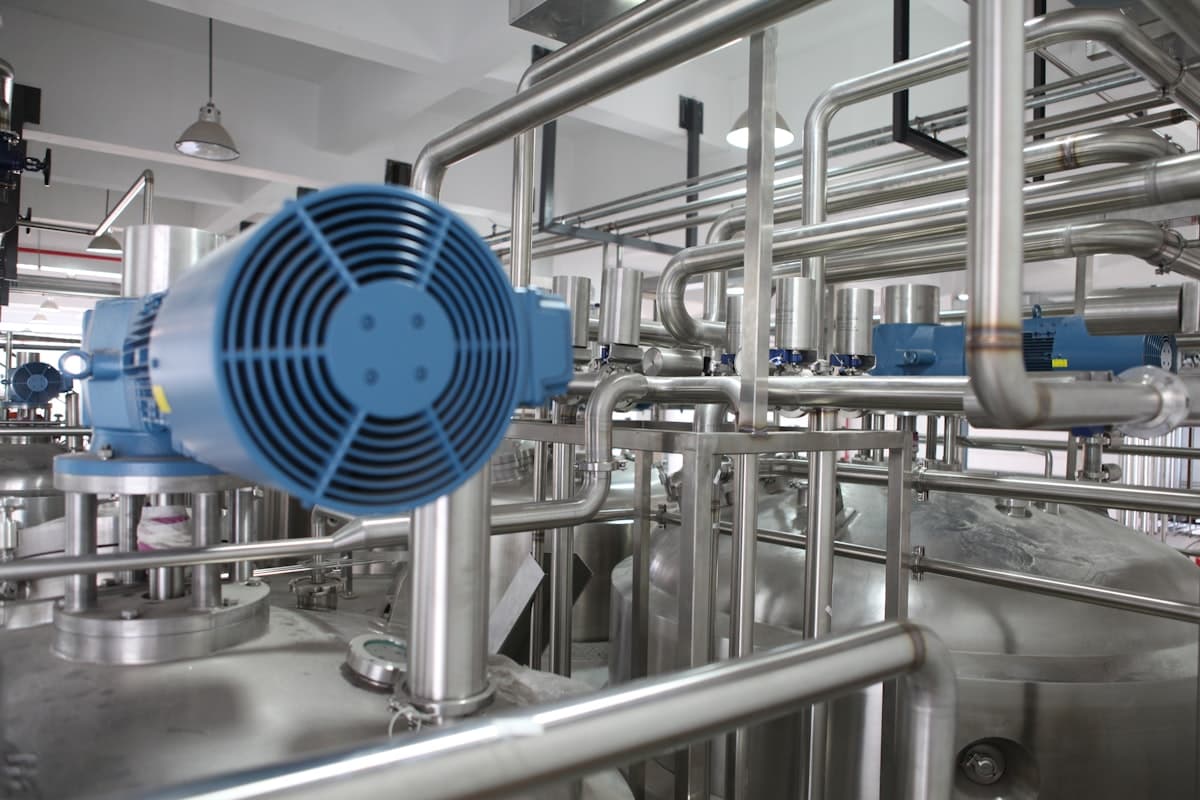
Process plants still pay for flexibility in engineering hours. Every new skid, package unit, or vendor island arrives with its own tags, HMI faces, and integration scripts. Module Type Package (MTP) attacks that cost: a vendor-neutral description of module services so a process orchestration layer can discover, command, and supervise equipment without rewriting the plant each time.
By mid-2026, MTP was no longer only a NAMUR/pharma talking point. Equipment vendors and integrators were shipping MTP-capable packages, and discrete-adjacent work—robots as MTP services—showed the idea traveling beyond pure process skids.
What MTP actually standardizes
- Services, not screenshots — Start, stop, modes, and parameters as callable plant services.
- Orchestration-ready modules — A process control system can compose recipes from module capabilities.
- Faster changeovers — Swap or add a qualified module with less custom PLC glue.
What still blocks scale
Legacy brownfield tags do not magically become MTP. Cyber and change-control boards still own who may expose a service. Vendors that ship half-complete MTP files create the same integration tax under a new label. MTP also does not replace MES or batch execution—it feeds them cleaner module boundaries.
What to watch next
- How many new package units ship with validated MTP files, not slideware.
- Whether discrete cells (robots, conveyors) keep appearing as MTP services in real plants.
- Brownfield retrofit patterns that map existing skids without a full rip-and-replace.
Private 5G and TSN move bits. MTP decides whether those bits describe a plant you can reconfigure—or another one-off project.