
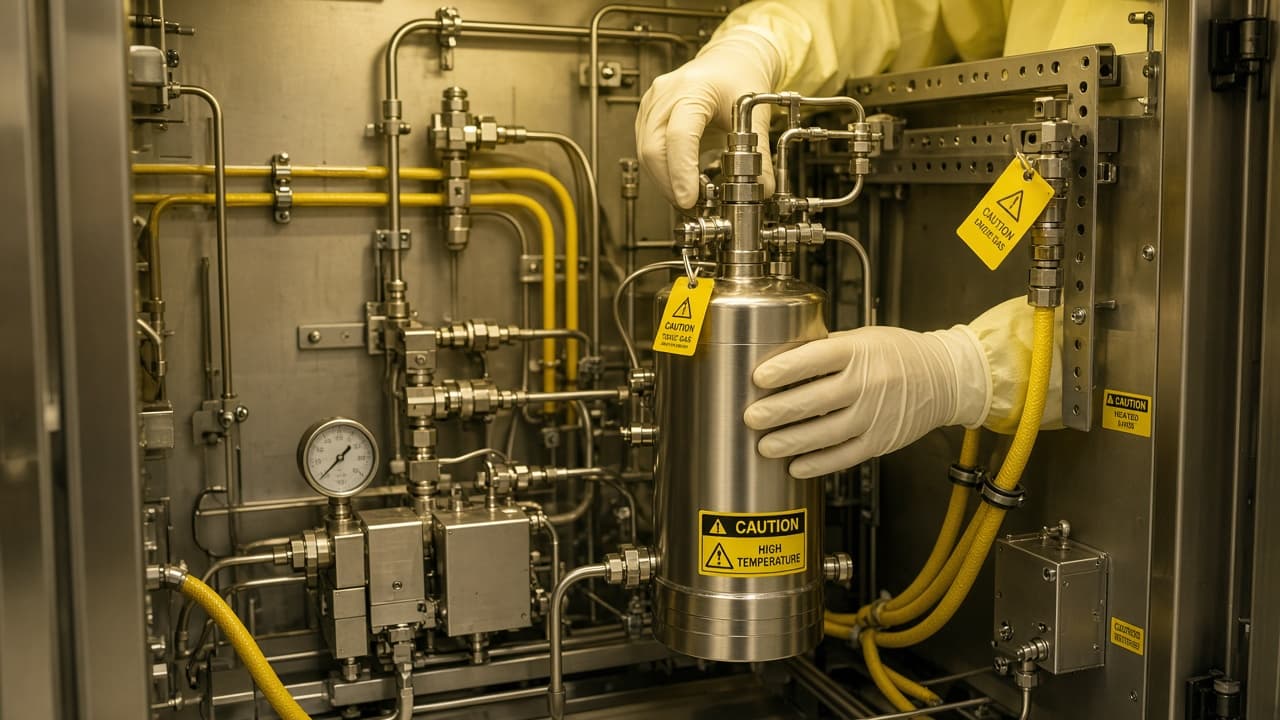
Metal-organic CVD tools meter precursors from temperature-controlled bubblers or ampoules into a carrier stream. When the vessel empties—or when a lot change is required—the source must come offline. That handoff is not a warehouse swap. Residual precursor in the manifold is often air- and moisture-sensitive; a few careless minutes at the fittings can seed particulates that later decorate wafers and valves alike.
ALD delivery-temperature briefs already cover ampoule setpoints and heat tracing. Ion-implant dose notes own beam metrology. This page is narrower: bubbler changeout and purge integrity on MOCVD (and similar vapor-draw) source cabinets.
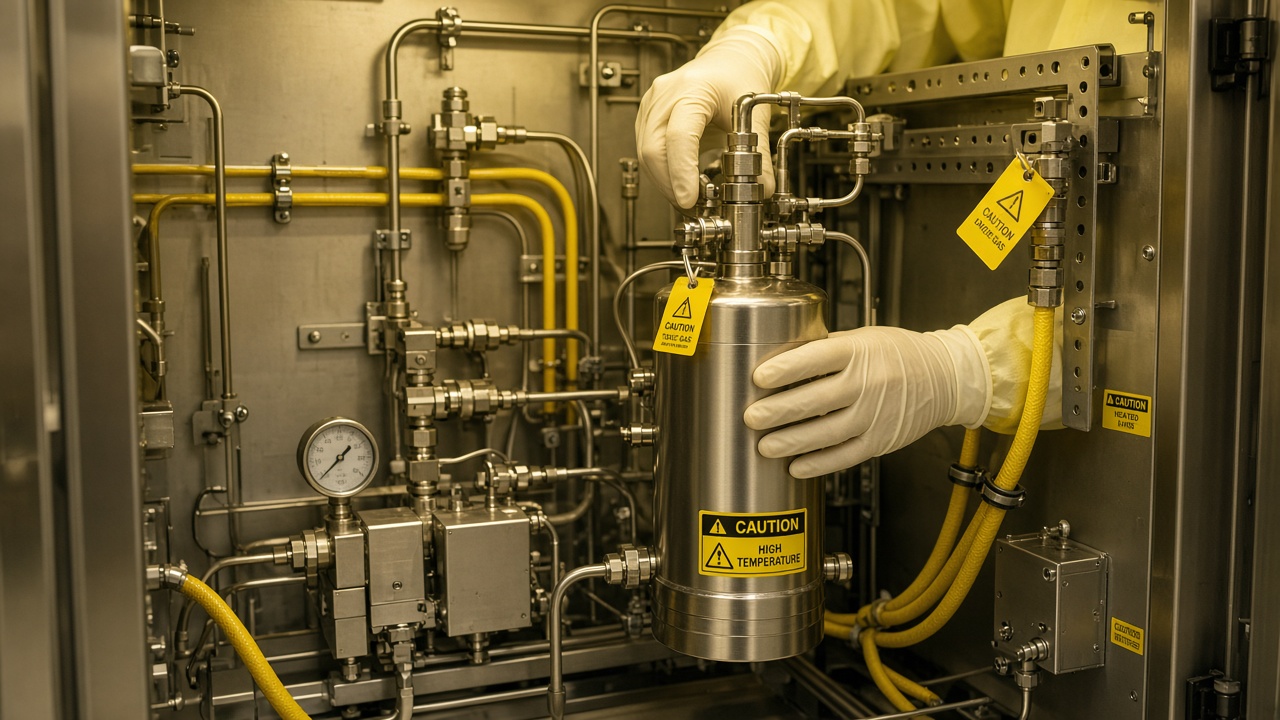
A defensible sequence is boring on purpose. Isolate the source per the tool OEM. Cycle-purge the broken lines at a temperature that clears residual vapor without cooking decomposition products into the valves. Cool the spent vessel before disconnect. Cap and bag the old ampoule under the site chemical procedure—do not park an open leg in room air “for a minute.” Seat the new vessel, then pump-purge the connection legs at room temperature until residual air is gone. Leak-check every joint that was broken. Only then ramp heat slowly to operating temperature and run the fab’s source-qualification wafers or concentration checks before releasing the chamber to production lots.
Hot-swap and dual-ampoule manifolds exist because a full cold changeout can cost hours. They do not excuse skipping the purge and leak steps on the legs you actually opened. Track bubbler level and precursor concentration trends so changeout is planned, not discovered mid-lot when vapor pressure collapses.
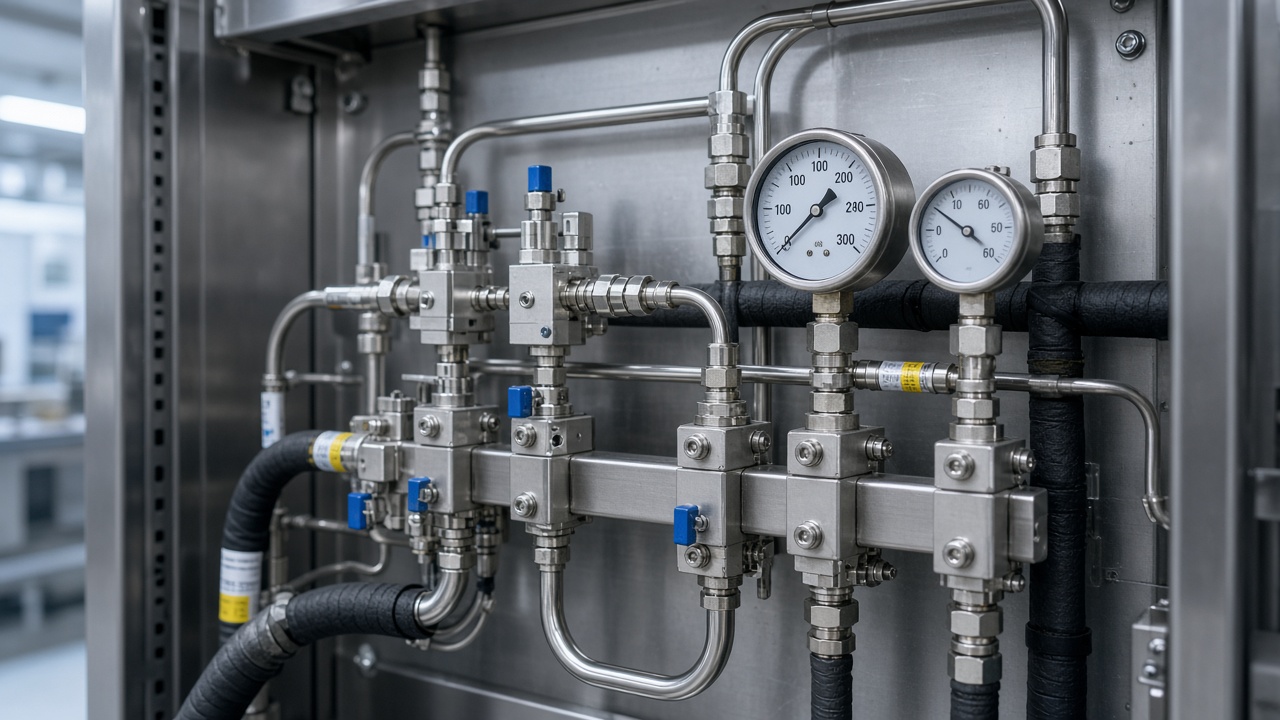
Growth rate and composition are only as honest as the last connection that saw atmosphere. Write the purge cycles, leak-check result, lot ID, and qualification outcome into the tool log—or accept that the next particle excursion will start with “we changed the bubbler yesterday.”