
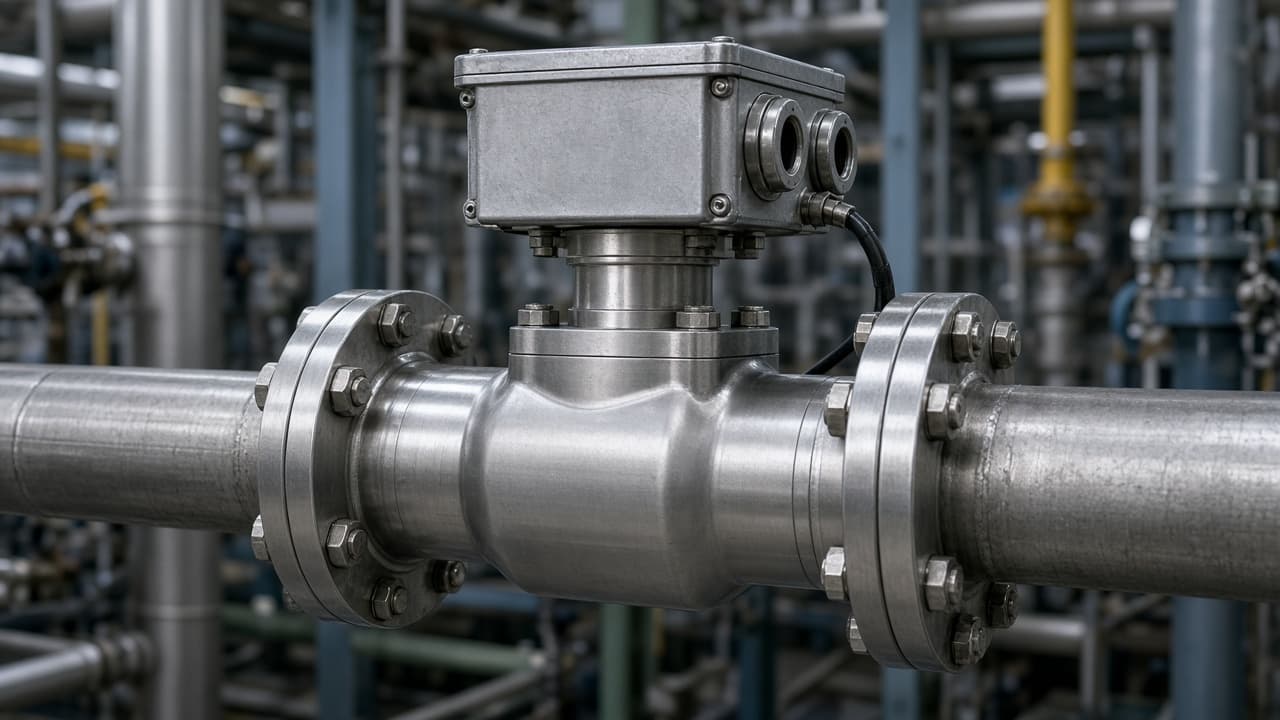
Electromagnetic flowmeters measure volumetric flow by inducing a voltage across a conductive fluid moving through a magnetic field. They have no moving parts in the stream. That does not make them maintenance-free. The electrodes that pick up the induced voltage sit in the process. When those electrodes coat, foul, or see a non-full pipe, the transmitter can still output a confident number.
Orifice ΔP freeze and analyzer sample-system briefs own other measurement lies. This note is about magmeter electrode and fill integrity.
What the meter actually needs
The liquid must be conductive enough for the electrode circuit. The pipe must be full at the meter—or the empty-pipe detection logic must be enabled and trusted. The grounding rings or grounding electrodes must give the fluid a defined reference. Vendor manuals treat these as installation conditions, not optional extras.
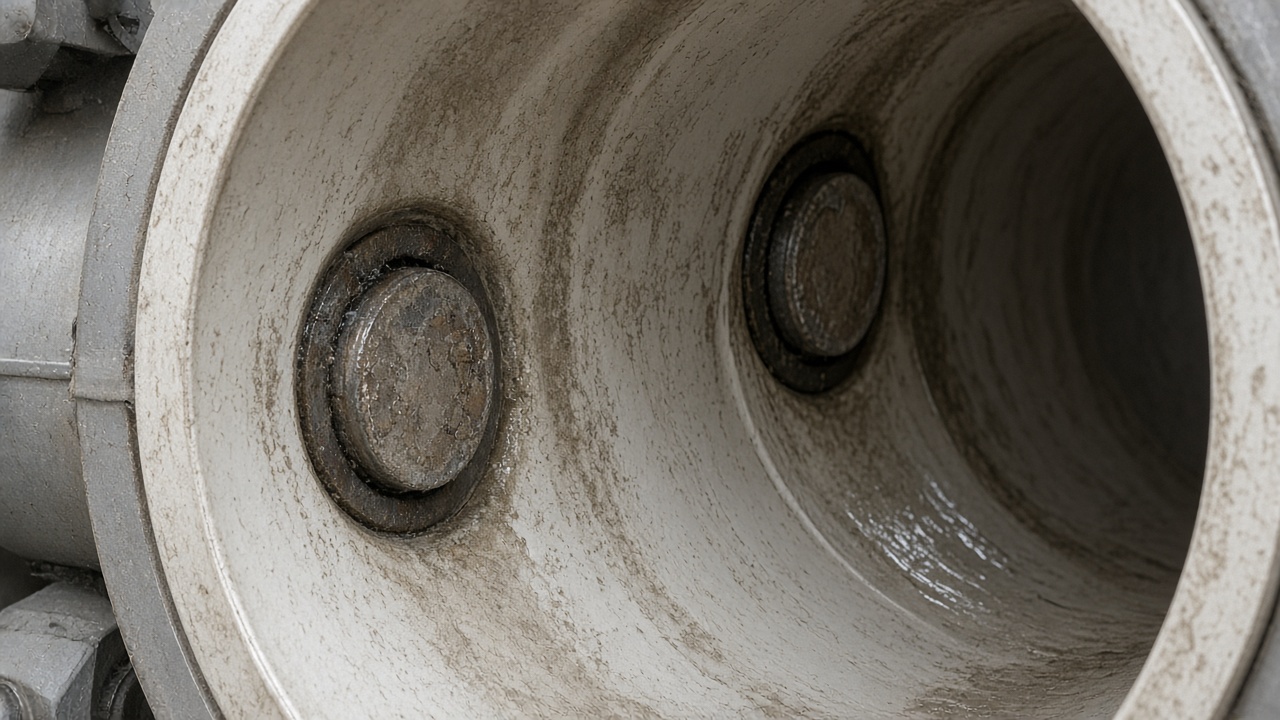
Coating and the quiet totalizer
Scale, biofilm, grease, and polymer films raise electrode impedance. Some transmitters compensate; others slowly under- or over-report until a mass-balance audit or a weigh-tank check exposes the drift. Cleaning schedules belong to the fluid and the duty—not to a calendar copied from a clean water loop. If electrode diagnostics or coil-current health bits exist, trend them. Ignoring them is how a “stable flow” becomes a disputed inventory month.
Empty pipe and air
Slug flow, poorly vented high points, and meters installed where the line does not stay flooded create intermittent empty-pipe conditions. Empty-pipe detection that is disabled “because it nuisance-alarmed” removes the only honest gate the transmitter has. Air in the measuring section is not a small error; it is a different instrument.
Magmeters are reliable when electrodes see liquid and ground. Treat coating and fill as process conditions you own—or accept totalizers that document fiction.