
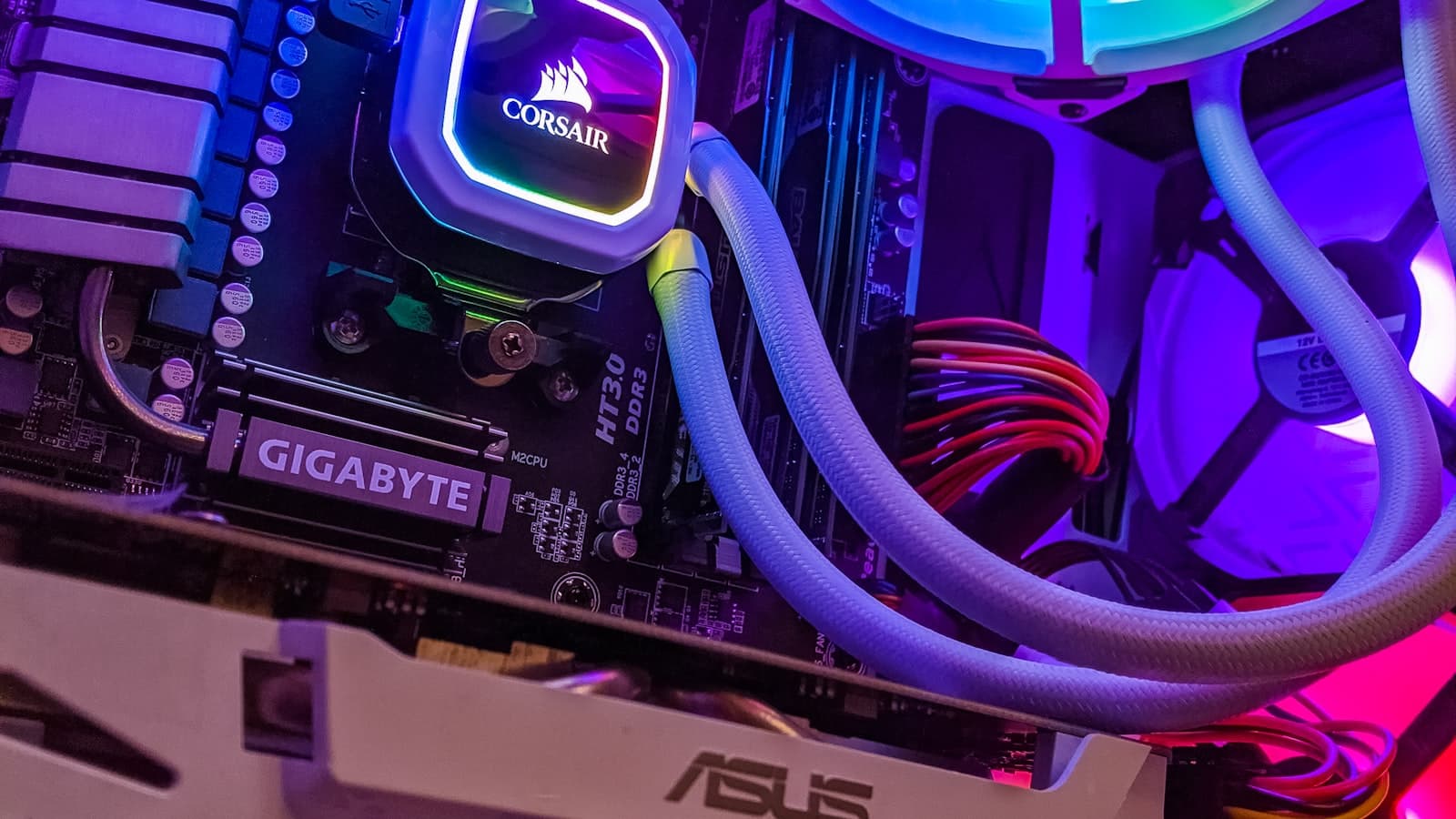
Traditional data halls were built around single-digit to low-teen kilowatt racks. AI training and inference clusters routinely push far higher densities—often cited in the 40–100+ kW per rack range for dense GPU configurations—with roadmaps pointing higher still. At those levels, air cooling stops being a tuning problem and becomes a hard limit.
Liquid cooling—direct-to-chip loops, rear-door exchangers, and in some cases immersion—has moved from evaluation pilots to deployment planning. Coolant distribution units (CDUs), fluid quality, filtration, and material compatibility now sit beside power and networking on the critical path.
Why facilities are redesigning around heat
- Thermal envelope — Heat rejection must scale with phased AI buildouts without forcing a full rebuild each generation.
- Power–cooling co-design — Available megawatts are useless if heat cannot leave the rack safely and efficiently.
- Control latency — Reactive PID loops can lag thermal spikes; operators are exploring feed-forward and agent-based control using rack power as a leading indicator.
Operational and cyber implications
Cooling plants connect IT white space to OT systems—BMS, PLCs, valves, and sensors. That expands the attack and failure surface: spoofed sensors or manipulated setpoints can threaten thermal runaway. Segmentation, OT-aware monitoring, and manual isolation paths belong in the same readiness checklist as CDU sizing.
ASHRAE guidance and facility–IT interface standards are shaping how loops are designed so phased deployments do not strand capital in incompatible plumbing.
What to watch next
- Brownfield retrofit playbooks versus greenfield halls designed for liquid from day one.
- CDU reliability, fluid chemistry discipline, and sparing strategies at hyperscale.
- Whether power–cooling–workload orchestration becomes a single operational domain (“AI factory”) rather than three silos.
For AI infrastructure, cooling is no longer a facilities afterthought. It is part of the compute product’s delivery system.