
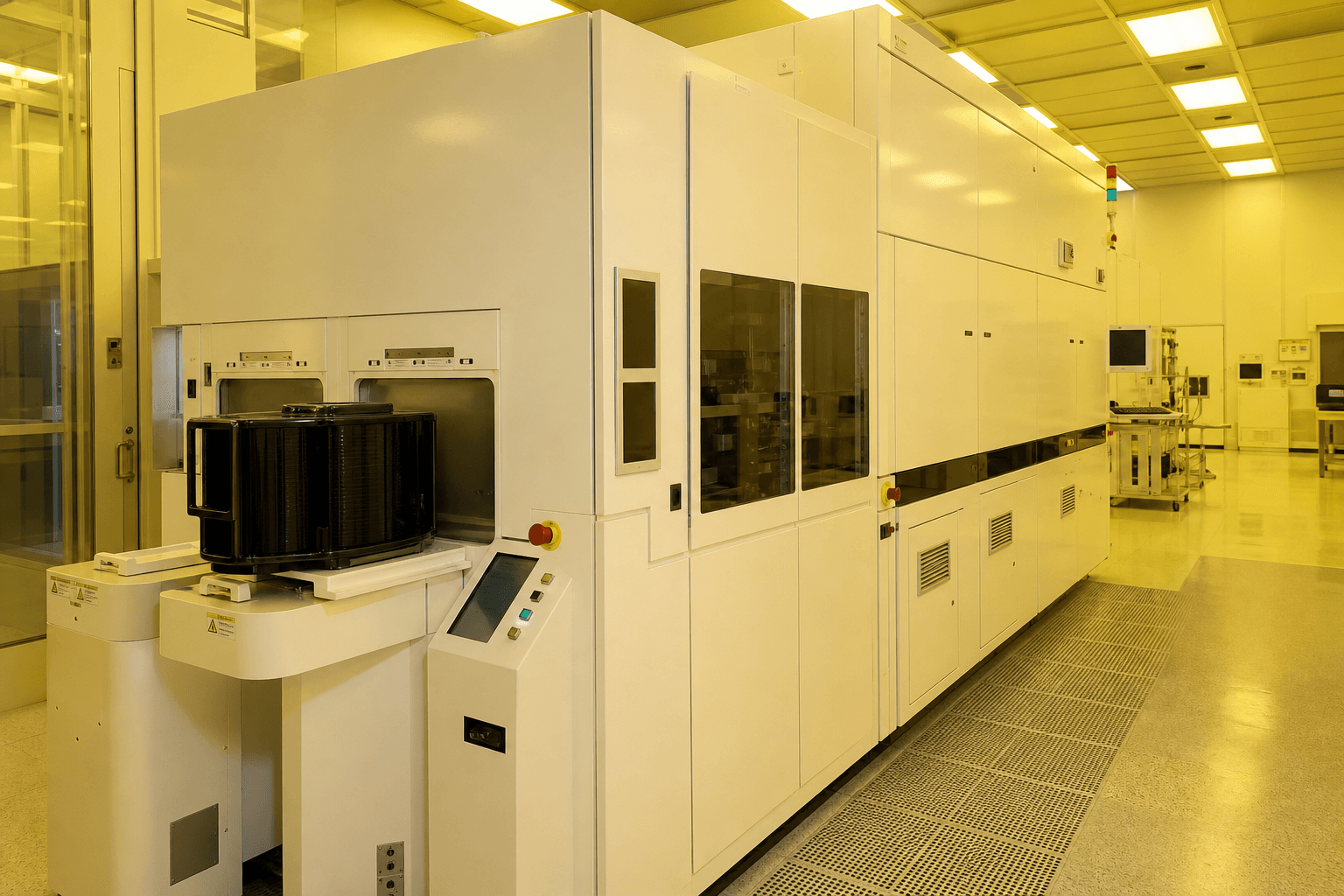
Yield meetings argue about litho. Parametric meetings eventually argue about dose. When Vt, sheet resistance, or leakage walks after an implant weekend, the scrap narrative arrives late. The narrative that should have arrived is a walk along a single chain: recipe → ion source → analyzer → beam current → wafer charge control → Faraday truth → SPC disposition.
This brief is that walk. It is not a tool brochure, and it is not a materials logistics piece.
1. Recipe intent (what you think you asked for)
Dose is not a number typed into a recipe screen. It is an intent expressed as ions/cm² under assumptions about species, energy, tilt, twist, and wafer charging. When process “owns the recipe” and equipment “owns the beam,” the assumptions orphan themselves. Write the intent as a measurable claim: this Faraday integral under this neutralization state equals this parametric window.
2. Source and species (what actually leaves the source)
Species contamination and source health rewrite dose without rewriting the recipe name. A beam that is “mostly” the right ion is a parametric time bomb. Ownership here is equipment + process jointly—or it is folklore.
Signals that belong on the same board as dose SPC:
- Source lifetime counters vs arc stability
- Mass peak purity checks after source change
- Energy calibration after maintenance that touched the analyzer path
3. Beamline transport (what survives the magnets)
Steering, apertures, and beam shape decide uniformity long before the wafer map looks “a bit tilted.” Implant tools hide transport sins as “disk scan quirks.” If your uniformity map always blames the mechanical scan, you have not walked the beamline.
4. Charge control (the wafer as an electrode)
Photoresist pop, charging damage, and dose error from neutralization failure are cousins. Sites that treat flood guns and plasma flood as “options” discover them as scrap root causes. Charge control is part of the dose chain, not an accessory.
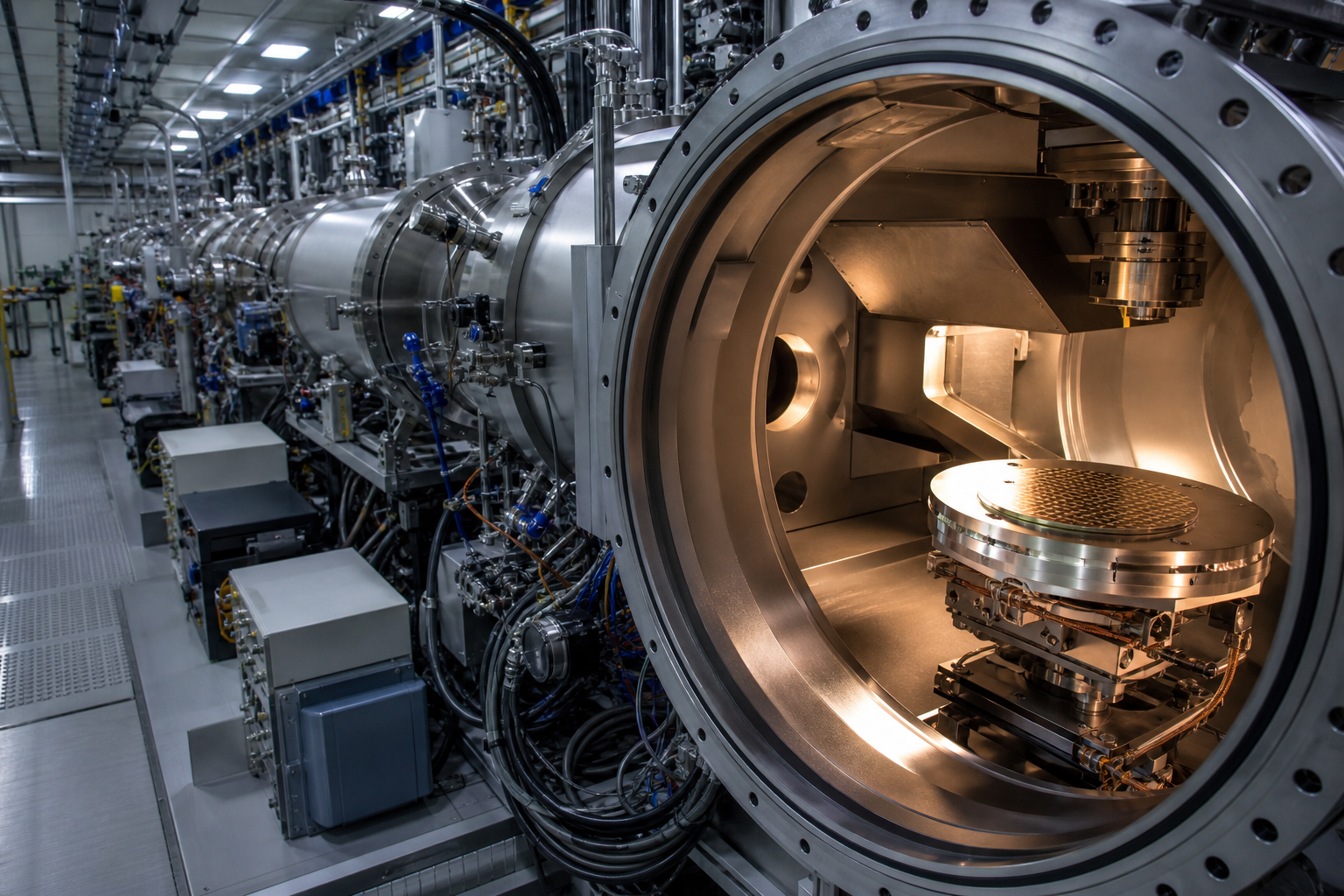
A stable recipe name is not a stable beam.
5. Faraday truth (the only honest integrator)
Faraday cups and dose controllers are the metrology you pretend is perfect. They drift. They get dirty. They get recalibrated against a standard that was due last quarter. When Faraday truth is soft, every “recipe match” is theater.
Practical discipline:
| Check | Cadence logic | Failure mode if skipped | | --- | --- | --- | | Cup cleanliness / inspection | After particle or current anomalies | Soft dose under-read | | Dose controller verification | After board/firmware events | Silent scale error | | Parallel wafer vs monitor | After source change | Species/energy surprise | | Neutralization state log | Every production recipe | Charge × dose confound |
6. SPC disposition (who may release the lot)
SPC without a disposition owner is a chart on a wall. Implant needs a rule as sharp as litho’s: which sigma events block the lot, which force a beam requal, which force a Faraday check before anyone touches the recipe.

Parametric drift is often Faraday drift wearing a process mask.
7. An anonymized chain break
A logic line saw sheet-resistance walk on a high-dose well implant after a source rebuild. MES showed “recipe unchanged.” Equipment showed “beam current nominal.” Metrology showed maps that looked like a soft global under-dose. The break was Faraday contamination after the rebuild plus a neutralization setting restored from an old template. Scrap cost was not the source rebuild. It was the missing rule: source rebuild → Faraday verification → neutralization state audit → monitor wafer before production lots.
8. Ownership map (one sentence each)
- Process owns parametric window and recipe intent.
- Equipment owns beam health and Faraday maintenance.
- Metrology owns the confirmation wafer method.
- Yield owns disposition authority when charts disagree.
- Only a named implant dose owner may release production after chain breaks.
Adjacent fences
Photoresist track reliability owns coat/develop logistics. High-NA stitching owns litho field seams. Dry vacuum owns etch/CVD pump health. CMP slurry owns consumable chemistry. None of them own Faraday integrity, beam species purity, or implant neutralization state. Do not fund a track upgrade and expect dose honesty.
Questions along the chain
After the last source change, which Faraday check was dated and signed? Who can alter neutralization without a recipe MoC? When parametric walks, is Faraday verification step one—or step twelve after a recipe argument? If the tool OEM vanished for a month, would your QMS still know cup maintenance history and which lots ran under which dose-controller revision?
Ion implant does not fail as “a mysterious Vt shift.” It fails as a broken measurement chain. Walk the chain in order, or keep arguing about recipes while the Faraday lies quietly.