
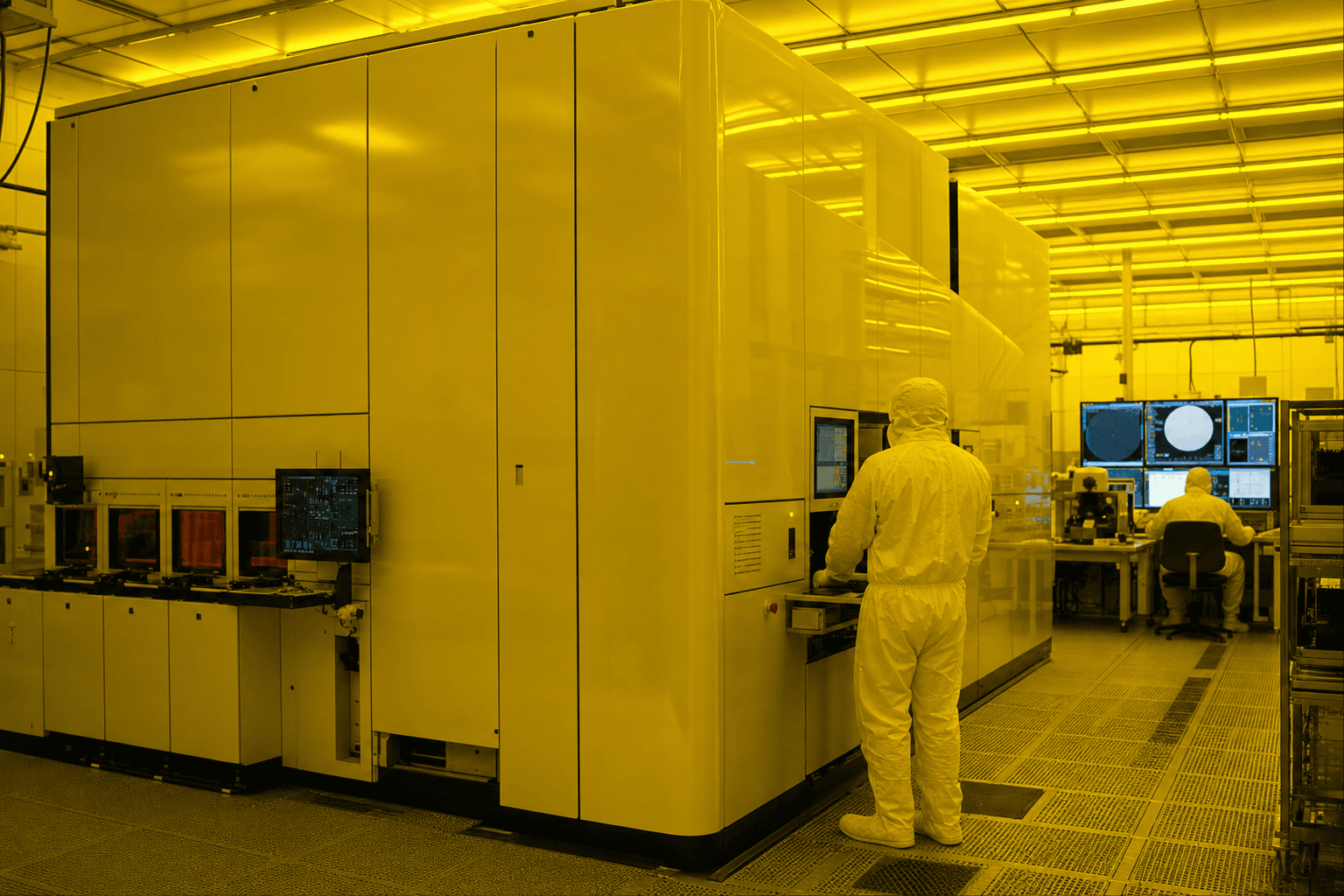
The first scrap was not “EUV is hard.” It was a stitched field that passed scanner metrology and failed electrical overlay at the die edge, followed by a thin-resist stack that collapsed DOF on a focus exposure matrix nobody owned across litho and etch. Only later did the yield board admit the High-NA program had three owners and one missing rule: stitching and depth-of-focus are process windows, not ASML marketing footnotes.
High-NA sits in ownership fog. Litho owns the scanner. Mask shop owns anamorphic reticles and actinic inspection. Etch owns selectivity under thinner resists. Integration owns the node. Nobody owns the living chain from stitch strategy → OPC → resist thickness → etch transfer → edge-die disposition.
This brief is that chain—not another High-NA capability deck, and not a pellicle supply story.
Symptom → likely owner (before you blame the scanner)
| What you see | Often not “scanner down” | First place to look | | --- | --- | --- | | Edge-die overlay fail after stitch | “Stage drift folklore” | Stitch interlacing, mask 3D, OPC at seam | | Focus window collapses on FEM | “Lens aging” | Resist thickness, DOF vs NA, underlayer | | LER / stochastic defects spike | “Dose only” | Thin resist, etch selectivity, stochastic budget | | CD at stitch boundary wander | “Metrology noise” | Actinic mask defects, absorber stack | | “Good” wafer map, bad sort | “Test program” | Field placement vs die floorplan stitching |
The point of the table is ownership: litho owns exposure; mask owns reticle truth; etch owns transfer—but only a named High-NA process-window owner connects them before CapEx becomes scrap CapEx.
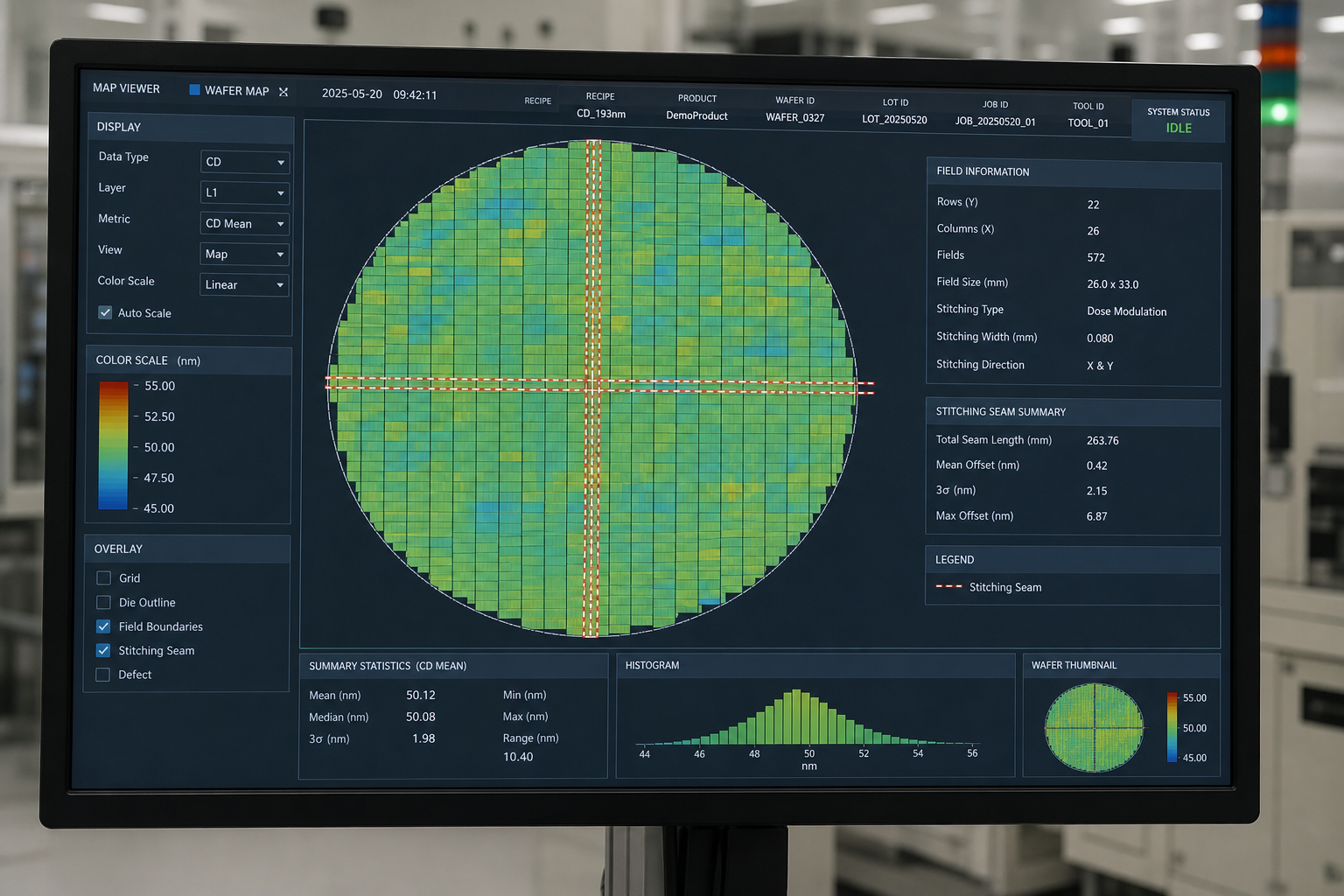
A green scanner log is not a stitch-qualified process.
What a stitching & DOF program actually controls
High-NA reduces DOF and forces thinner resists, metal-oxide or dry-resist paths, and etch co-optimization that legacy 0.33 NA habits do not forgive. Stitching is not a software checkbox: interlacing strategies, seam CD/EPE budgets, and mask economics decide whether single patterning savings survive the yield board.
Mature programs run stitch metrology as a release gate, not a weekly curiosity; FEM ownership shared by litho and etch with one disposition rule; and mask actinic findings that can stop a lot before it becomes a wafer story. Sites that buy High-NA throughput stories without a DOF owner buy tool depreciation and edge-die mystery in the same quarter.
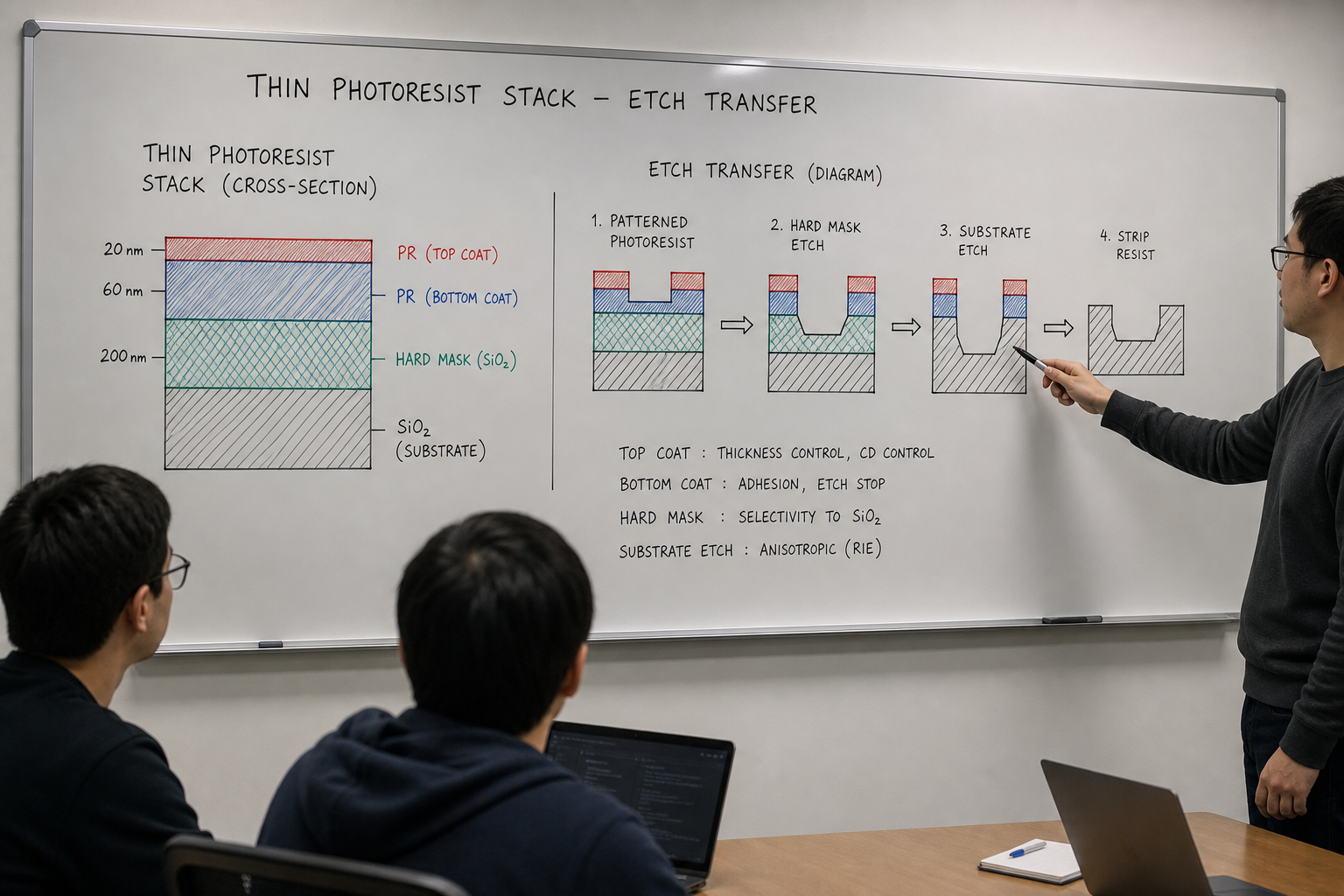
Thinner resist without etch co-ownership is delayed scrap.
An anonymized lot that should have been a stitch gate
A logic pilot lost nine days of High-NA learning wafers after stitched fields passed in-tool overlay and failed at sort on edge macros. Ticket trail: two stitch strategies in parallel without a freeze, resist thickness reduced for DOF without etch selectivity sign-off, and mask shop actinic backlog treated as “materials.” Post-mortem was not scanner availability. It was a missing rule: any stitch-boundary EPE trend or DOF collapse blocks new tape-outs until dual litho–etch disposition—same day, named owner.
Magnitudes without brochure theater
Exact NA, pitch, and resist numbers belong to your node and your OEM NDAs. Ordering is portable: lost learning wafers outrank deferred mask spend; stitch gates outrank scanner utilization slides; shared FEM ownership outranks blaming stochastic folklore. Fabs that only celebrate High-NA tool install photos will keep celebrating “progress” while the seam quietly writes the next scrap chapter.
Adjacent topics that stop here
High-NA lithography overviews own tool architecture and CapEx framing. EUV pellicle supply owns membrane logistics. Photoresist track reliability owns coat/develop cold chain. Dry vacuum owns etch/CVD pump health. None of them own stitch interlacing budgets, thin-resist DOF co-optimization, or edge-die disposition rules. Do not fund a pellicle warehouse and expect High-NA yield.
Questions that replace hope
Who can change stitch strategy without a process freeze? When did litho and etch last sign the same FEM disposition on the same day? Is actinic mask backlog allowed to ship lots into High-NA learning? If the scanner OEM disappeared for a month, would your QMS still know stitch EPE limits, resist thickness change control, and which tape-outs inherit which seam rule?
High-NA is not a brochure aperture. It is a process-window program that fails at the stitch and the DOF before it fails at the press release. Name the owner, gate the seam, and treat thin resist as etch equipment—because the die edge already does.