
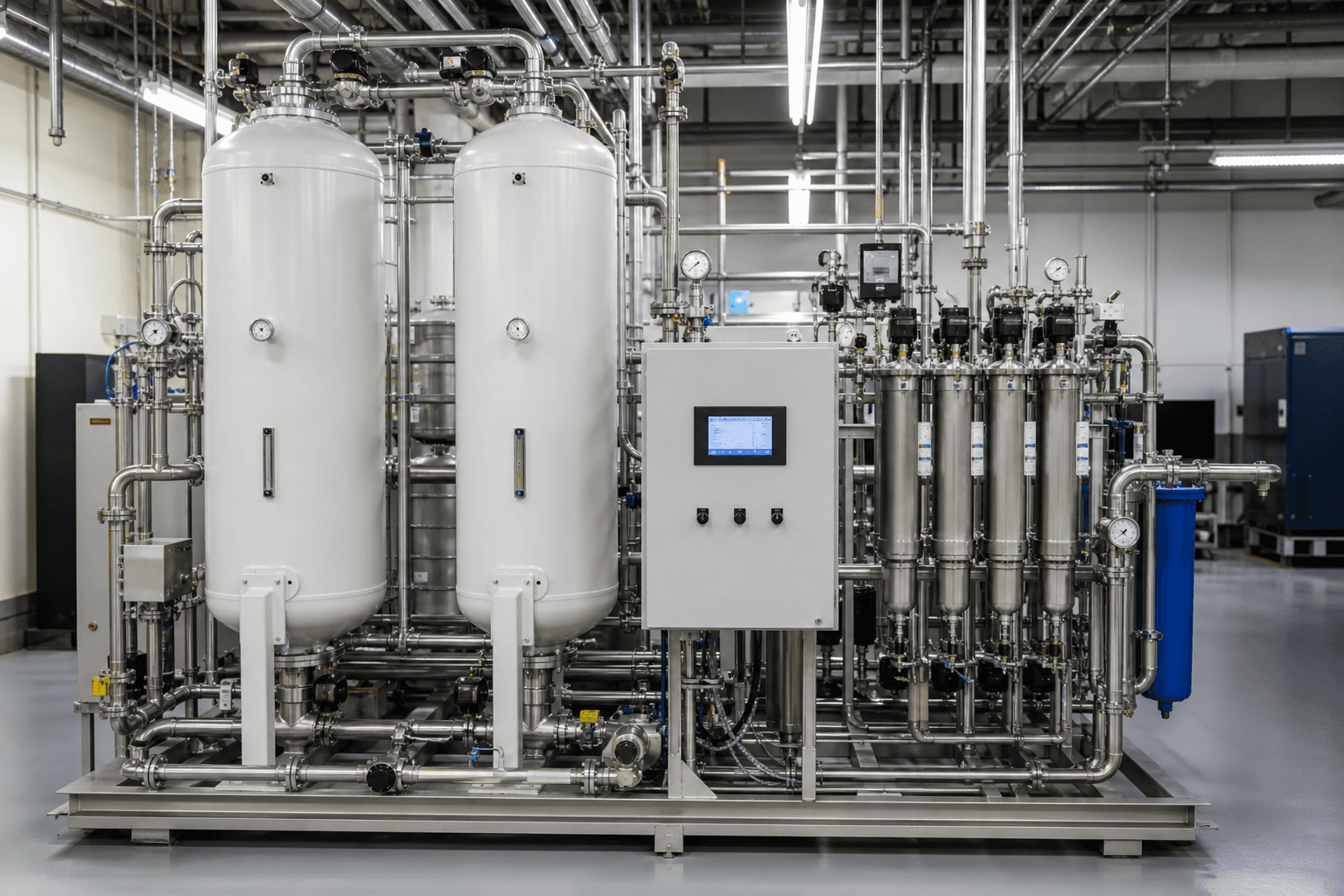
The first alarm was not a robot servo. It was a tool-changer that “lost air” mid-cycle, followed by sticky pneumatic valves on a metrology handler and a weekend of intermittent vacuum ejector faults that cleared after a power cycle. Only later did someone walk the CDA header and find a desiccant dryer past its purge cycle, a coalescing filter differential pressure ignored for weeks, and a dew-point transmitter sampling a bypass that never saw product air.
Clean dry air sits in the same ownership fog that hid UPW and nitrogen. Facilities owns compressors and dryers. Maintenance owns filters at the skid. Production owns the robot stop. Process owns the tool recipe that assumes “shop air is fine.” Nobody owns the living chain from intake → dryer → oil removal → distribution → point-of-use → pneumatic actuator health.
This brief is that chain—not a compressor brand catalog, and not another leak-detection walkdown.
Symptom → likely owner (before you blame the robot)
| What you see | Often not the robot | First place to look | | --- | --- | --- | | Tool-changer soft couple / air loss | “Seal kit” | Dew point, dryer purge, POU filter DP | | Sticky solenoid / slow cylinder | “Valve age” | Oil carryover, coalescer saturation | | Vacuum ejector intermittent | “Vacuum generator myth” | Moisture at nozzle, regulator freeze | | Particle on optical sensors near air | “Housekeeping” | Oil mist, poorly drained drop legs | | “Fixed” after dryer bypass closed | “Operator luck” | Bypass valve state under change control |
The point of the table is ownership: facilities owns dryer health; maintenance owns filtration; production owns takt—but only a named CDA program owner connects them before pneumatic faults become robot tickets.
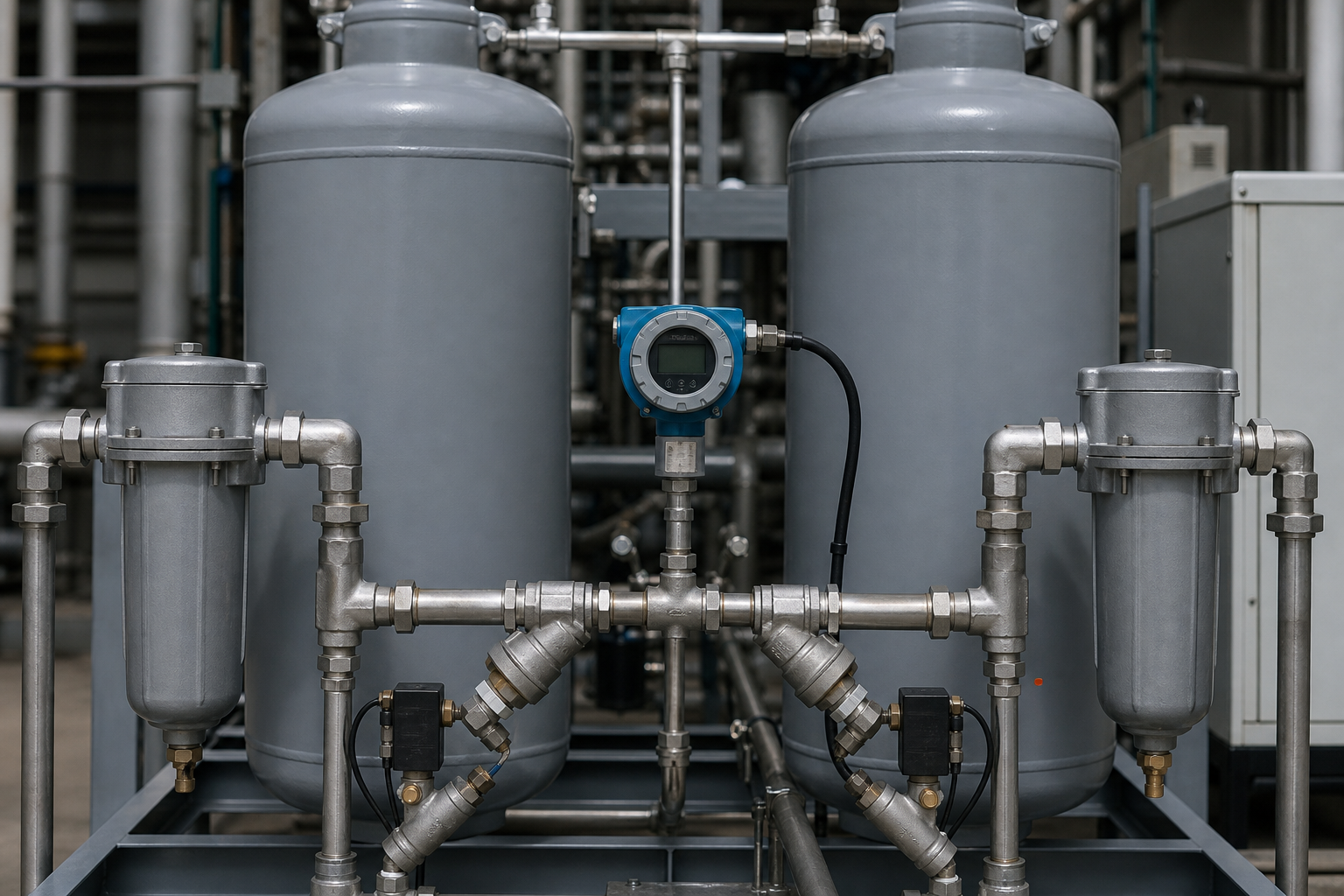
Header pressure is not air quality.
What a CDA program actually controls
CDA is not “compressed air with a nicer name.” It is a specification: dew point class, residual oil, particles, and sometimes sterile or oil-free grades for clean tools. Mature sites run dew-point trending at the dryer outlet and at distant branches, not a single green lamp on the skid; coalescer and particulate change keyed to DP and oil analysis, not calendar folklore; and documented bypass rules so a temporary dryer bypass cannot become permanent infrastructure.
Point-of-use filters do not forgive upstream sins. A pristine robot dress pack still fails if wet air freezes regulators at takt, or oil mist fouls EOAT sensors. Sites that fund leak hunts to cut kWh while ignoring dew point buy energy savings and weekend pneumatic scrap in the same quarter.
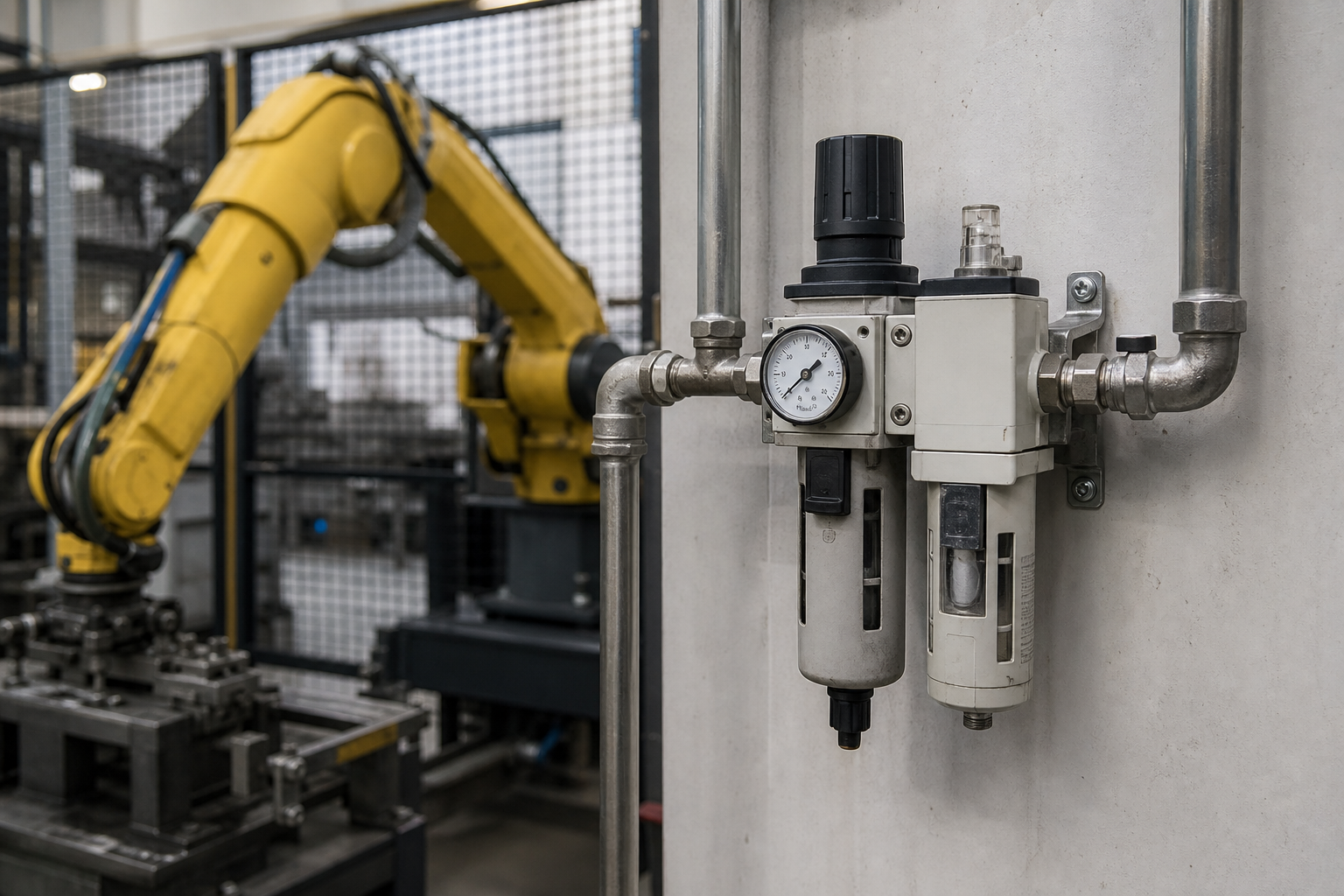
POU filtration is the last chance—not the whole program.
An anonymized weekend that should have been Tuesday’s dryer PM
A packaging cell lost fourteen hours after three robots shared intermittent tool-changer faults. Ticket trail: desiccant dryer purge valve sticking, dew-point alarm disabled “during commissioning,” and POU filters never logged with DP. Post-mortem was not EOAT seals. It was a missing rule: any dew-point class excursion blocks new high-mix recipes on pneumatic cells until disposition—same shift, named owner.
Magnitudes without brochure theater
Exact ISO 8573 classes belong to your tools and your OEM. Ordering is portable: lost takt hours outrank deferred dryer rebuild; branch dew-point truth outranks skid-local green lights; bypass discipline outranks compressor kWh theater. Sites that only trend header pressure will keep celebrating “stable air” while cylinders quietly write the next stop chapter.
Adjacent topics that stop here
Compressed-air leak programs own mass-balance and ultrasonic hunting. On-site nitrogen owns inert blanketing purity. Fab UPW owns wet-bench rinse integrity. Robot dress-packs own cable flex life. None of them own dryer purge health, oil carryover at the header, or pneumatic POU dew point. Do not fund a leak survey and expect tool-changer reliability.
Questions that replace hope
Who can open a dryer bypass without recorded risk acceptance? When did you last compare dryer-outlet dew point to a portable reading at the farthest pneumatic cell on the same hour? Are coalescer changes keyed to DP and oil, or to a calendar? If the compressor vendor disappeared for a month, would your CMMS still know dryer media age, bypass states, and which cells share which CDA branch?
CDA is not glamorous infrastructure. It is the reason your “healthy” robot still stops on wet air. Instrument the chain, name the owner, and treat dryers as process equipment—because the actuator already does.