
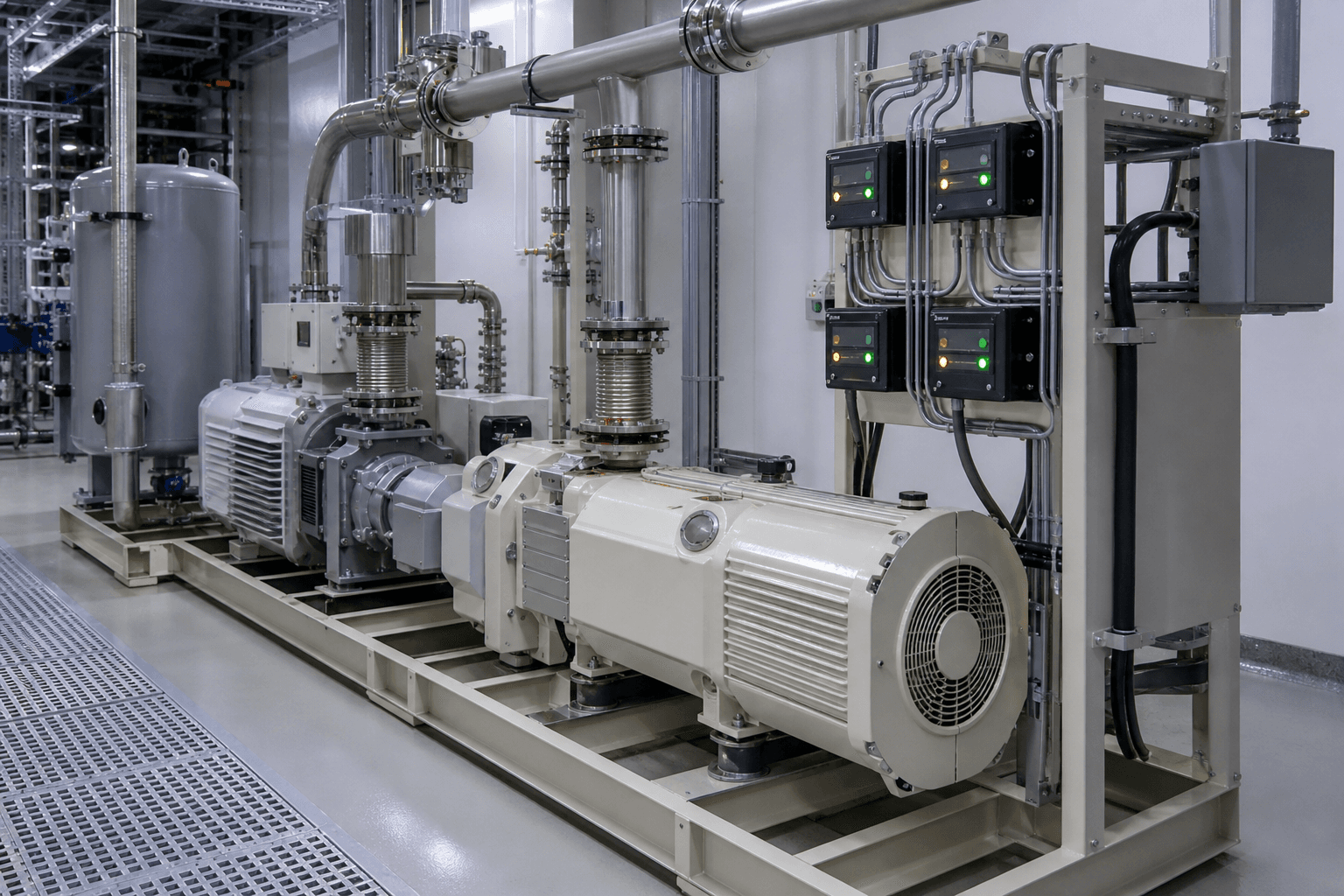
Yield boards talk recipes. Capacity boards eventually talk vacuum. When a dry pump on a critical etch or CVD tool starts running hot, vibrating oddly, or pulling a soft base pressure, the scrap conversation is already late. The conversation that should have happened is in a war room that treats pumps, forelines, and abatement as one reliability chain—not three vendor tickets.
This brief is that war-room map. It is not a CMP slurry supply chain piece, not an AMC detective timeline, and not an on-site nitrogen purity story.
Symptom → likely owner (before you blame the recipe)
| What you see | Often not the recipe | First place to look | | --- | --- | --- | | Base pressure soft after wet clean | Chamber “dirty” folklore | Pump capacity, ballast, check valves | | Particle spikes after idle | “Human error” | Foreline condensation / powder shedding | | Abatement trip → tool interlock | Facilities “nuisance” | Scrubber load vs process chemistry | | Rising pump current / temperature | “Aging” shrug | Oil-free claw/screw health, purge gas, seals | | Slow pump-down after PM | Technician skill myth | Foreline length, leaks, heater tape state |
The point of the table is ownership: process owns the recipe window; equipment owns the pump package; facilities owns house nitrogen/purge and abatement utilities. When those three only meet after a scrap event, you are running folklore.
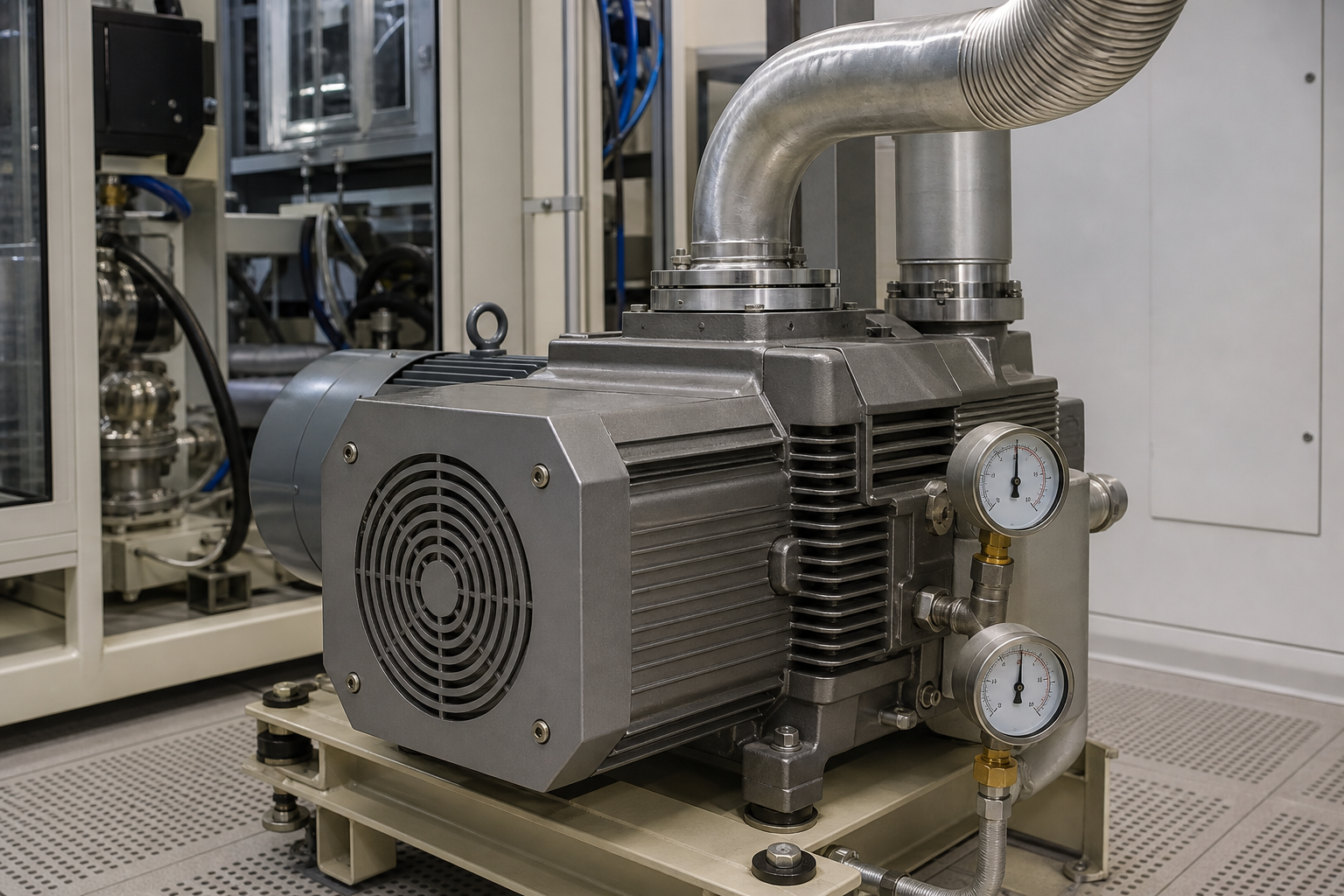
A green “running” lamp is not a vacuum health certificate.
What a dry-pump program actually controls
Dry pumps do not forgive process chemistry. They ingest condensables, powders, and corrosive species that rewrite clearances and bearings. Mature fabs run purge discipline, heated forelines where chemistry demands it, and scheduled rebuilds keyed to amp-hour / process-hour counters—not calendar folklore. They also keep a hot spare strategy that matches tool criticality: a shared “we’ll cannibalize” culture is how a single pump outage becomes a multi-tool outage.
Abatement is not a distant scrubber myth. If the abatement skid cannot take the exhaust load, the tool will invent a new failure mode for you—interlocks, soft aborts, or silent recipe throttling that looks like “process drift” in the MES.
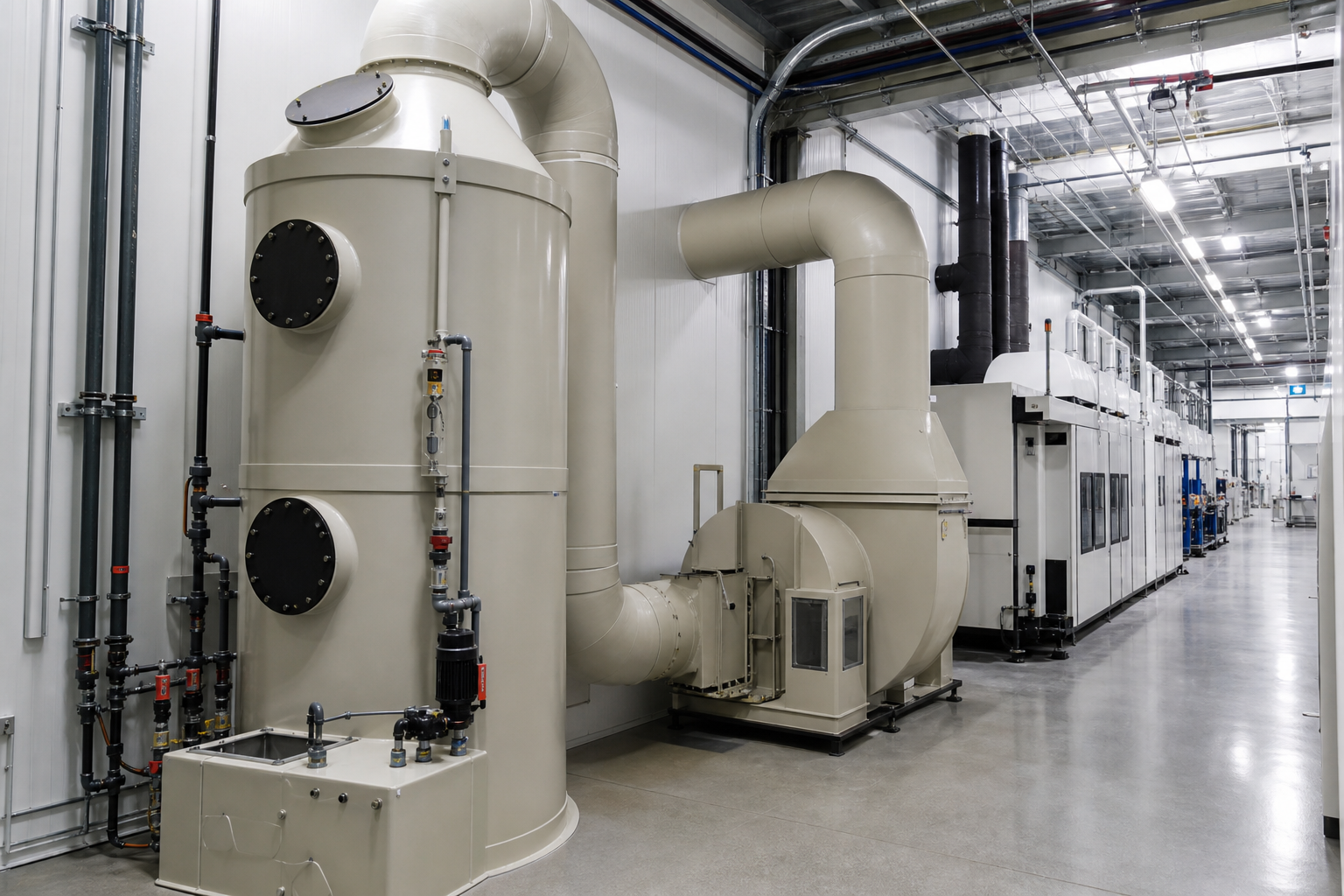
Tool vacuum health ends where abatement capacity begins.
An anonymized Friday that should have been Tuesday
A specialty fab lost fourteen hours of etch capacity after a dry pump seized during a high-polymer recipe week. The ticket trail showed rising motor current for nine days, a deferred rebuild because “the spare was on another tool,” and an abatement differential-pressure alarm that facilities cleared as nuisance. The post-mortem was not chemistry. It was a missing war-room rule: any pump trending outside band blocks new high-load recipes until disposition—same shift, named owner.
Magnitudes without brochure theater
Exact MTBF belongs to your chemistry and your OEM. Ordering is portable: lost tool-hours outrank deferred rebuild savings; foreline integrity outranks a prettier HMI; abatement headroom outranks blaming the last resist lot. Sites that only monitor chamber pressure will keep celebrating “stable recipes” while the pump is quietly writing the next scrap chapter.
Adjacent topics that stop here
CMP slurry is liquid consumable logistics. Lithography AMC is molecular contamination detective work. Nitrogen blanketing is inert-atmosphere integrity for tanks. Acoustic PdM is rotating-asset sound in plant utilities. None of them own dry-pump rebuild counters or etch foreline heaters. Do not fund an AMC sample cart and expect CVD uptime.
War-room questions that replace hope
Who can defer a pump rebuild past its process-hour limit without a recorded risk acceptance? When did you last correlate pump current with abatement DP on the same tool family? Is the hot spare actually ready, or is it a rumor on a shelf? If the pump OEM disappeared for a month, would your CMMS still know purge settings, rebuild kits, and which tools share which abatement train?
Vacuum is not glamorous infrastructure. It is the reason your “stable” etch recipe still becomes a capacity story on Friday. Instrument the chain, name the owners, and treat dry pumps as process tools—because the chamber already does.