
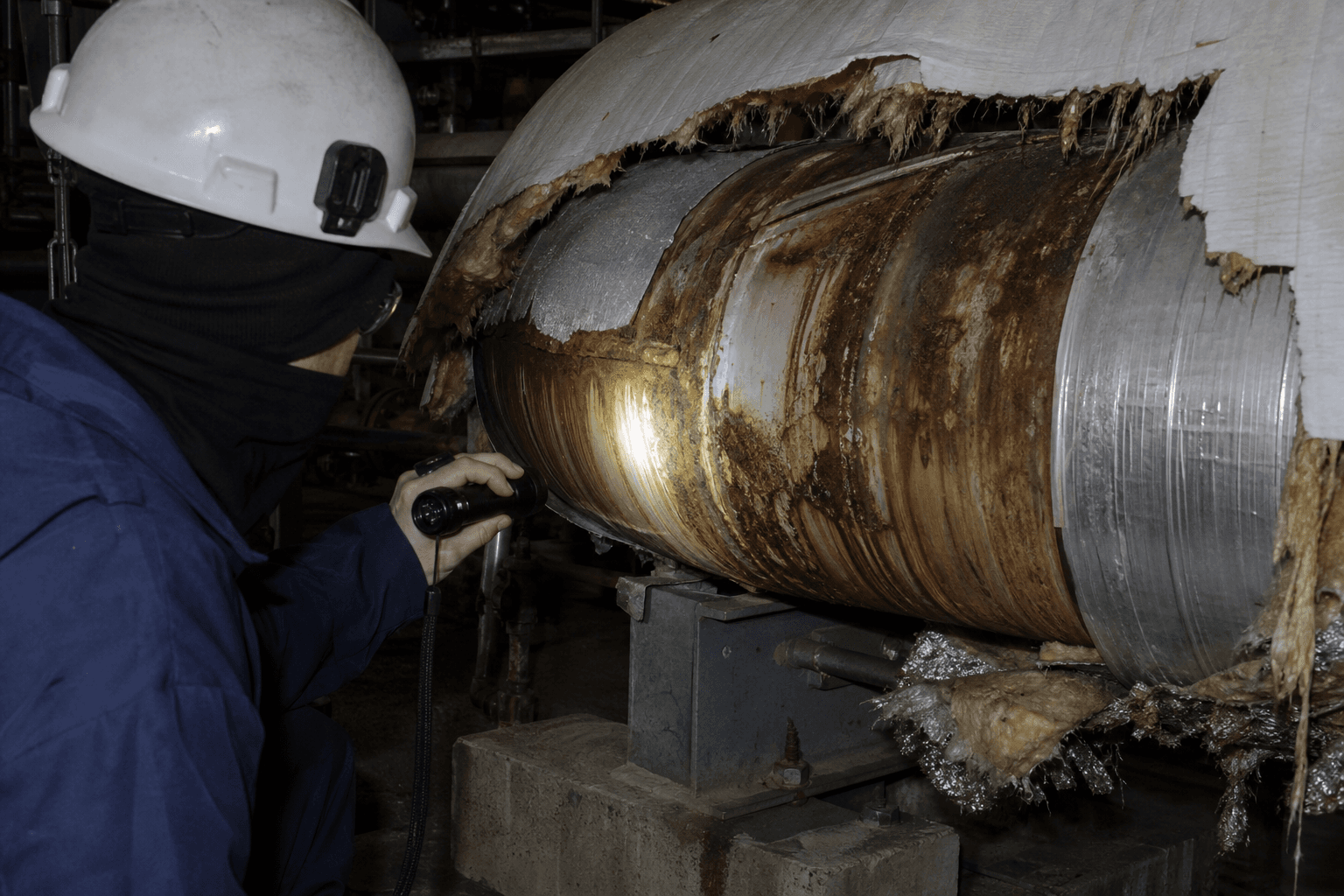
Carbon-steel pipe that runs in the CUI temperature band—roughly where water can exist as liquid under insulation and where freeze-thaw or steaming cycles keep that water moving—does not need a spectacular coating failure to lose wall. It needs a breach in the cladding, a failed seal at a support, or a dead-leg that never dries. The insulation does its job: it hides the rust. External visual inspection of intact cladding is not an inspection of the steel.
Plants that treat CUI as a painting issue strip too late. Plants that treat it as an integrity program rank circuits, open the right windows, and use through-cladding NDE where stripping everything is impossible.
Where water actually gets in
Cladding is a weather jacket, not a pressure boundary. Seams, protruding nozzles, pipe supports, and termination points at flanges are the usual inlets. Horizontal runs pond. Vertical runs drain into a boot that was never detailed. Steam tracing that leaks is a dedicated water injection system aimed at the steel.
The temperature window matters more than the generic "insulated pipe" label. Circuits that cycle through dew point—intermittent steam, batch heat-up, seasonal idle—are worse than a line that stays hot and dry or stays cold and dry. Stainless can still crack under insulation if chlorides concentrate; carbon steel thins. Mixing those mechanisms in one inspection procedure produces the wrong NDE and the wrong remaining-life math.
Ranking before the knife
A CUI program that starts with "strip 10% of insulated footage" is a budget, not a method. Ranking uses process temperature, cycling, coating age, cladding condition, and consequence of leak. Dead-legs, low points, and support locations get a higher prior than mid-span on a well-sealed, continuously hot header.
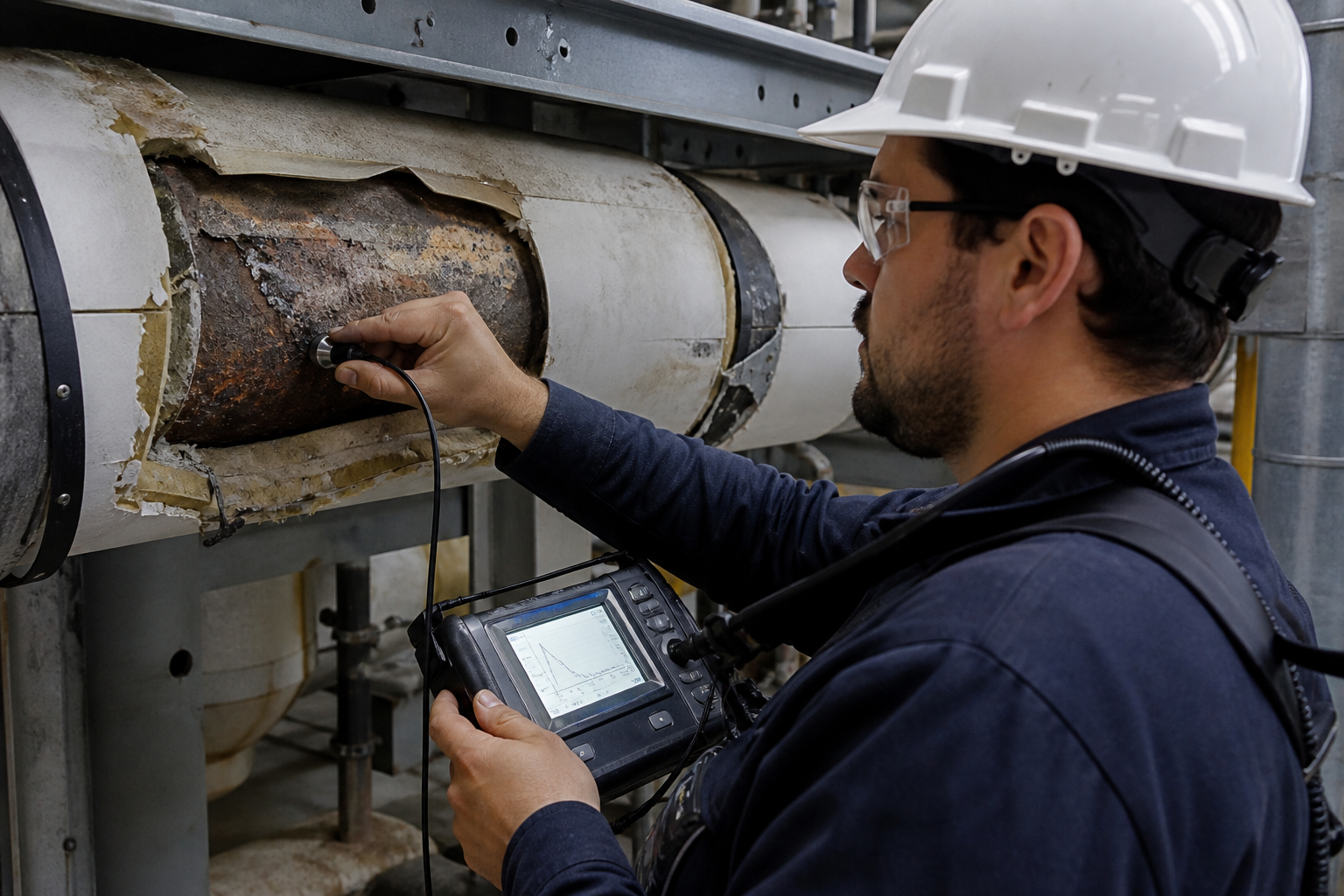
Once ranked, inspection is a mix: designed strip locations that can be reinstated to a weather-tight spec, and screening NDE—pulsed eddy current, guided wave, profile radiography—on runs that cannot be stripped this turnaround. Screening is not a remaining-life certificate. It is a way to put the next strip window on the right 20 metres instead of the convenient 20 metres next to the platform.
Reinstatement is part of the inspection
Every opened window that is closed with tape, wrong jacketing, or a missing termination seal is a new CUI site. The inspection work pack should include cladding restoration details, sealant type, and a photograph of the closed window. If restoration is not in the pack, the inspection created the next failure.
Coating under insulation is a specification, not a leftover from the last painter. If the steel is pitted and you only wrap new mineral wool over rust, you have insulated the corrosion cell.
What the integrity file must hold
Location, temperature history, inspection method, wall measurements, and restoration quality. A spreadsheet of "CUI strips completed" without thicknesses is a progress metric for contractors, not an argument that the circuit is fit for service.
CUI is slow until it is not. The plants that live with it are not the ones with the most insulation. They are the ones that assume water is already under the jacket and who design the inspection to find the steel, not the cladding.