
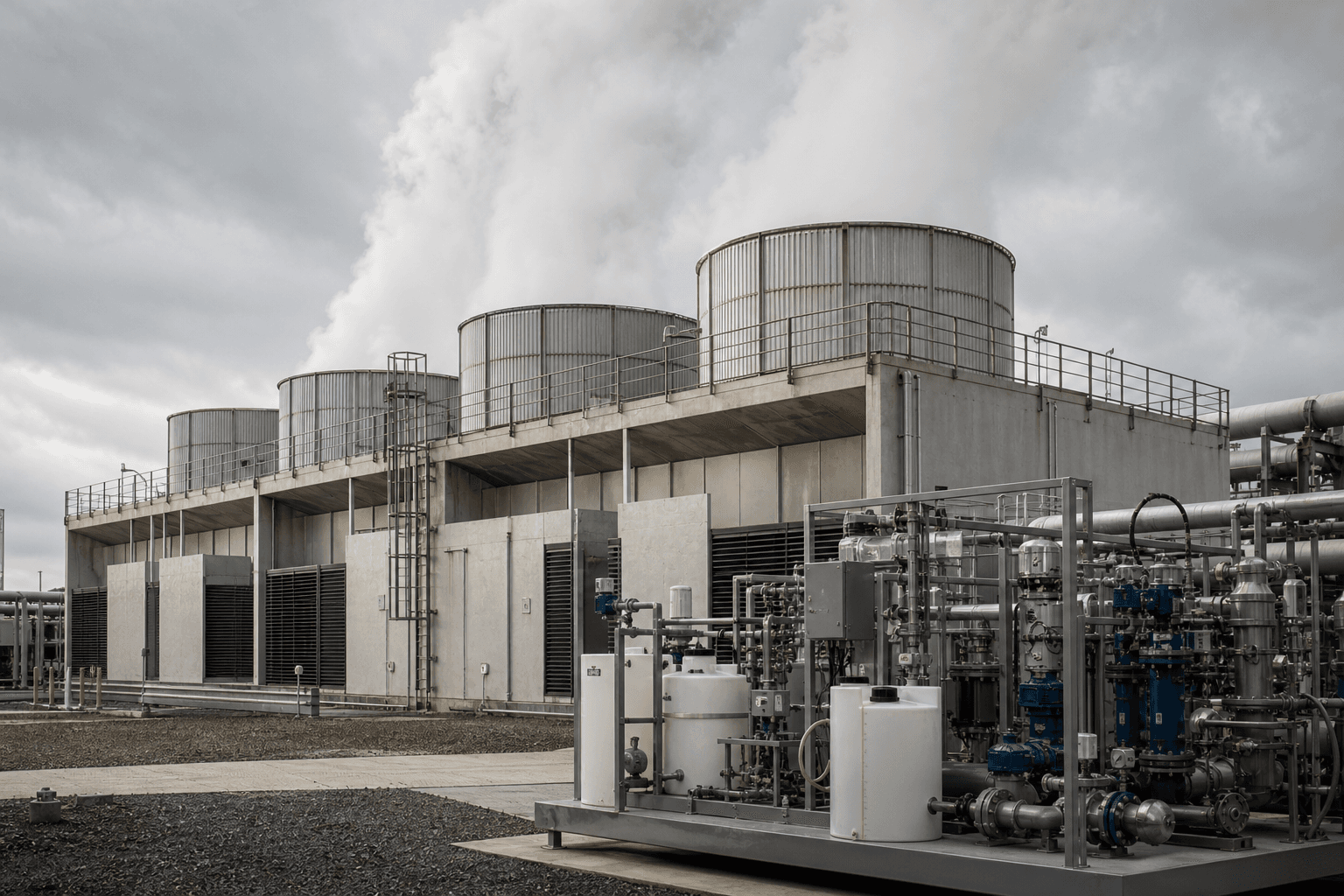
The first alarm was not chemistry. It was a process condenser that could not hold vacuum on a humid Tuesday, followed by a compressor suction temperature that forced rate. Only later did someone walk the tower deck and find cycles of concentration drifting, a clogged blowdown valve, and a biocide drum that had been “on order” long enough for the biofilm to win.
Cooling towers sit in a blind spot between utilities contracts and production ownership. The water-treatment vendor samples on a route. Operations watches process temperatures. Reliability owns the exchanger when it fouls. Nobody owns the living system that couples them: makeup quality, cycles, inhibitors, biodispersants, drift, and the sensors that should have told the truth days earlier.
This brief is that ownership story—not a catalog of tower brands, and not another electrification CapEx piece.
Tuesday’s trip, rewritten without folklore
An anonymized specialty-chemicals site lost roughly 18 hours of nameplate rate after a shell-and-tube condenser fouled hard enough to trip interlocks. Post-mortem showed basin conductivity had been climbing for eleven days while the online probe read flat—biofilm on the tip, not a healthy steady state. Manual grab samples existed in a binder; nobody trended them against exchanger ΔT.
The fix that stuck was organizational before it was chemical. A named tower water owner (utilities, with production veto on biocide windows), daily auto-logged conductivity/pH/ORP into the historian, and a rule that a probe-process mismatch opens a work order the same shift—not at the next vendor visit.
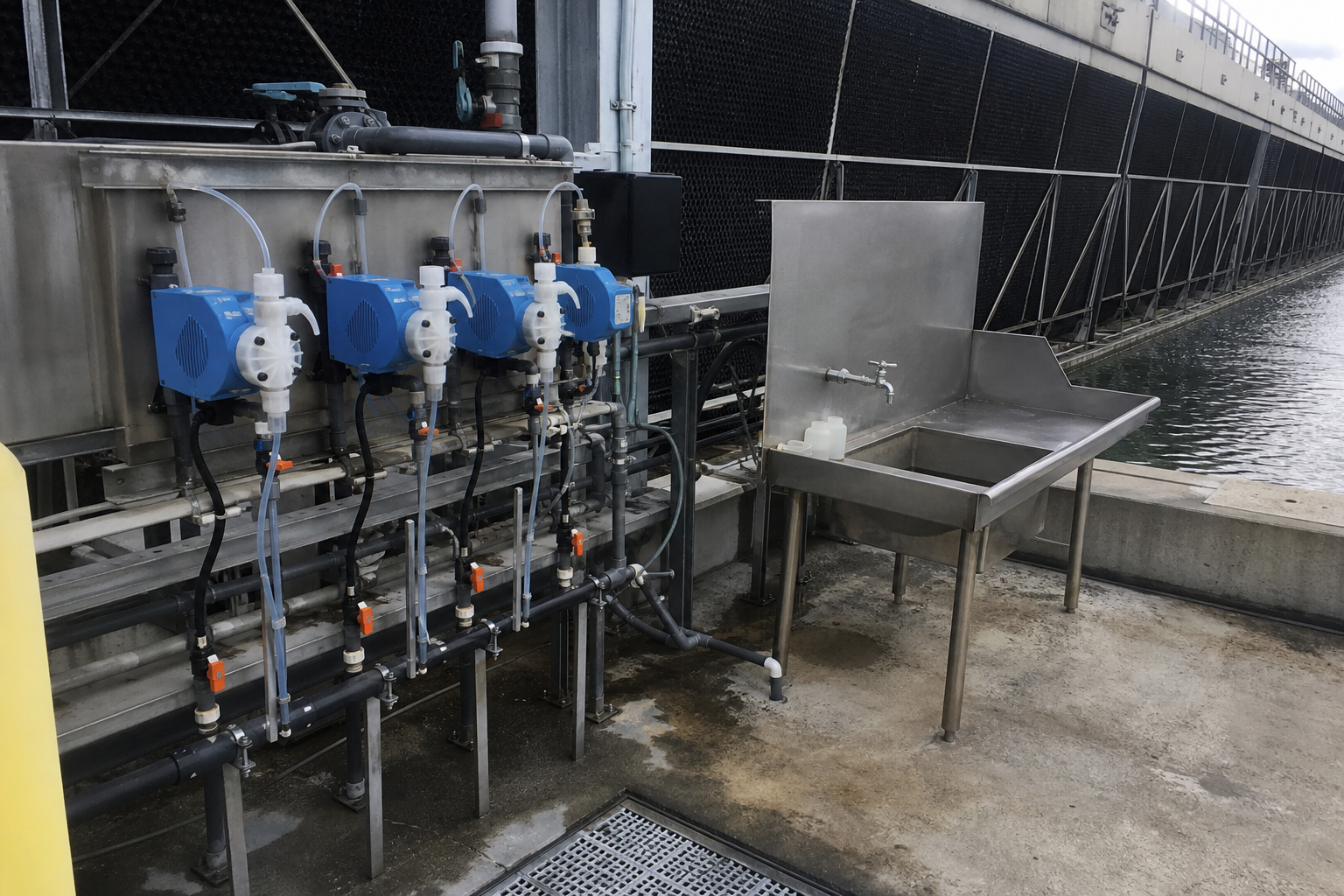
Dosing pumps without verified residual and blowdown control are theater with drums.
The physics production actually feels
Heat rejection fails in familiar ways: scale that insulates tubes, corrosion products that seed more fouling, and microbiological growth that both fouls and under-deposit corrodes. Plants that run aggressive cycles to save makeup without matching inhibitor control buy short-term water bills and long-term metal loss. Legionella risk adds a compliance overlay that “we shock occasionally” does not satisfy when auditors ask for a written program.
Practical operating bands vary by makeup and metallurgy, but the pattern is stable: uncontrolled cycles and blind sensors precede most “mystery” condenser losses. Treating the tower as a living process unit—with SPC on key parameters—cuts the folklore.
Summer humidity and winter low wet-bulb both change evaporative load; a blowdown timer tuned in April will lie in August. Sites that couple blowdown to measured conductivity (with high/low clamps) and that verify inhibitor residual after every makeup-quality swing stop treating the tower like a static tank. Fill media condition matters too: collapsed or fouled fill raises approach temperature long before anyone opens a chemical tote.
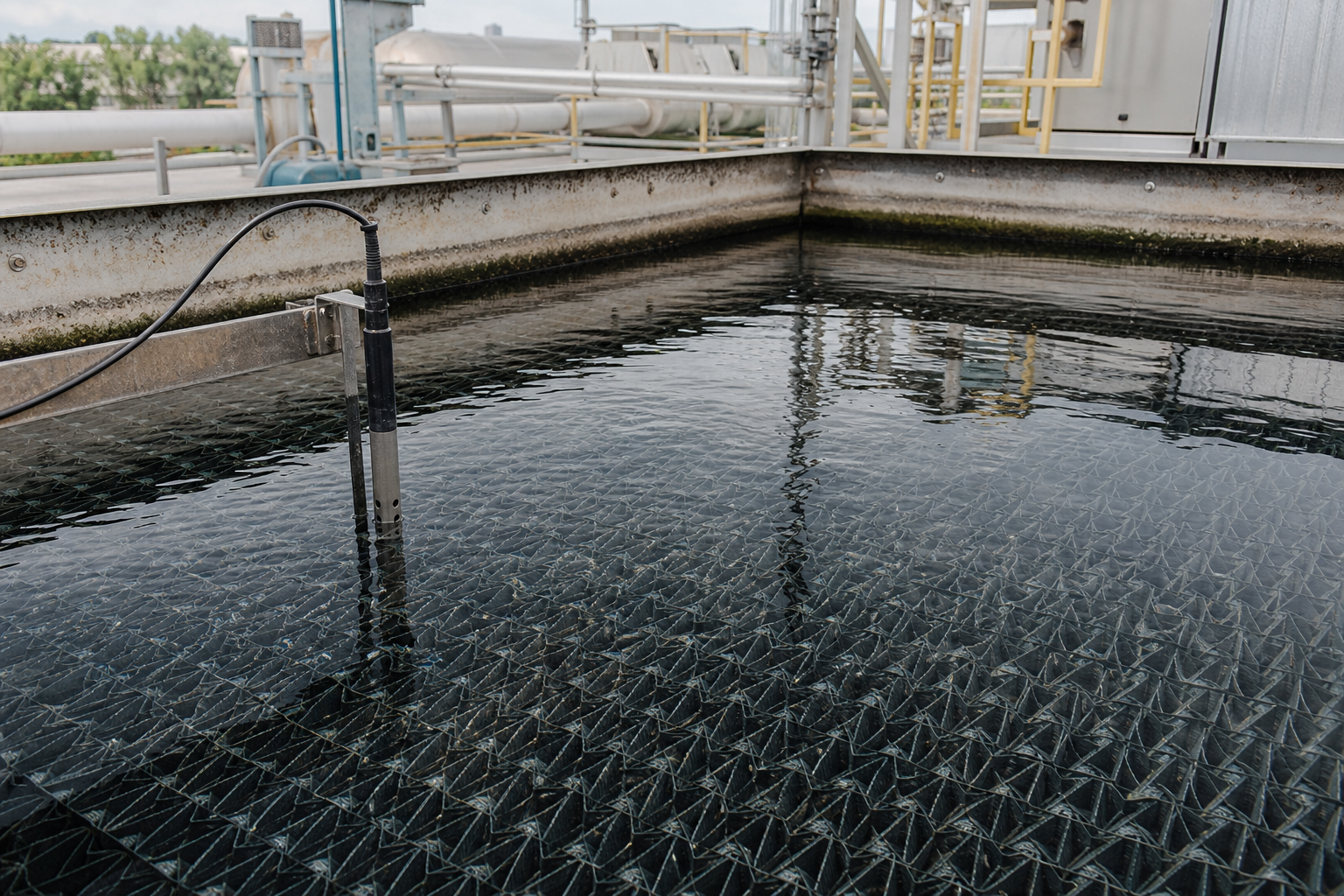
If the probe lies, every clever chemical program lies with it.
Three magnitudes worth keeping in your head
You do not need a vendor ROI slide to sanity-check urgency. Industry water programs repeatedly show that a few tenths of a millimeter of foulant can erase large fractions of design heat-transfer coefficient on critical exchangers; that biocide and dispersant spend is usually trivial next to a day of lost production; and that sensor cleaning/calibration intervals measured in weeks, not seasons, are what separate programs from hope. Exact numbers belong to your metallurgy and your makeup analysis—steal the ordering, not a brochure constant.
One more ordering rule: lost production hours outrank water invoice savings whenever the condenser is on the critical path. Programs that optimize only for cycles-of-concentration without publishing exchanger health will eventually “save” water all the way into a trip.
Where adjacent topics stop
Compressed-air leak programs own the air network. CHP owns coincident heat and power. Acoustic listening owns rotating-asset sound. None of them own basin chemistry, cycles of concentration, or Legionella documentation. Do not buy a smarter compressor sequence and expect clean condenser tubes.
Questions that replace a checklist theater
Who can stop production-adjacent biocide feed without a recorded reason? When did you last compare online conductivity to a lab sample on the same bottle? Is blowdown automated on a measured signal or on a timer that ignores weather and load? If the water vendor disappeared for a month, would your CMMS still know which drums, which residuals, and which tower cells are in what state?
Cooling water is not glamorous infrastructure. It is the reason your “optimized” process still trips when the basin quietly goes wrong. Name an owner, instrument the truth, and treat chemistry as reliability work—because that is what the condenser already knew on Tuesday.