

Process loops that look “tuned” on paper still hunt, overshoot, or sit dead until a large error accumulates. Operators blame the PID. Instrument techs swap the positioner firmware. The valve stem, meanwhile, has been sticking in small increments for months.
This note is control-valve stiction and packing friction—how stick-slip at the stem rewrites what the controller commanded. It is not ESD partial-stroke proof testing, not mechanical-seal flush plans, and not diaphragm-seal transmitter fill honesty, though a sticky final element will happily impersonate all three on a bad day.

Stiction is the extra force needed to break the stem free after it has rested. Once motion starts, kinetic friction is lower, so the valve jumps. The positioner may still show a smooth feedback trend if it averages, or if the jump is inside the deadband the loop has learned to live with. Product quality sees the jump as a spike in flow, pressure, or composition that no one can tune away.
What usually creates the stick
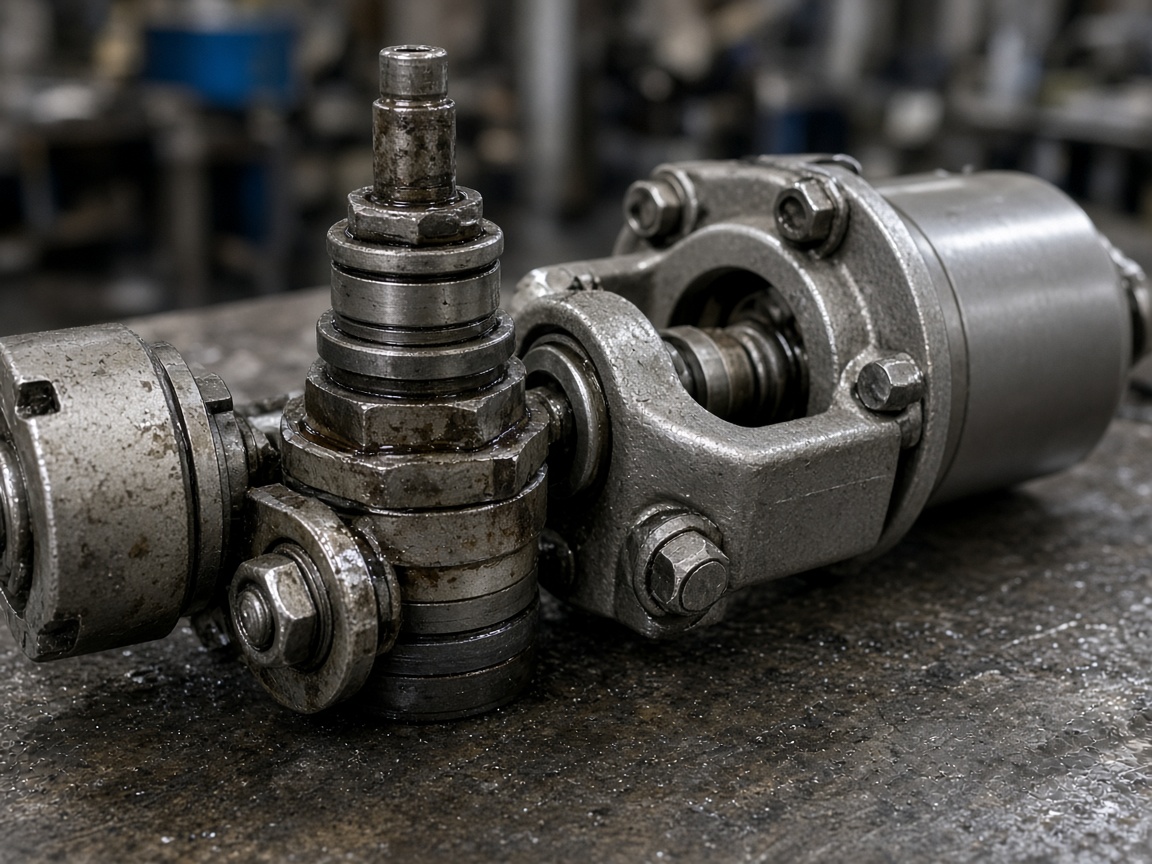
Packing that was overtightened to stop a fugitive emission, graphite that dried out after a temperature cycle, a bent stem from side load, or an actuator that lost bench set all raise breakaway force. Smart positioners that can run partial stroke or friction signatures help—if someone schedules the test and believes the result. A green “in service” LED only means the electronics are powered.
Compare commanded setpoint to measured stem position at high resolution during a slow ramp. Parallel tracks with occasional steps are the signature. A PV that stays flat until it suddenly moves, while the controller output crept for minutes, is the same story told from the process side.
What to do before you retune the PID
Stroke the valve through the operating band with the process safe. Log positioner diagnostics if the device supports friction or stick-slip metrics. Repack to the vendor torque procedure—not “until the leak stops and then another half turn.” Check stem straightness and actuator air supply. Only after the mechanical path is honest should you touch tuning constants.
When a loop needs ever-larger gains to “wake up,” ask whether the valve is asleep. Stiction does not care how elegant the controller block looks on the HMI.