
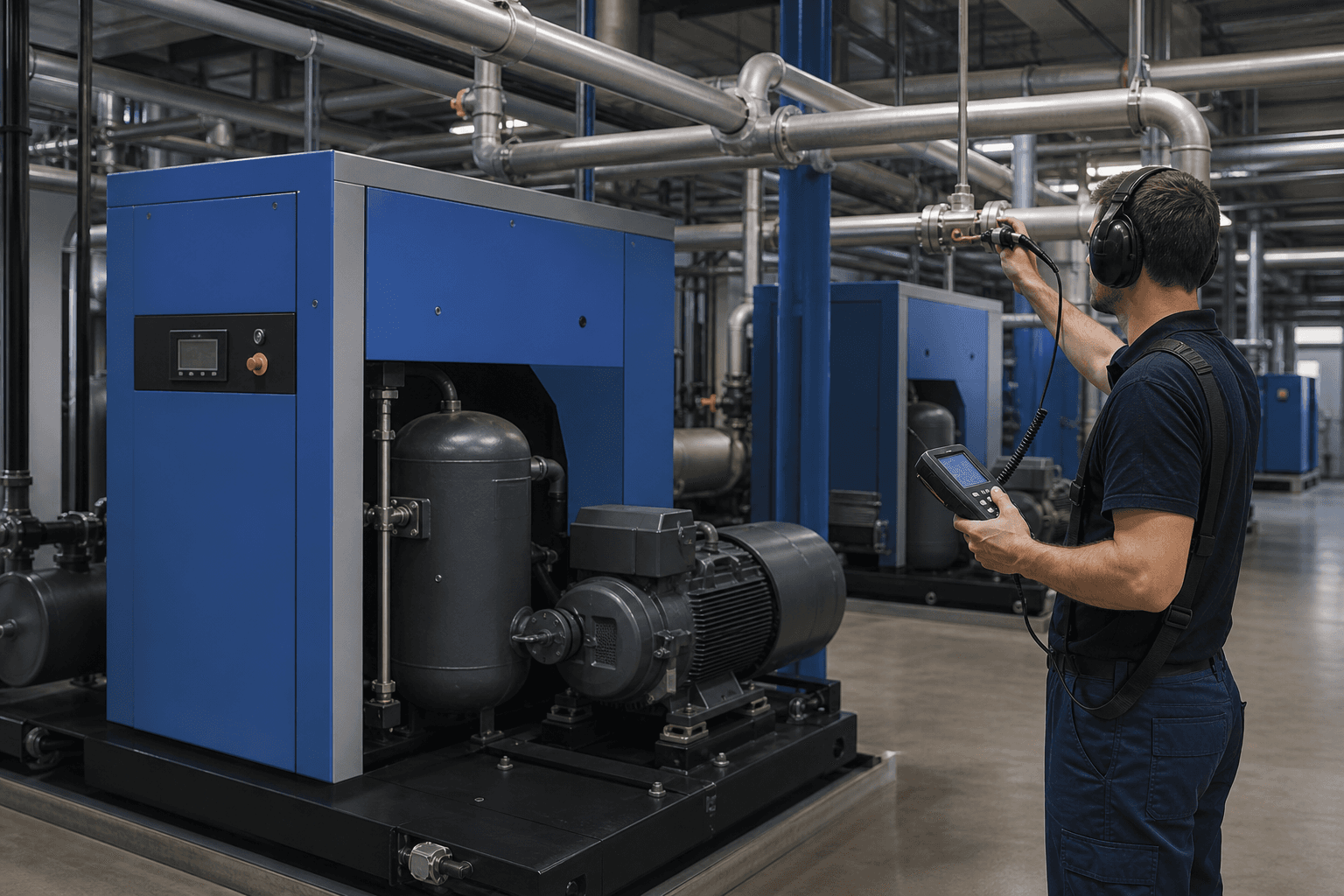
Steam trap programs chase live steam. Power-quality work tames harmonics from VFDs. Demand response sheds flexible loads. What still burns electricity every minute on most sites is compressed air treated as “free when the compressor is already running”: leaks at fittings, open blow-offs, oversized pressure setpoints, and wet air that kills tools downstream.
A serious compressed-air program is not a weekend leak hunt with a soap bottle. It is a tagged leak register, ultrasonic routes, pressure and flow metering, and compressor sequencing that matches real demand—not the highest whistle on the header.
The industrial point is system efficiency. Fixing three audible hisses while the plant runs 1.0 bar above need and two fixed-speed machines fight each other is theater with a better soundtrack.
Why air is usually the most expensive “utility”
Industry energy guides often place compressed air among the costliest plant utilities per delivered joule: typical generation efficiency from electricity to useful air work is frequently discussed in the 10–20% range once heat of compression and distribution losses are counted. Leak rates of 20–30% of generated flow are still common on unmanaged networks; best-practice sites drive sustained leakage toward the low teens or below with continuous programs.
Every 0.1 bar of unnecessary header pressure raises compressor power roughly on the order of ~0.5–1% depending on machine type—small on a slide, large across a year of continuous duty. Artificial demand from unregulated blowguns and open purge valves multiplies the same mistake.
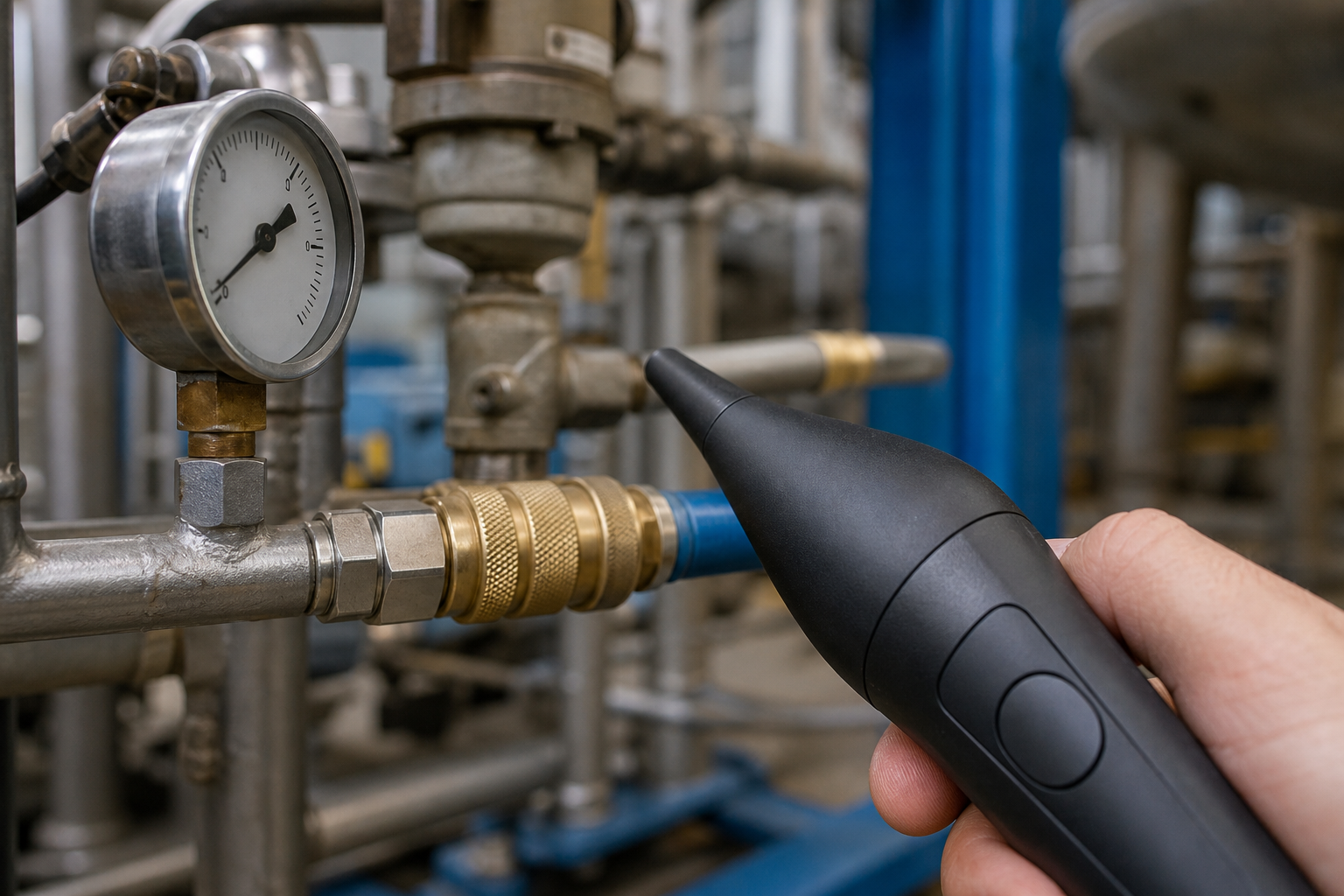
Ultrasound finds leaks you cannot hear over plant noise; soap finds the ones you already suspect.
An anonymized automotive components plant cut compressor electricity by roughly 12% in nine months after it combined a full ultrasonic survey (≈180 tagged leaks repaired in priority order), lowered header pressure by 0.3 bar after verifying critical tools, and put a VSD machine in trim with two base-load units instead of three fixed-speed machines hunting. No new “green” compressor brand was required—only metering and discipline.
What the air program actually controls
- Leak population — Tagged location, estimated orifice class, repair WO, and re-survey proof.
- Pressure policy — Lowest stable header that still feeds the worst critical tool—not tribal “we always run 7.5 bar.”
- Compressor control — Base/trim sequencing, blow-off minimization, and storage that prevents short-cycling.
- Air quality — Dryer and filter condition that protect pneumatic devices so “more pressure” is not compensating for wet air.
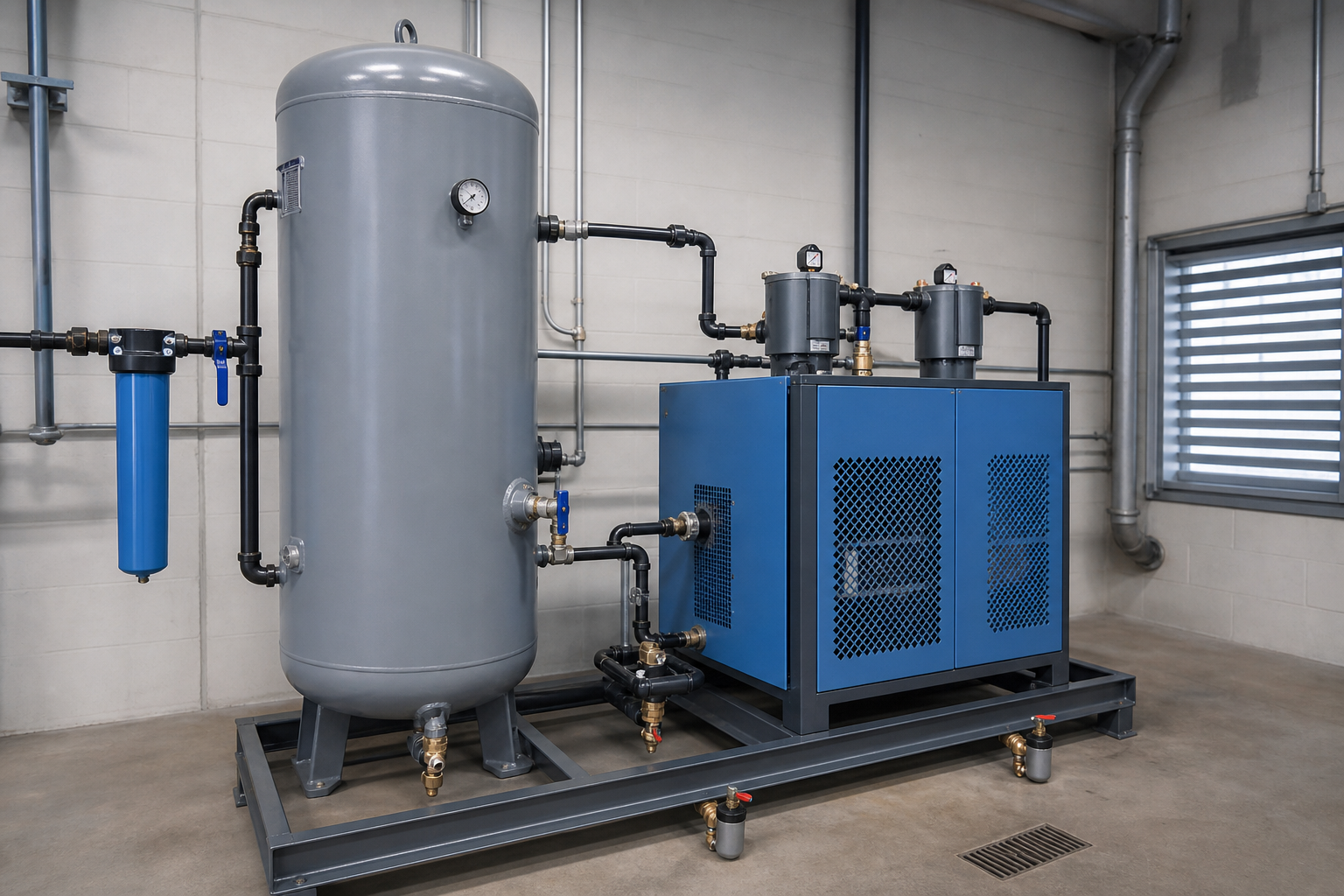
Storage and drying decide whether demand spikes become another online compressor or a pressure panic.
Situation: the eternal “temporary” blow-off
A packaging hall added open-pipe blow-offs for carton clearing during a rushed changeover. Eighteen months later they were still open on every shift. Compressor kWh climbed; nobody owned the temporary fixture. Closing them after flow metering on the branch—and replacing two with pulsed nozzles—removed more load than the previous year’s leak blitz on that building.
What this is not
This is not steam-trap condensate recovery, not industrial CHP heat balance, not power-quality harmonics, and not demand-response load shed of process heaters. Those constrain different energy surfaces. Compressed air owns generation, distribution, and the leak/artificial-demand population on the air network.
Numbers worth putting on the buyer slide
| Signal | Practical ranges plants use | | --- | --- | | Unmanaged leak share of generation | Often 20–30% | | Program target leakage | Often toward ≤10–15% sustained | | Pressure discipline | Each unnecessary 0.1 bar costs real kWh | | Payback on survey + repair + control | Commonly 6–18 months where electricity is metered |
Vendor “one leak = X €/year” claims need your tariff, hours, and orifice estimate—not a brochure average.
Failures that still look like an energy win
Repairing leaks without lowering pressure setpoints. Buying a bigger compressor instead of fixing artificial demand. Skipping flow meters so “savings” are stories. Letting temporary blow-offs become permanent plant culture.
Buyer checklist
- Metering — Flow and power on the compressor room, not only a monthly electricity bill.
- Leak register — Living tags in CMMS, not a PDF from last year’s contractor day.
- Pressure map — Critical tool minimums documented before anyone touches the setpoint.
- Control strategy — Who sequences machines, and how is blow-off detected?
- Ownership — Utilities vs area maintenance—who closes leak WOs on SLA?
Compressed air feels free because it is silent until the power invoice arrives. Programs that meter, tag, and sequence make that invoice negotiable again.