

Electrification programs change more than utility bills. They change available fault current, protective device clearing times, and the stickers hanging on doors that tell a technician how to dress. An arc-flash study printed the year before a VFD farm, a transformer upsize, or a new main-tie-main scheme is not a safety program. It is a historical document wearing a yellow vest.
Electronic permit-to-work owns job authorization. Power-quality captions own waveforms. SF₆-free switchgear memos own insulation-gas transitions. This brief owns what plants keep forgetting: incident energy is a function of the system you have now, not the system you had when the consultant visited.
What the study is supposed to be
A living arc-flash program, in industrial language:
- A short-circuit and coordination model that matches installed gear.
- Incident-energy and arc-flash boundary results at relevant equipment.
- Labels that match those results—and get replaced when results change.
- A MoC trigger list that forces restudy when the electrical system changes.
If any of those four is missing, PPE selection becomes folklore.

A faded label is not “close enough.” It is a wrong instruction with confidence stripes.
Electrification changes that invalidate last year’s stickers
Common 2025–26 plant moves that alter incident energy:
- Larger service transformers / lower impedance — Higher available fault current.
- Main-tie-main and new feeders — Different contribution paths during contingencies.
- VFD and regenerative bus additions — Protection and topology changes; also new cabinets that need their own assessments.
- BESS or CHP paralleling — Additional sources during certain operating modes.
- Relay setting campaigns — Faster or slower clearing that moves calories at the working distance.
Teams that add drives for energy savings and skip electrical MoC buy efficiency and outdated PPE guidance in the same CapEx.
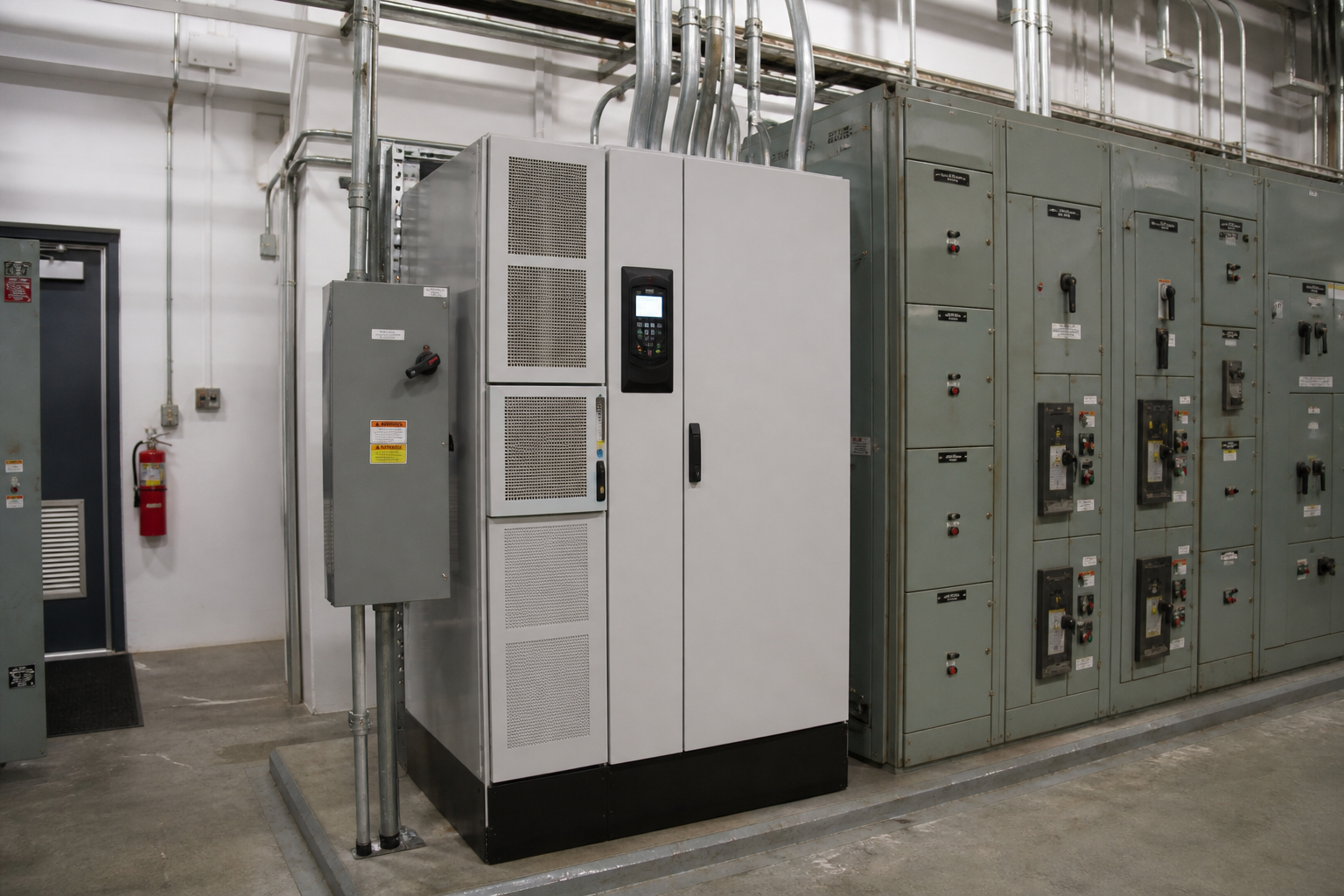
Every serious electrical change is a study input—not only a production win.
Label discipline that survives audits
| Practice | Healthy | Sick | | --- | --- | --- | | Study date vs install date | Study after last major electrical MoC | Stickers older than the new transformer | | Working distance assumptions | Documented and trained | Assumed from a template plant | | Task-based PPE | Matches label category / cal/cm² | “We always wear the green kit” | | Temporary feeds | Assessed or prohibited | Energized with leftover stickers |
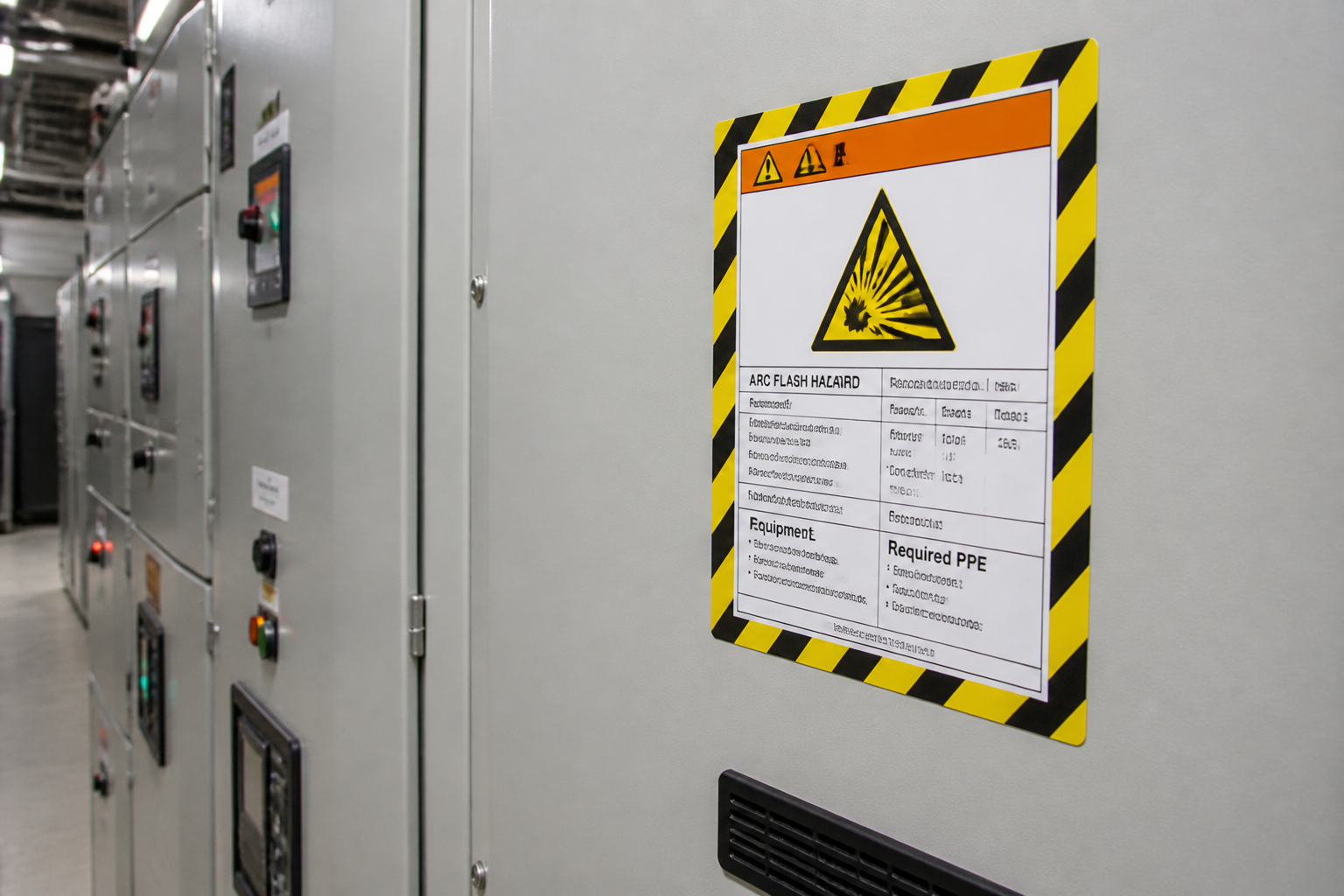
If the model changed and the label did not, the plant is lying to its own hands.
MoC triggers worth putting in writing
Restudy or targeted update when you:
- Change transformer MVA or impedance.
- Change main/tie/breaker ratings or relay settings that affect clearing time.
- Add paralleled sources (generator, BESS, CHP) that can contribute to a fault.
- Rebuild MCC lineup or add significant VFD capacity on a bus.
- Discover the model never matched field nameplates (the quietest failure).
Adjacent fences
Permit/LOTO briefs own authorization honesty on a job. Harmonics and PQ briefs own waveform quality. UPS island cascades own ride-through. SF₆ retrofit memos own gas technology swaps. This page owns arc-flash truth after electrification. Do not finish a VFD program and leave last decade’s calories on the door.