
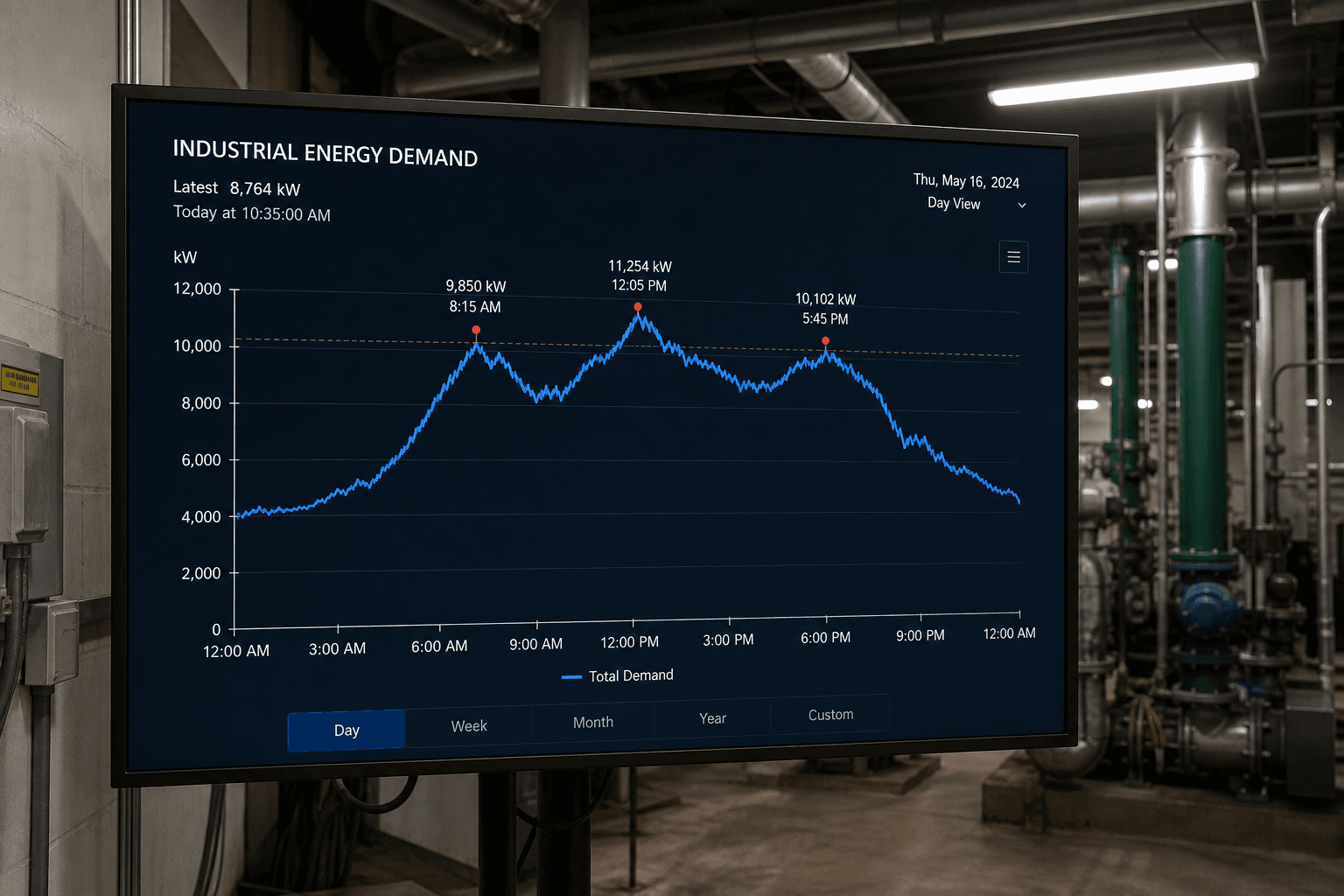
Below is a single plant day. The curve is the article. Annotations are the argument. Average kWh is the distraction.
kW
 ▲
 │                    *P2  ← oven bank + paint cure coincidence
 │                 *     *
 │              *           *P3  ← chiller + air compressors stacked
 │           *                 *
 │        *                       *
 │     *P1                           *     ← shift start surge (real)
 │  *                                   *
 │ *                                     *  *
 │*________________*______________________*____► time
 00:00            08:00                  16:00   24:00
This brief is an annotated demand curve, not a storage vendor pitch.
00:00–05:00 — The false calm
Night baseline looks virtuous. Two idling ovens and a leaky compressed-air header still buy reactive energy you will meet again on the invoice as “power factor” language. The curve is quiet; the meter is not innocent.
Annotation: baseline audits beat peak theater.
05:40 — Point P1 (shift surge)
Real load. Legitimate. The mistake is declaring P1 the enemy while ignoring later coincidences you can schedule.
Annotation: not every peak is stupid—only the unowned ones.
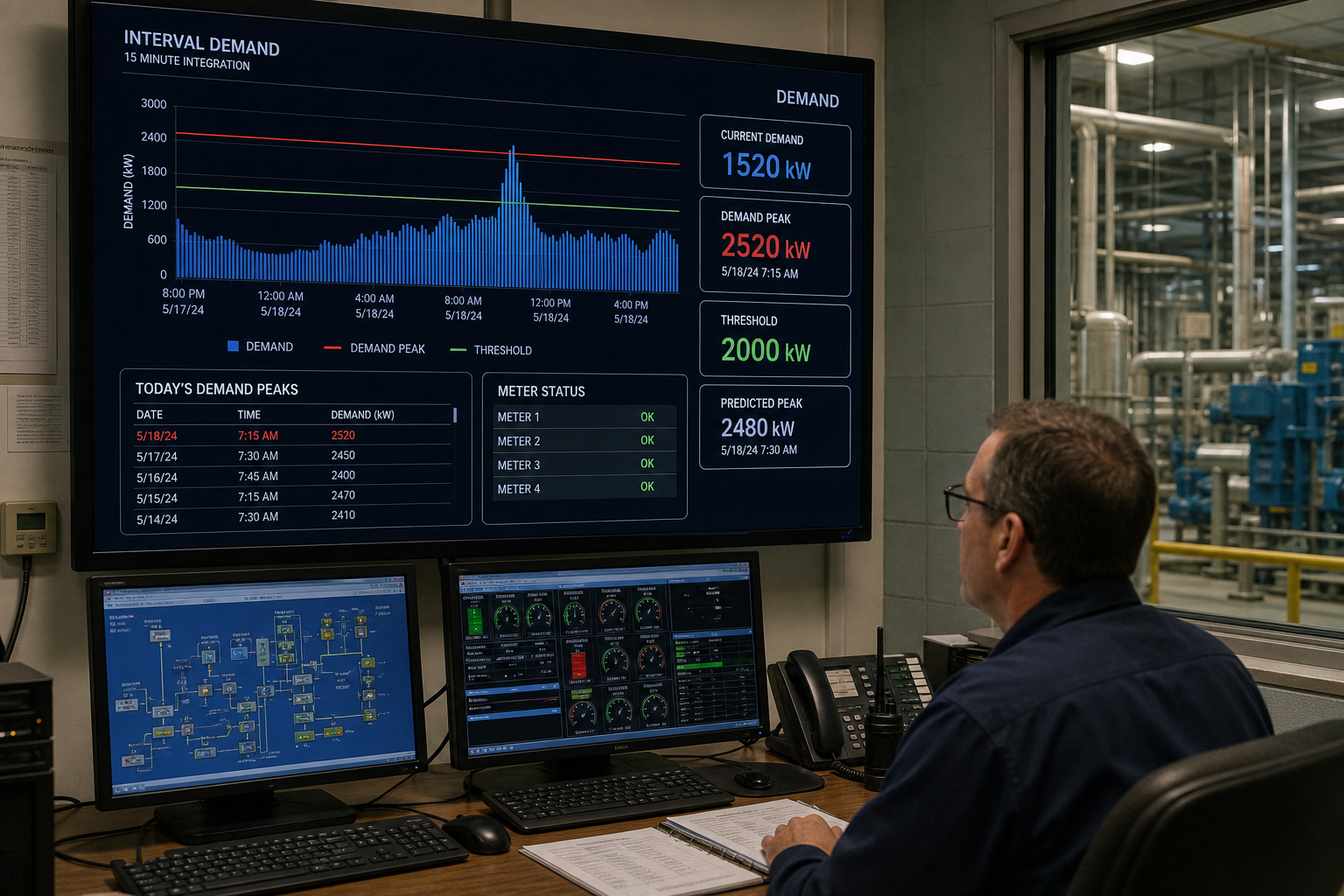
Interval peaks are legal events. Folklore averages are not a defense.
10:15 — Point P2 (process coincidence)
Oven bank ramp scheduled by production. Paint cure scheduled by a different supervisor. Same 15-minute interval. Tariff ratchet may remember this for months depending on contract structure.
Annotation: calendars are energy equipment. Two departments without a shared peak owner invent P2 forever.
14:05 — Point P3 (utility stack)
Chillers fight ambient. Compressors fight leaks. Nobody stacked them on purpose; nobody unstacked them on purpose either.
Annotation: leak programs and chiller setpoints are tariff tools—not only “sustainability.”
18:20 — The shoulder nobody staffs
Production leaves. Cleaning crews and dock doors invent a shoulder peak. Demand ratchets do not care that the plant “closed.”
Annotation: off-shift loads need an owner name on the curve review.
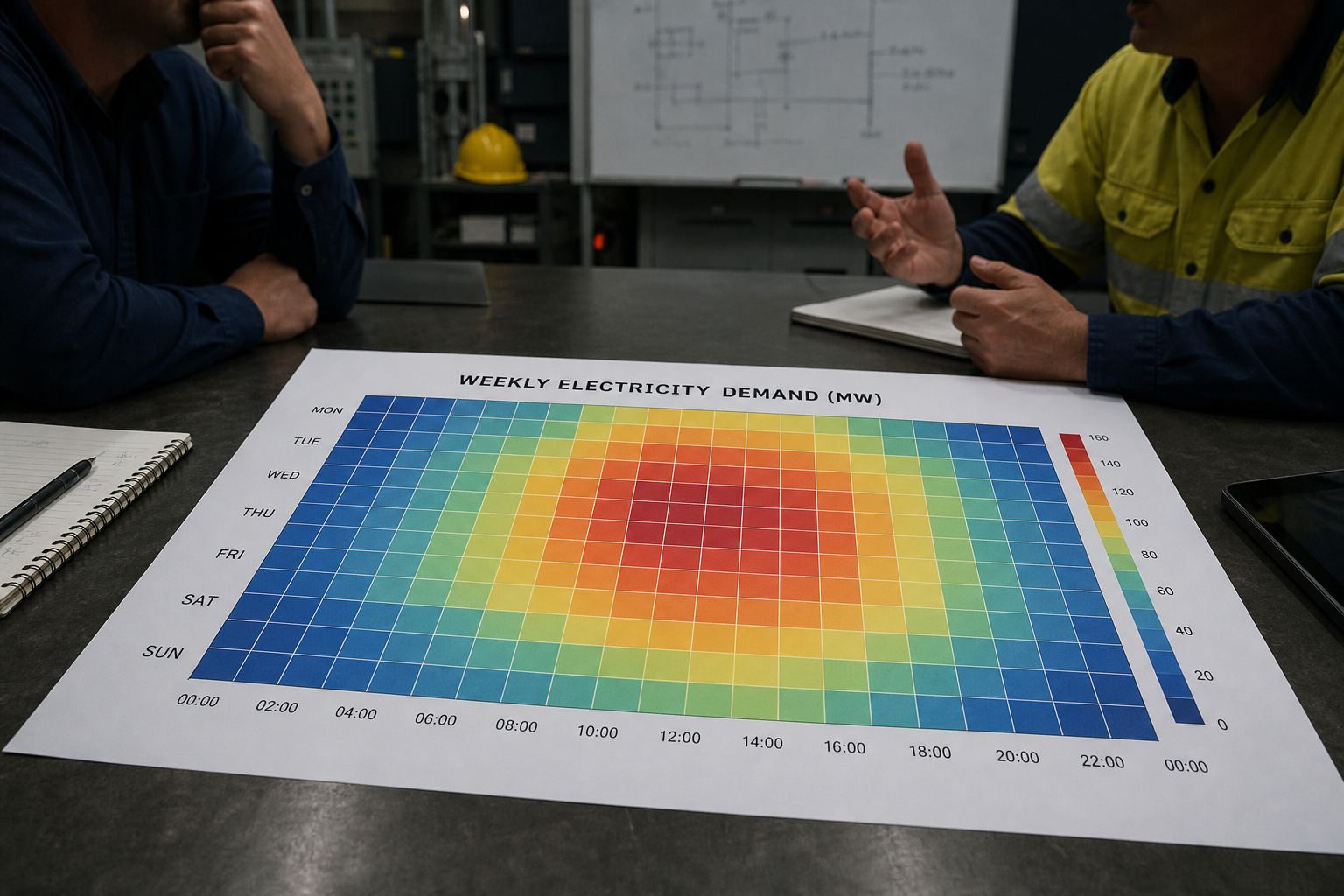
If cleaning can move the ratchet, cleaning is on the energy team.
Contract footnotes that change the reading
| Clause type | What to mark on the curve | Wrong response | | --- | --- | --- | | Monthly ratchet | Circle the max interval | “We’ll average better” | | Reactive charges | Mark PF events at night | Buy kWh only narrative | | Feeder mis-tag | Verify which meter owns which process | Optimize the wrong curve | | Demand response | Mark voluntary shed windows | Shed safety-critical islands |
Ownership
Facilities owns meters. Production owns calendars. Finance owns tariffs. Only a demand-interval owner may move schedules against the curve with authority.
Adjacent fences
BESS peak shaving owns storage dispatch economics. UPS process islands own ride-through cascades. Regenerative VFDs own cell-level recovery. Power-quality harmonics own distortion. None of them replace interval-curve literacy and coincidence ownership. Do not buy a battery to hide a scheduling feud.
Close
The bill is a story about minutes, not moods. Annotate one day honestly—or keep funding average-kWh speeches while P2 quietly renews the ratchet.