
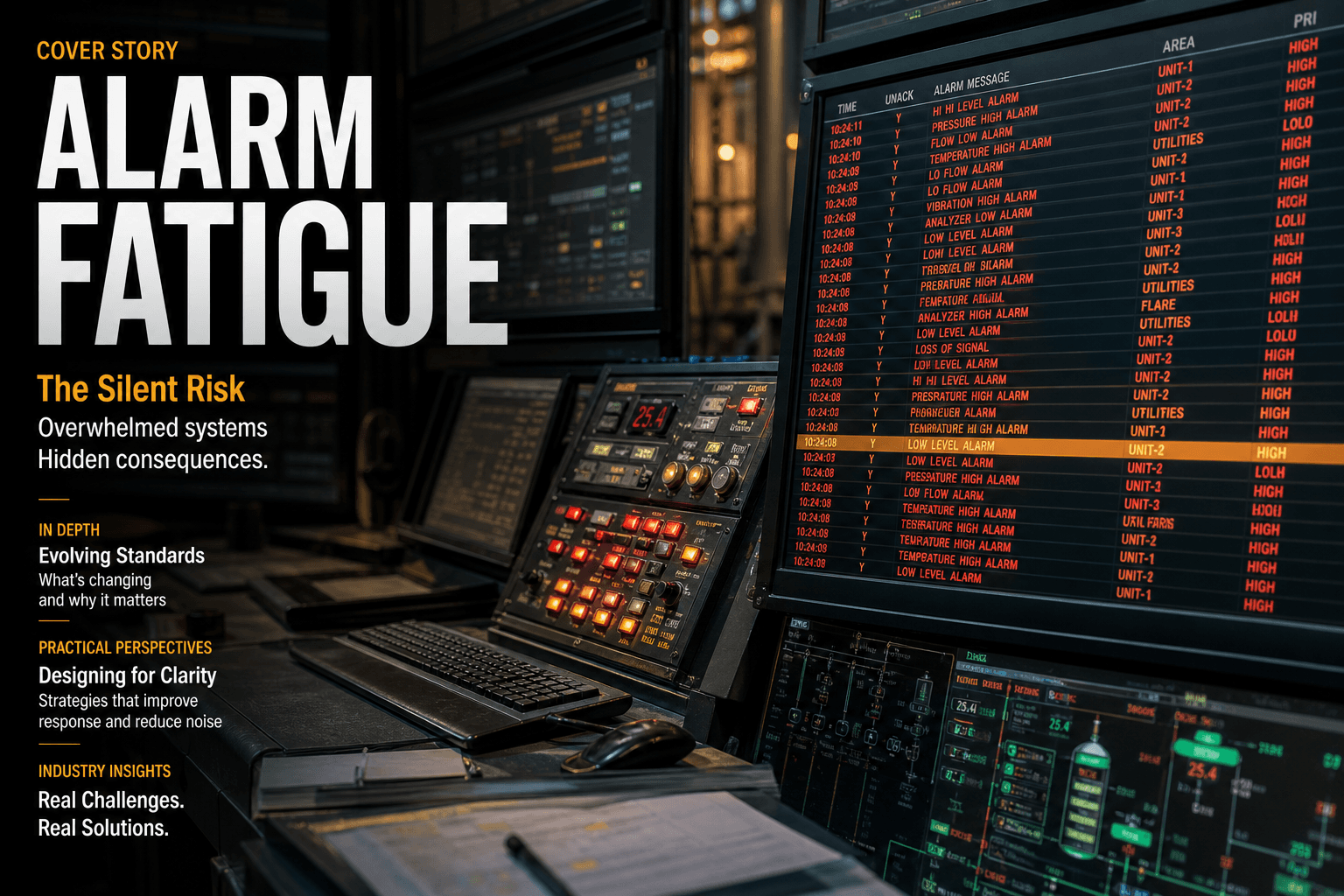
Chronograph: AF-90 · Unit Finishing / Utilities
Window: 14:03:11 → 14:15:40 local
Alarm rate peak: 48 / minute
Format: Minute-by-minute chronograph. Not an alarm-philosophy deck.
T+0:00 — First useful signal
PDAH-441 high (filter ΔP). Alone. Audible.
Operator opens faceplate. No second alarm yet.
T+0:40 — The bury begins
Chiller skid sheds a cluster: flow, temp, run-status, “comm fail” echoes.
HMI becomes a waterfall. PDAH-441 scrolls off the top.
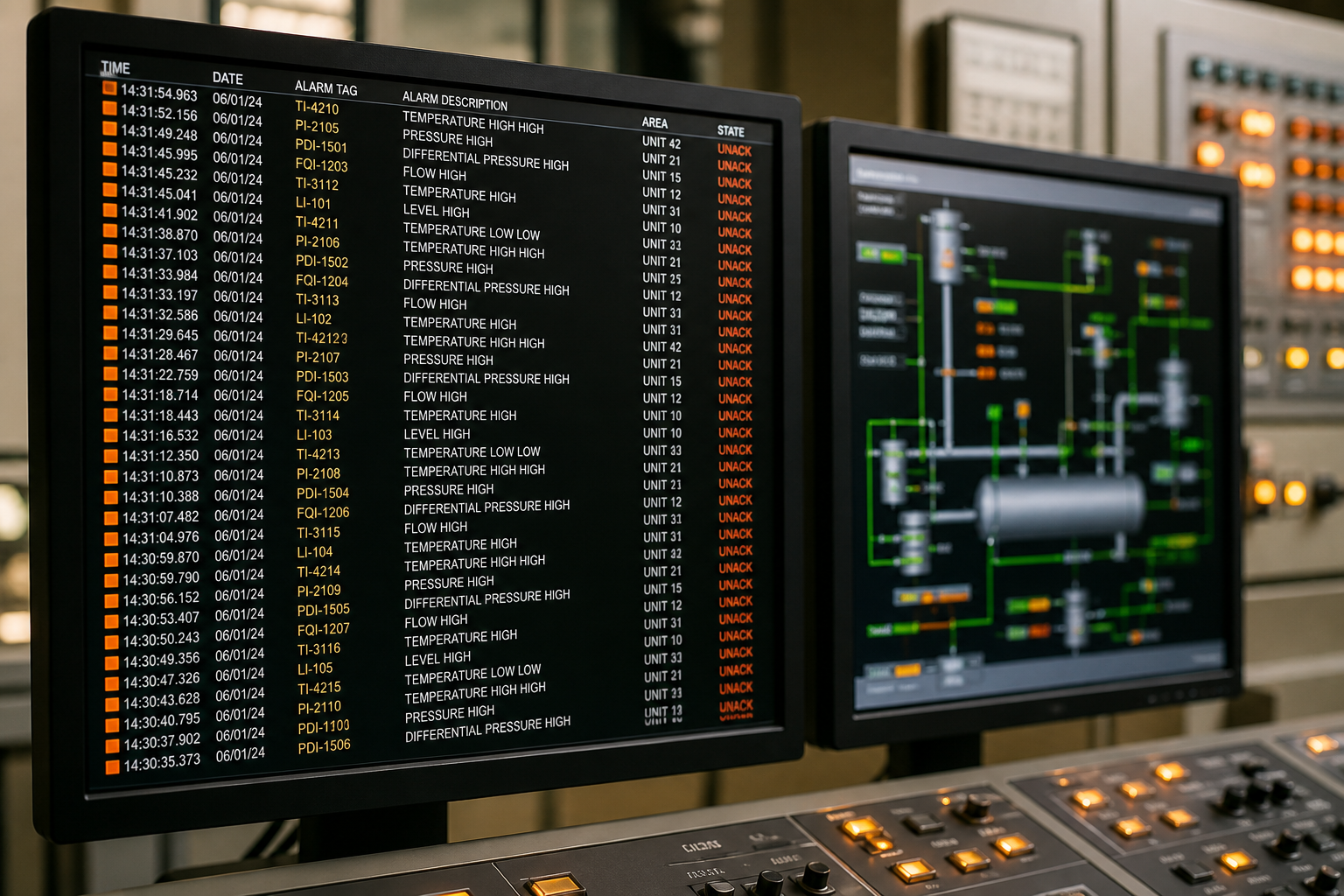
If the first fault leaves the screen, the chronograph already failed.
T+3:10 — Shelve culture
Six “nuisance” alarms shelved without ticket.
Including a low instrument-air pressure that was not nuisance.
T+7:55 — Wrong narrative
Radio: “chiller trip — restarting.”
Root still sitting in filter ΔP. Restart adds a second flood.
T+12:00 — Stabilization lie
Alarm rate drops because many points are bad-quality / forced, not because the process is healthy.
Night will inherit the forces (see handover disease).
| Minute | New alarms | Shelved | Operator focus (observed) | | --- | --- | --- | --- | | 0 | 1 | 0 | PDAH-441 | | 1 | 19 | 0 | chiller cluster | | 3 | 31 | 6 | restart chatter | | 7 | 22 | 2 | “make it green” | | 12 | 4 | 0 | rate looks calm |
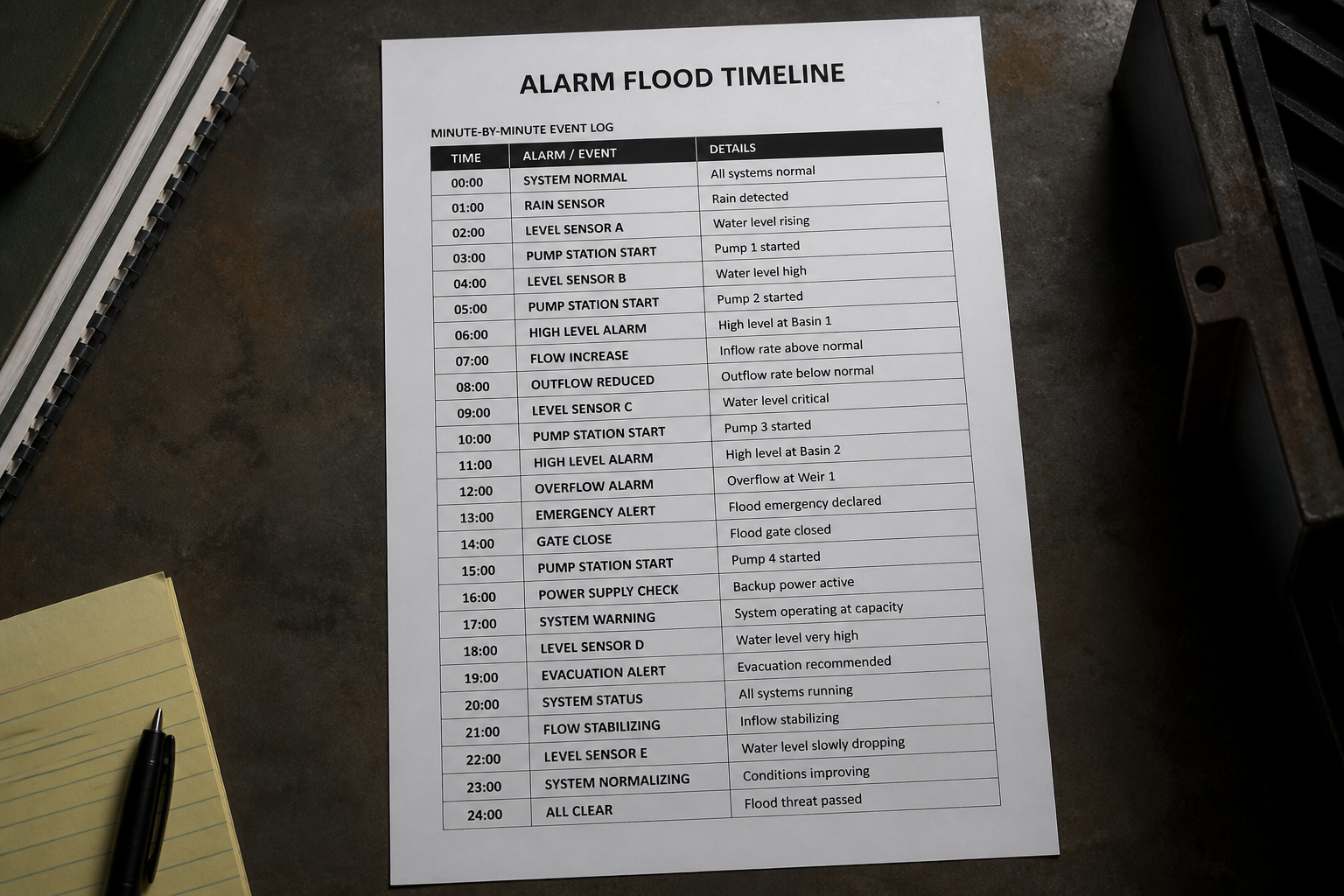
Calm rate ≠ calm plant.
Chronograph rules
- Pin first-out / first-useful; do not let it scroll away.
- Shelve requires reason code + expiry — never during flood without lead.
- Restarting a skid mid-flood is a MoC-sized decision, not a reflex.
- Post-flood: export chronograph + force/shelve list before shift end.
- Flood KPI is time-to-first-correct-action, not alarm count alone.
Adjacent fences
ISA-18.2 essays own philosophy. Handover redlines own night truth. Bypass audits own inhibit hygiene. AF-90 owns twelve minutes as evidence. Do not train operators to “clear the list.”
Close
The plant told the truth at T+0. The flood was how the truth was buried. AF-90 is the shovel log.