
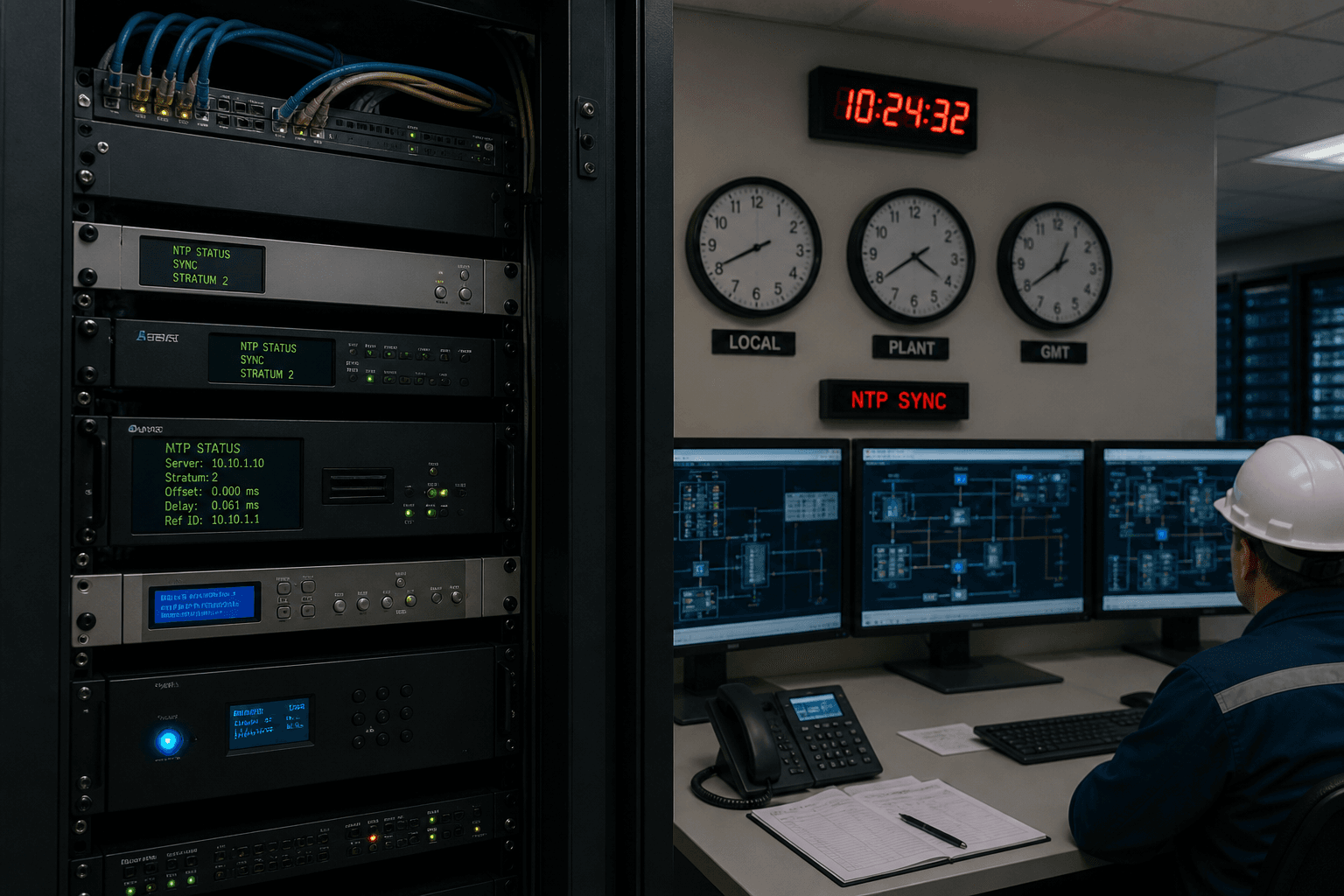
Time-series model은 timestamp가 “세상이 언제 일어났는지”를 의미한다고 가정한다. 플랜트에서는 historian, PLC, edge gateway, cloud feature store가 종종 수 초에서 수 분까지 어긋난다—network event 이후에는 때로 더 심하게. Soft sensor feature를 잘못된 clock 위에서 quality label과 join하면 존재한 적 없는 lead-lag를 만들어낸다. Compression trap은 storage에서 온 false feature를 소유한다. Tag alias는 익숙한 이름 아래의 잘못된 signal을 소유한다. 이 brief는 clock integrity를 AI 전제조건으로 소유한다.
Skew가 태어나는 곳
| 원인 | 전형적 실패 | | --- | --- | | Free-running PLC clock | 누군가 batch genealogy가 “이르다”고 알아챌 때까지 drift | | Historian 대 MES 시간대 | Join에서 DST와 UTC 혼합 | | Upload 시점에 stamp되는 edge buffer | Event time이 ingest time으로 대체됨 | | NTP outage / 잘못된 stratum | Island들 사이의 침묵하는 skew |
모델은 사과하지 않는다. 거짓말에 맞춰 fitting할 뿐이다.
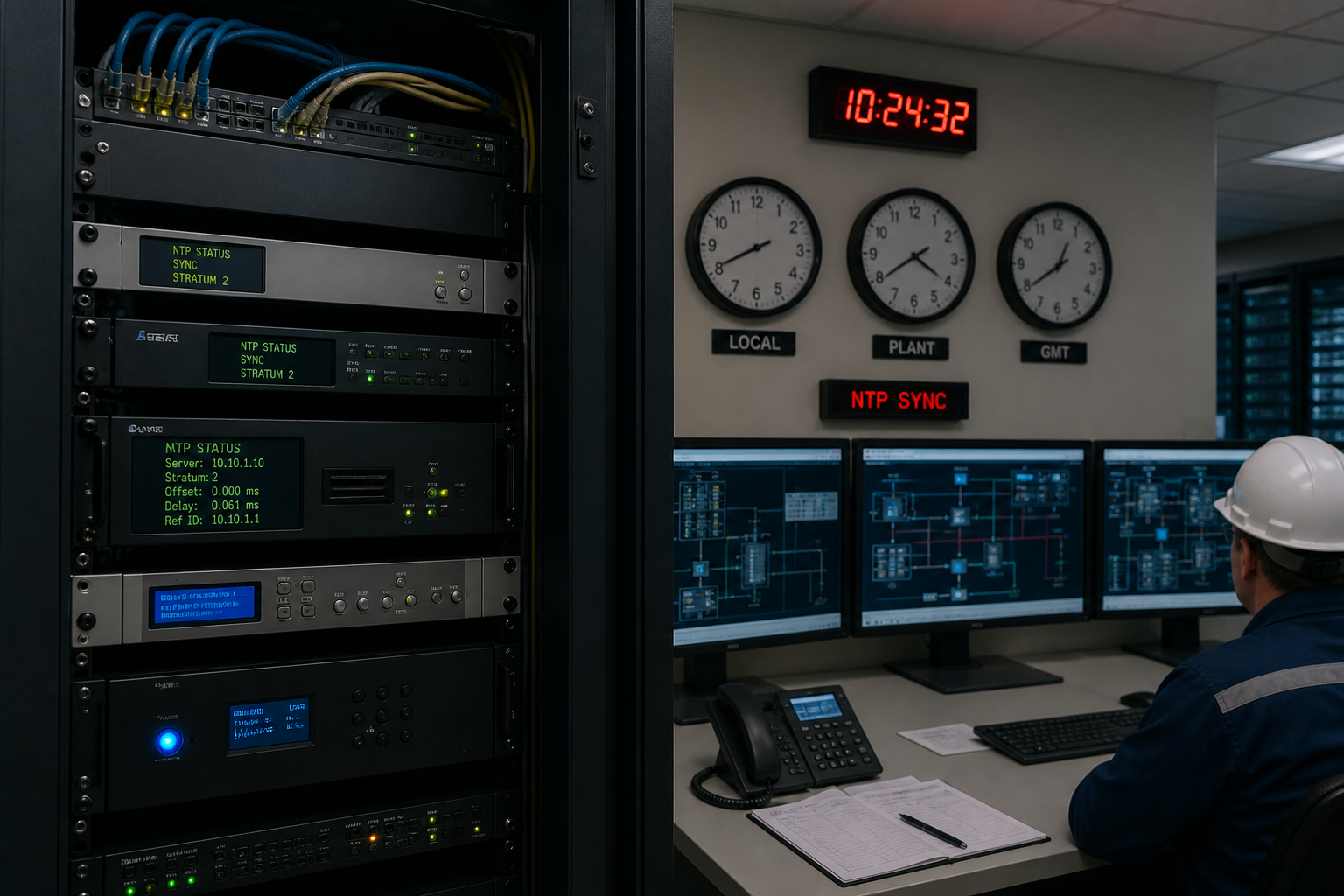
두 시스템이 “지금”에 동의하지 않는다면, causality는 선택 사항이다.
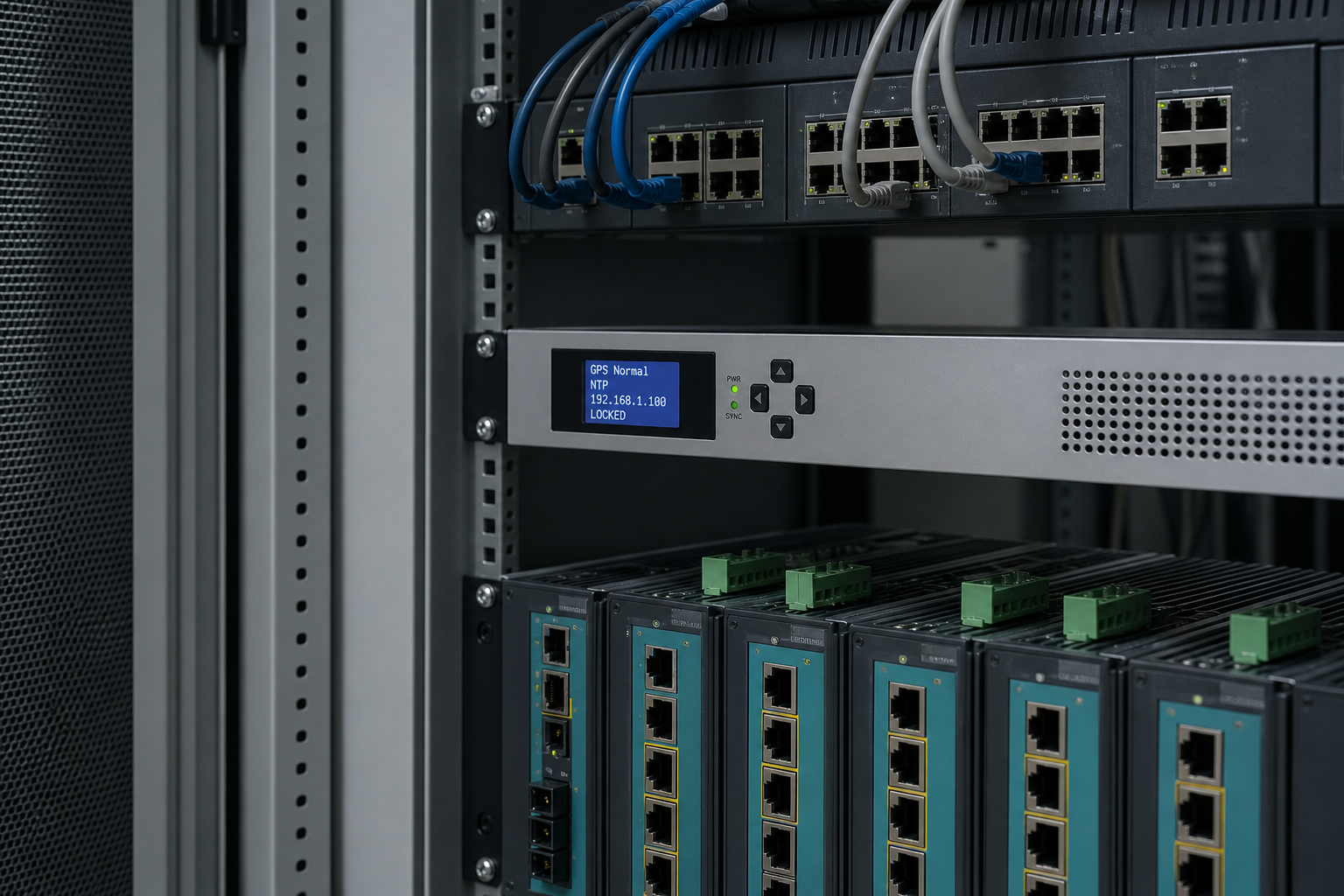
시간 분배는 플랜트 infrastructure다—IT의 배려가 아니다.
Sequence를 정직하게 지키는 통제
- 플랜트 time authority(NTP/PTP)를 선언하고 offset alarm을 process alarm처럼 모니터링하라.
- Feature pipeline에서 event time과 ingest time을 분리해서 저장하라.
- Source clock offset이 고정된 threshold를 넘으면 training join을 거부하라.
- Model drift 시, “더 세게 retrain”하기 전에 “시간이 깨졌나?”를 먼저 물어라.
- DST와 timezone 규칙을 tag dictionary와 같은 MoC에 문서화하라.
Oven setpoint와 scrap 사이의 causal AI story를 “증명했다”고 여겼던 익명화된 packaging line은 사실 store-and-forward outage 이후 upload 시점에 stamp된 MES scrap timestamp를 join하고 있었다. Oven이 유죄처럼 보였다. 유죄는 clock이었다.
Adjacent fences
Historian compression ML은 storage artifact를 소유한다. Tag alias collision은 identity 거짓말을 소유한다. Override telemetry는 human force label을 소유한다. SOP RAG delta는 document version skew를 소유한다. 이 페이지는 causal poison으로서의 time skew를 소유한다. OT 데이터 위의 foundation model을 축하하고 NTP를 검증되지 않은 checkbox로 남겨두지 말라.