
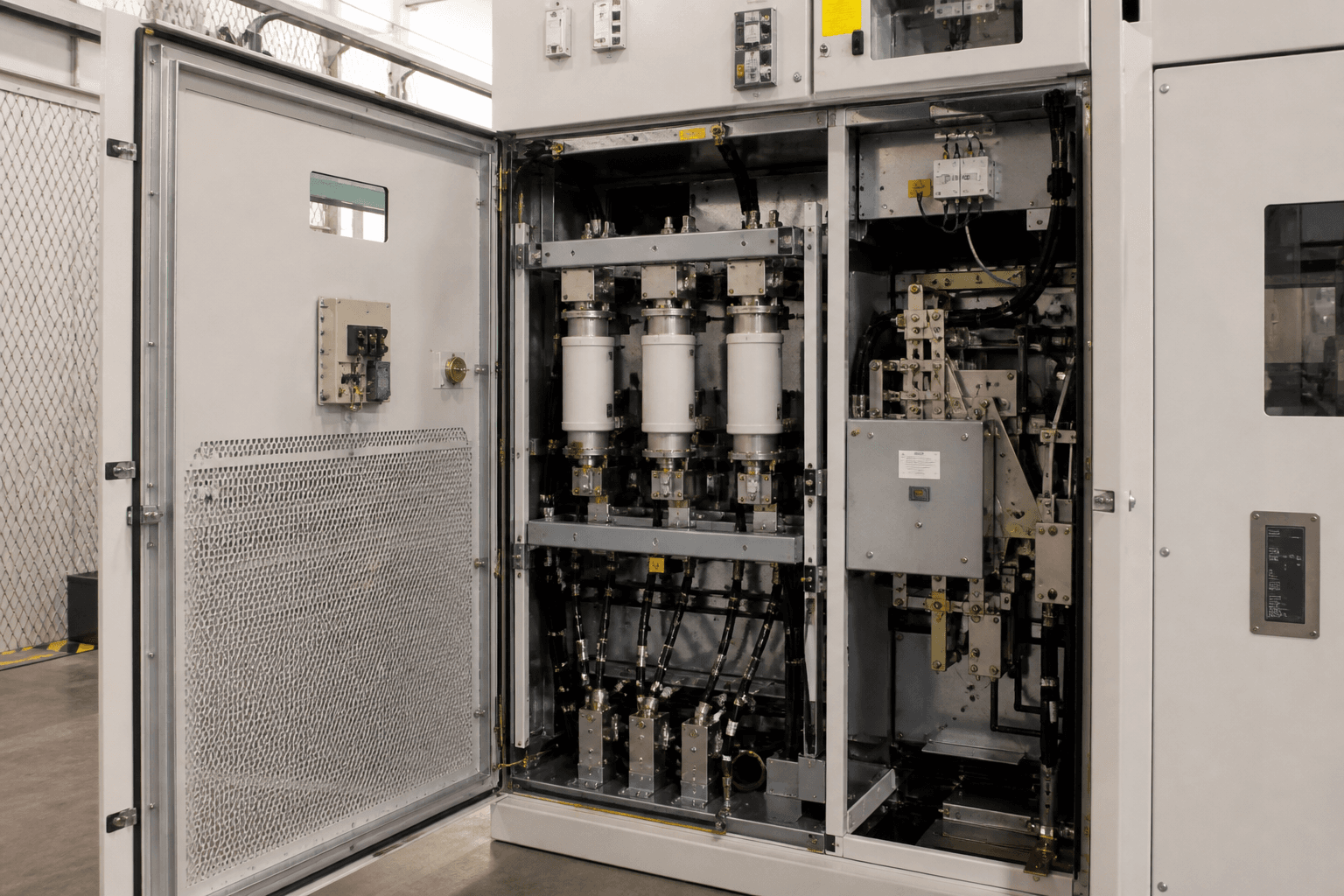
Vacuum circuit breakers dominate a large share of industrial medium-voltage switching. When they work, they look boring. When vacuum integrity collapses or contacts oxidize into heat, the failure mode is not a polite dashboard—it is a breaker that will not interrupt when the fault arrives. SF₆ retirement memos own gas-technology swaps. Transformer PD owns oil-filled iron. This brief owns vacuum interrupter health as a scheduled truth, not a hope attached to the last successful switching event.
Two tests that still earn their truck time
| Test | What it asks | What “bad” implies | | --- | --- | --- | | Vacuum integrity / withstand | Can the bottle hold insulation strength? | Leak, loss of vacuum, rising breakdown risk | | Contact resistance (micro-ohm) | Are contact interfaces still clean and tight? | Heating, wear, poor previous operations |
Together they form a minimum industrial language. Waveform toys and marketing “digital twins” do not replace them. Digital recording does help—if results land in the same CMMS genealogy as the breaker serial.
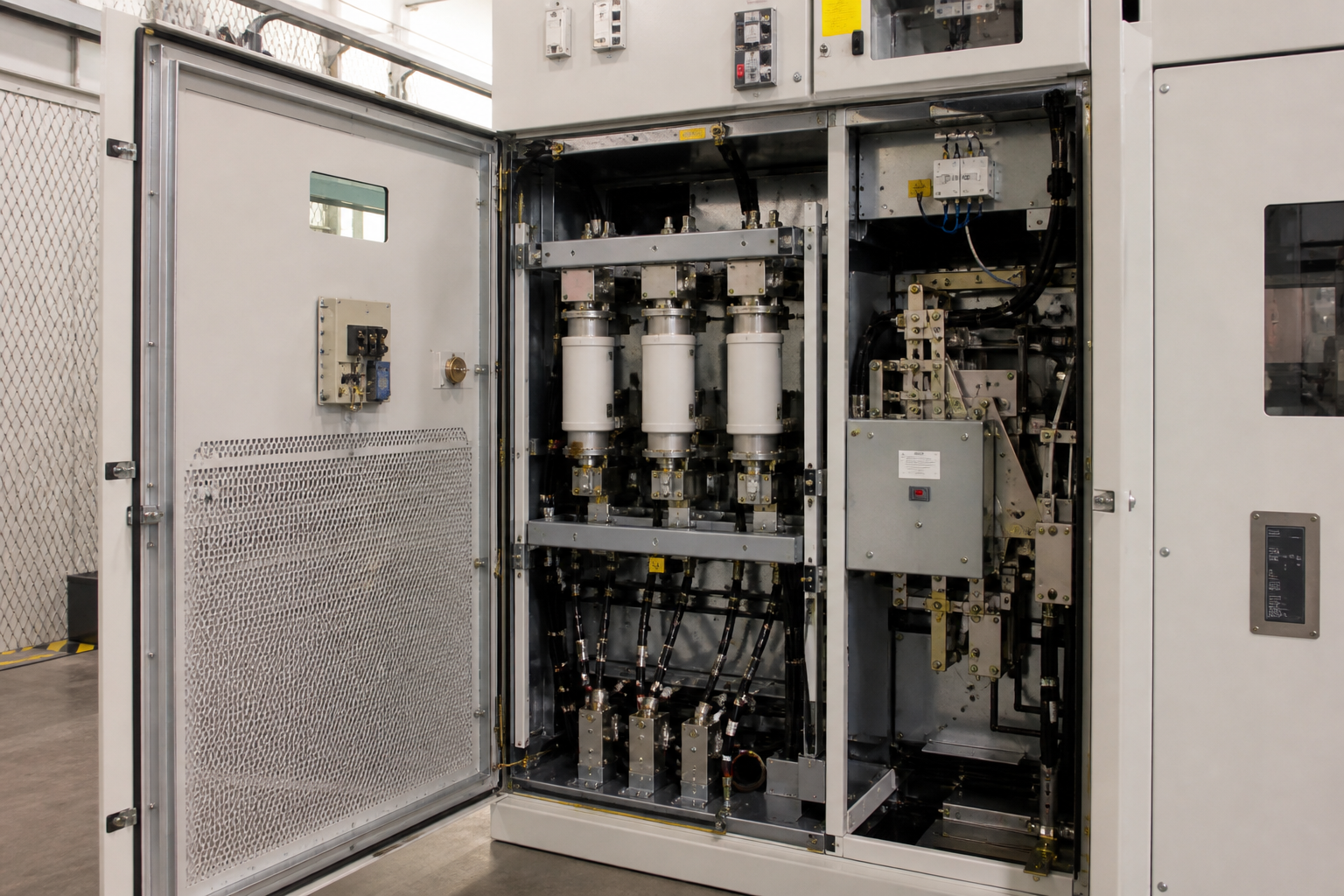
A breaker that closed yesterday is not certified for tomorrow’s fault.
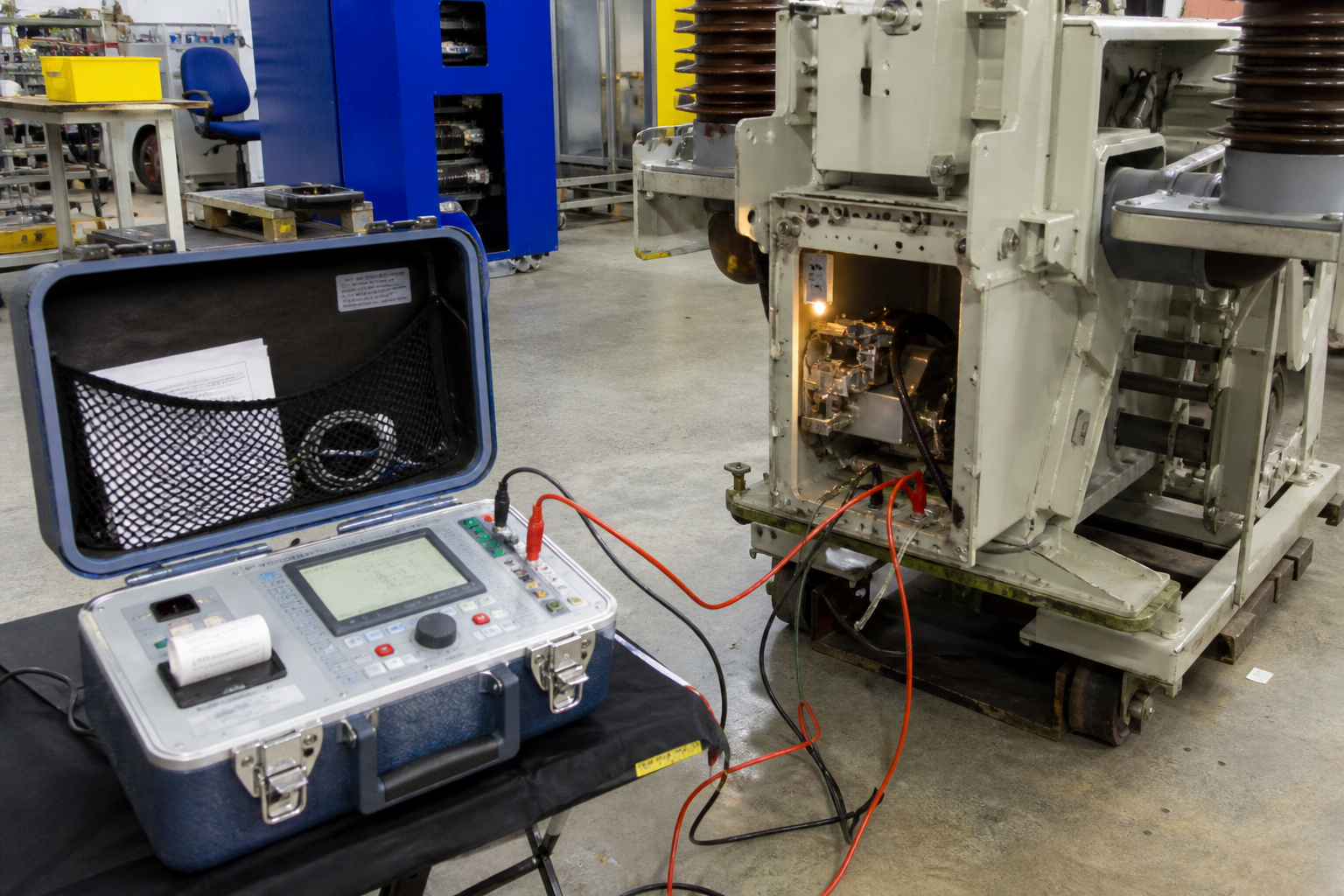
Integrity without a stored result is a story told in the truck.
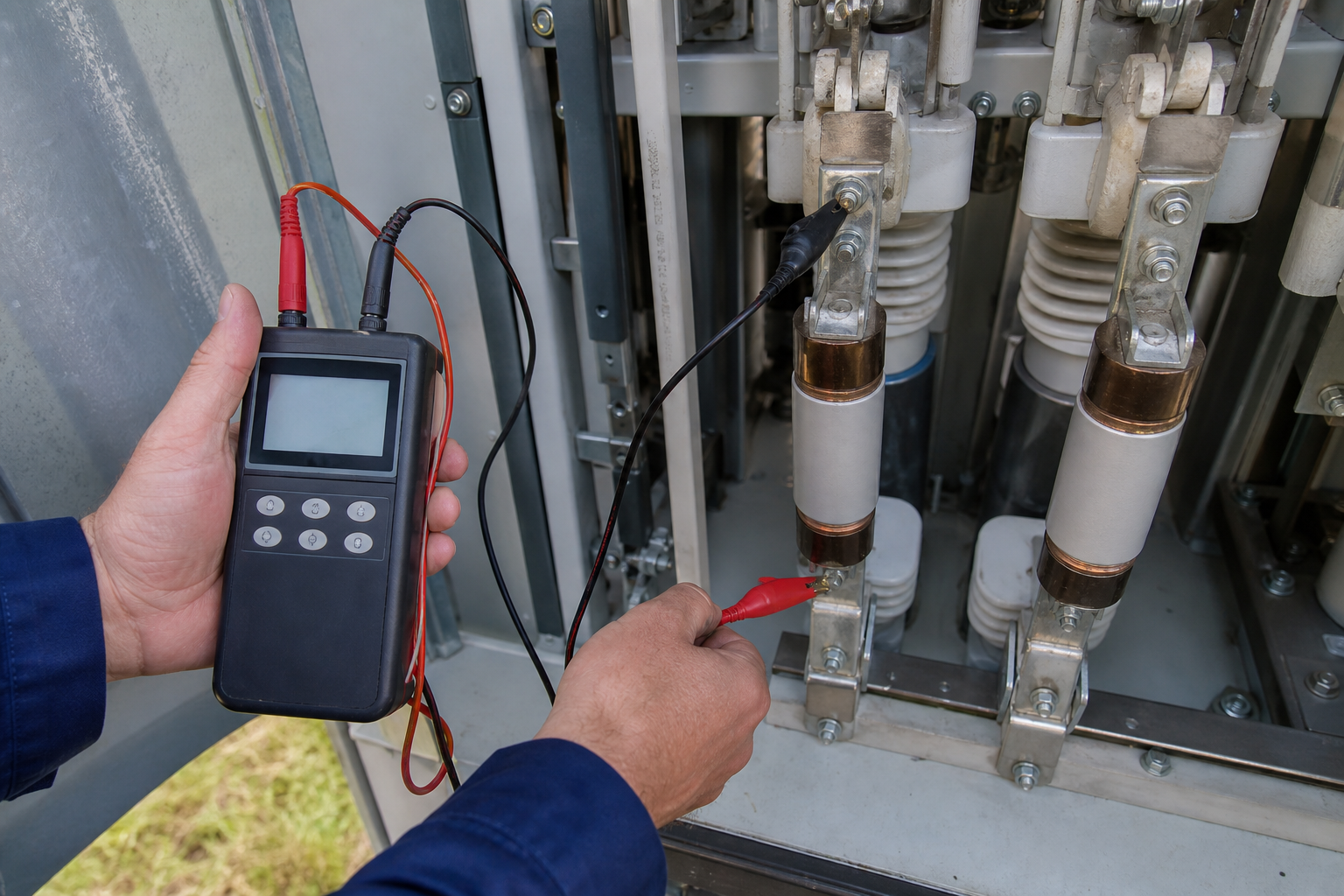
Micro-ohms trend; single snapshots lie.
A calendar that matches risk
Practical plant rules:
- Baseline every critical feeder breaker after install and after major arc events.
- Trend contact resistance—do not only compare to a one-time “pass.”
- Retest after slow operations, capacitor switching campaigns, or suspected restrikes.
- Treat rising resistance with load history; heat is a process, not a surprise.
- Keep bottles and poles under spare strategy—vacuum parts are not infinite shelf magic without storage discipline.
An anonymized process plant that only tested VCBs “when something felt wrong” discovered a bottle on a main feeder with integrity margins that would not survive a real fault study. The outage to replace it was planned. The alternative was not.
Adjacent fences
SF₆-free switchgear owns insulation-gas transition CapEx. Arc-flash studies own PPE after electrification. MV cable joint PD owns accessories. Relay trip decodes own post-event truth. This page owns vacuum interrupter testing as living MV reliability. Do not retire SF₆ and forget the bottles that already replaced it.