
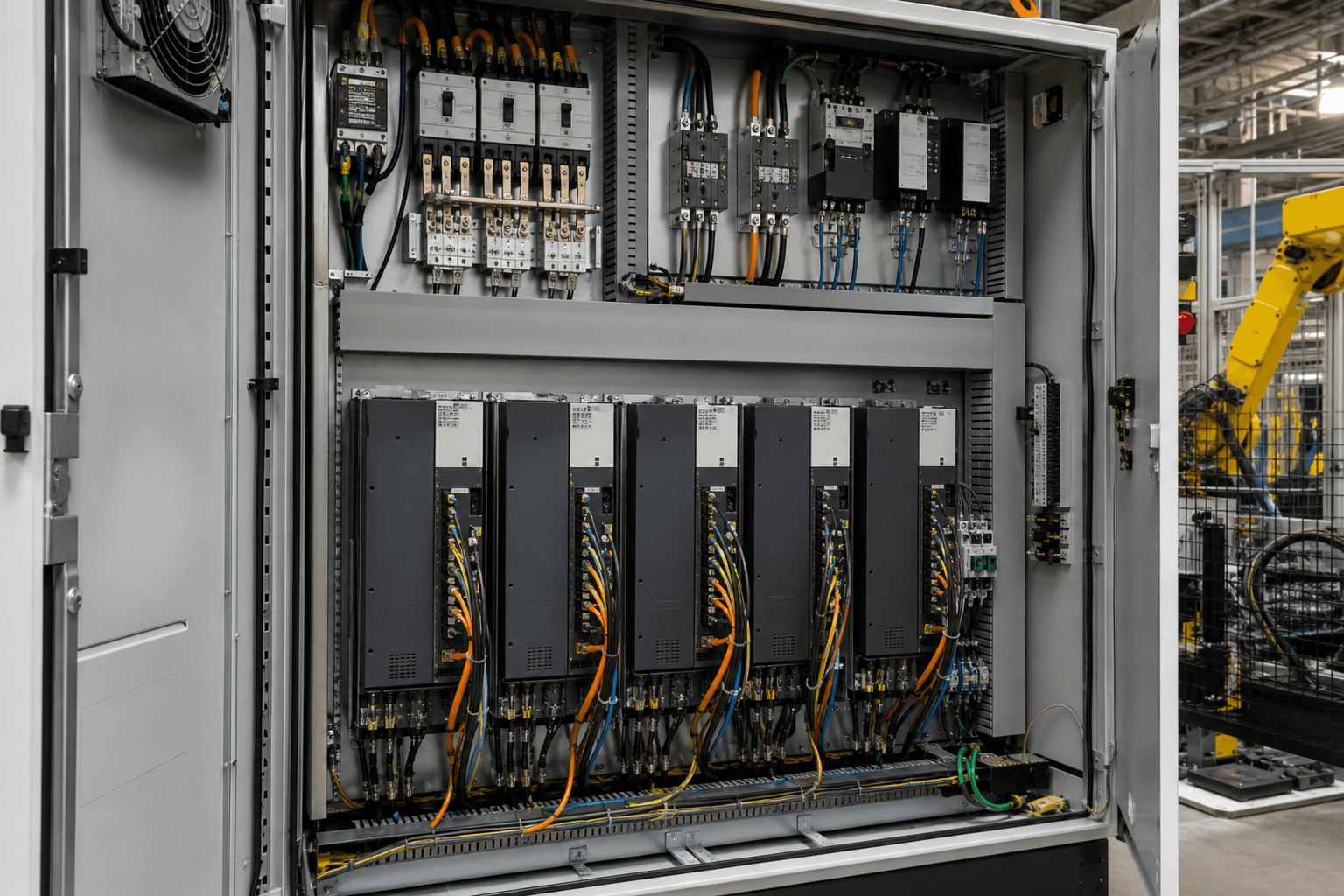
The first complaint was not a green KPI. It was a paint-shop robot cell that ran hot braking resistors all shift, tripped a harmonic filter on a shared feeder, and still showed “efficient VFDs” on the CapEx slide. Only later did energy and controls admit the cell dumped recoverable axis energy as heat while neighboring axes drew full line power—because nobody owned the DC bus as a plant utility.
Regenerative motion sits in ownership fog. Controls owns the drive parameters. Maintenance owns the resistor packs. Facilities owns the feeder and filter. Finance owns the kWh target. Nobody owns the living chain from axis deceleration → DC-bus voltage → regen path → metering → thermal and harmonic consequences.
This brief is that chain—not a servo catalog, and not another plant harmonics manifesto.
Symptom → likely owner (before you blame the utility)
| What you see | Often not “the grid” | First place to look | | --- | --- | --- | | Resistor banks glowing / HVAC load up | “Normal braking” | Missing regen enable, bus sharing | | Harmonic filter trips near robot cells | “Utility soft” | Simultaneous regen events, choke sizing | | High cell kWh despite “efficient motors” | “Tariff myth” | Meter at DC bus vs line only | | DC overvoltage faults on stop | “Drive firmware” | Shared-bus capacity, dump threshold | | CapEx ROI misses energy model | “Finance error” | Assumed regen never commissioned |
The point of the table is ownership: drives own parameters; facilities owns feeders; production owns takt—but only a named regen energy owner connects them before heat becomes the energy program.
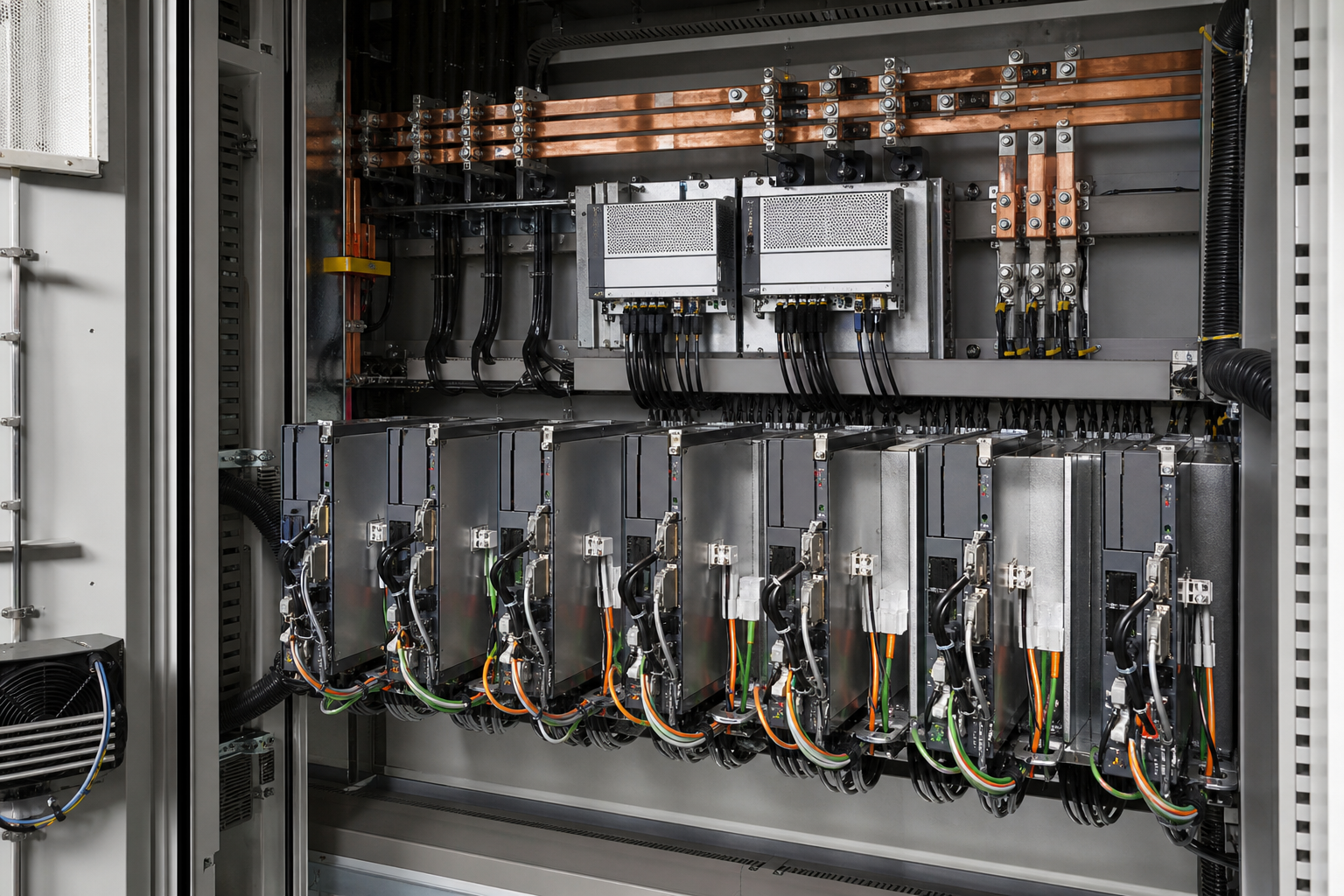
A line-side kWh meter alone cannot see recovered axis energy.
What a regen / shared-bus program actually controls
Regeneration is not a checkbox on a drive HMI. It is architecture: which axes share a DC bus, how overvoltage thresholds interact with stop categories, whether energy returns to the line or to peer axes, and how metering proves the story. Mature cells run commissioned regen with recorded enable states, thermal maps of resistor banks as failure evidence, and energy models keyed to real motion profiles—not brochure duty cycles.
Shared DC buses amplify both savings and mistakes. One mis-tuned axis can ride the bus into trips that look like “random” production stops. Sites that buy SiC drives for efficiency theater without naming a regen owner buy quieter cabinets and the same resistor heat.
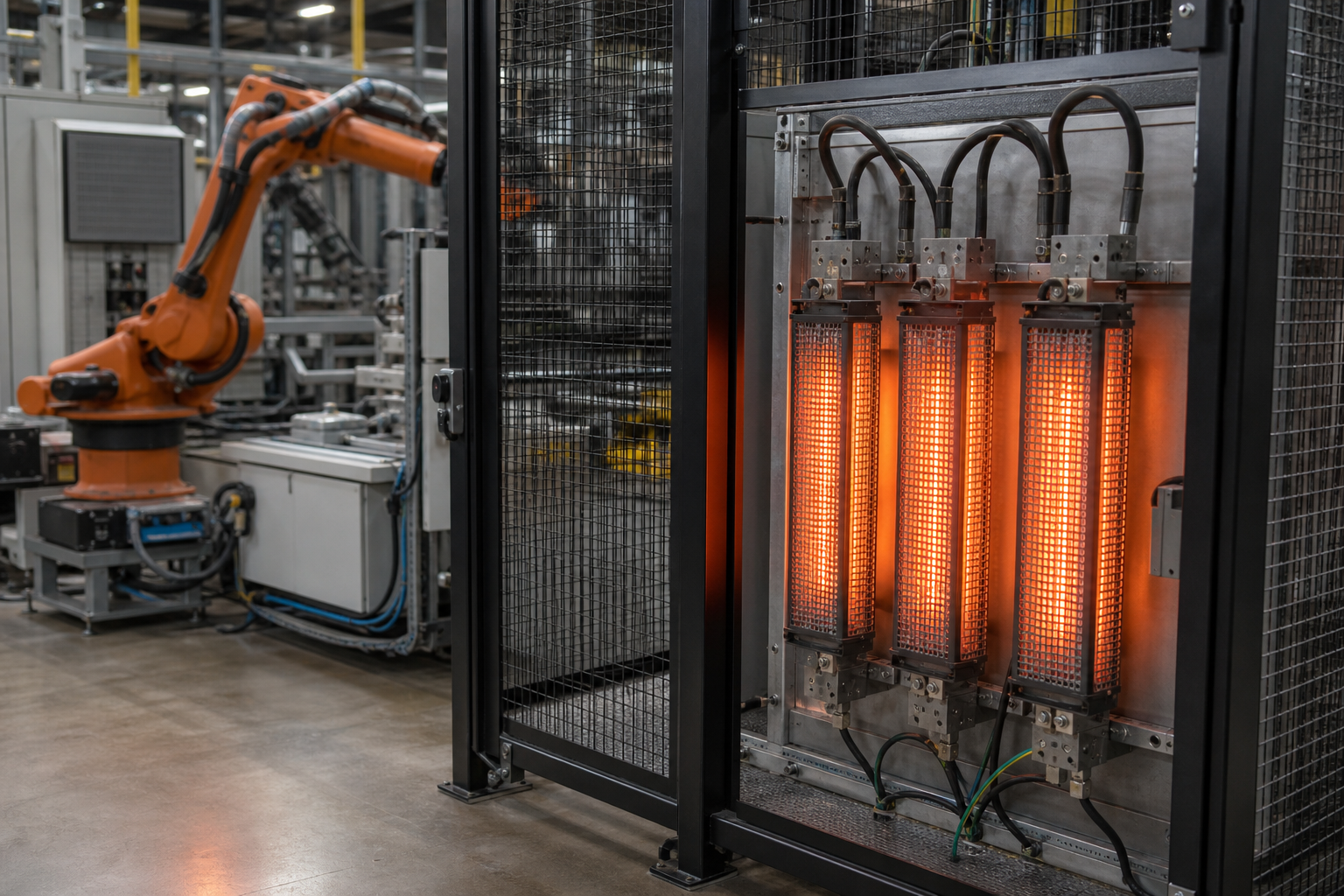
Hot resistors are an energy program confession.
An anonymized cell that should have been a bus design review
An appliance line lost six percent of monthly cell energy target and eight unplanned stops after a “regen upgrade” left resistor dump active on three axes and true bus sharing on two others. Ticket trail: parameter templates cloned without bus topology drawings, harmonic filter sized for motoring only, and no meter on the DC link. Post-mortem was not utility softness. It was a missing rule: any regen CapEx requires bus drawing, meter point, and resistor thermal trend under change control—before production sign-off.
Magnitudes without brochure theater
Exact recovery percentages belong to your motion profile and your OEM. Ordering is portable: proven kWh at the cell outranks drive brochure percent; bus drawings outrank cloned parameter sets; resistor heat outranks green CapEx slides. Plants that only meter the main incoming will keep celebrating “efficient motors” while braking energy quietly pays the HVAC bill.
Adjacent topics that stop here
Industrial power-quality briefs own harmonics and feeder health generally. BESS peak shaving owns facility storage. SiC/GaN power electronics own device and converter physics. Robot dress-packs own cable flex. None of them own shared DC-bus topology, regen enable discipline, or cell-level recovery metering. Do not fund a plant filter and expect multi-axis regen ROI.
Questions that replace hope
Who can disable regen without recorded risk acceptance? When did you last trend resistor bank temperature against axis stop counts? Is there a DC-link meter, or only line-side kWh? If the drive OEM disappeared for a month, would your CMMS still know bus topology, regen firmware revisions, and which cells share which DC link?
Braking energy is not destiny. It is either recovered on a owned bus or converted into heat and harmonics you will pay for twice. Draw the bus, meter the recovery, and treat regen as plant energy equipment—because the resistor already does.