
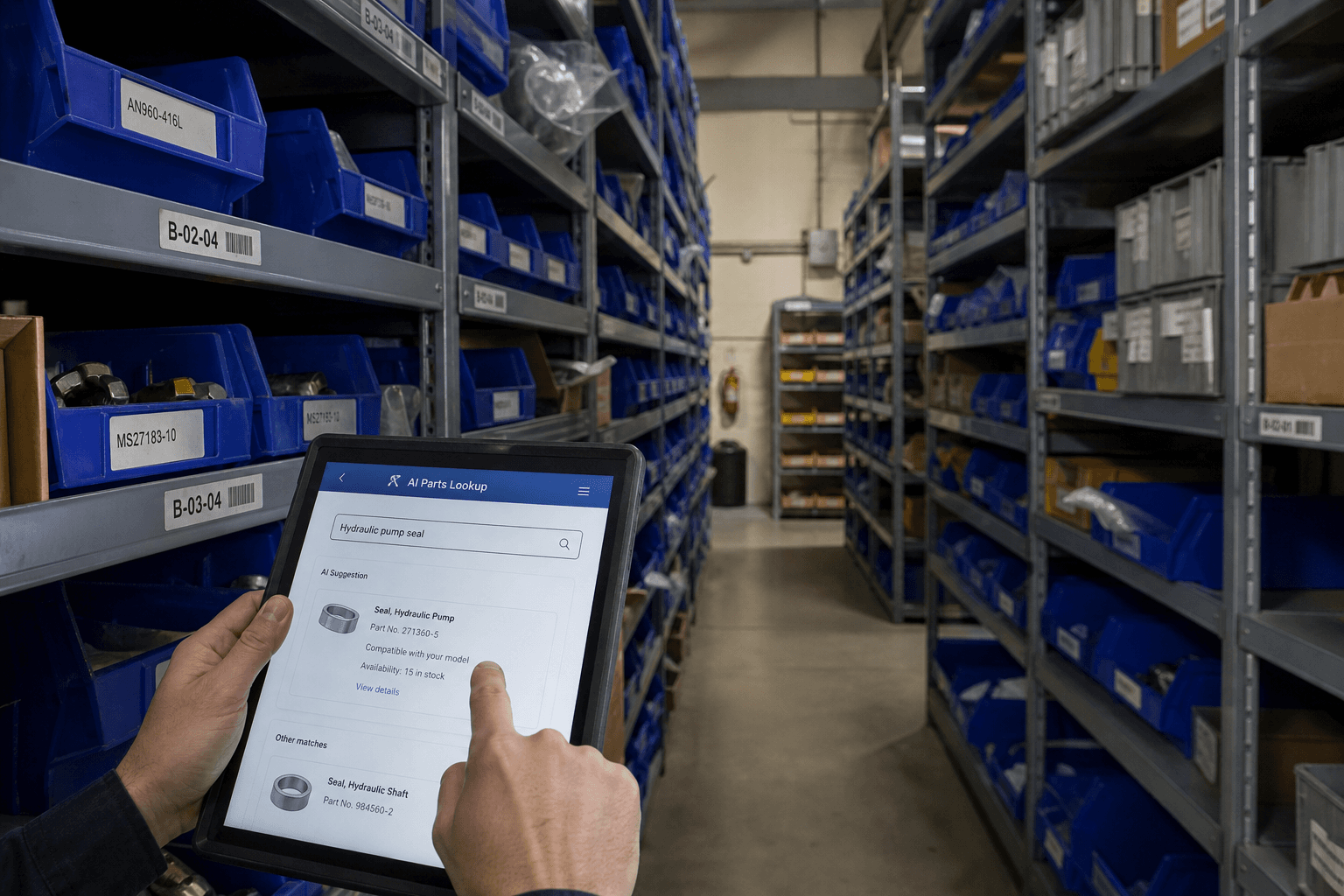
The weekend crew asked the maintenance assistant for a seal kit on a legacy gearbox. The reply looked perfect: OEM-style number, dimensions, even a torque note. Stores issued a near-match from a different series. The rebuild leaked on Monday. The part number had never existed in the manufacturer catalog—or in the plant’s item master.
Industrial RAG for manuals is not enough when the answer includes identifiers that must resolve to inventory. Hallucinated SKUs are a different failure mode from missing citations.
Where fluency becomes inventory risk
Unbounded generation. Free-form part numbers without a catalog lookup are fiction with formatting.
Fuzzy cross-reference. “Equivalent to…” without engineering approval is how wrong elastomers and wrong ratings enter the bay.
Cached wrong answers. Once a hallucinated SKU is typed into a WO, the next retrieval may treat it as plant truth.
Guardrails that belong in the agent
- Tool-required catalog search: no SKU in the answer unless the item master returns a hit.
- Show match method (exact, superseded, engineering-approved alternate)—never silent invention.
- Dual control for first-time issues of safety-critical or rotating-equipment parts.
- Reject and log any model output that fails catalog validation; do not “soft suggest” the fake number.
This is not predictive maintenance scoring, not spare-parts min/max optimization folklore, and not general RAG citation ledgers alone. It is identifier integrity for MRO AI.
Do not measure the assistant by how fast stores picks. Measure it by how often the pick matches a real master record.
Confidence is not a stock code.