
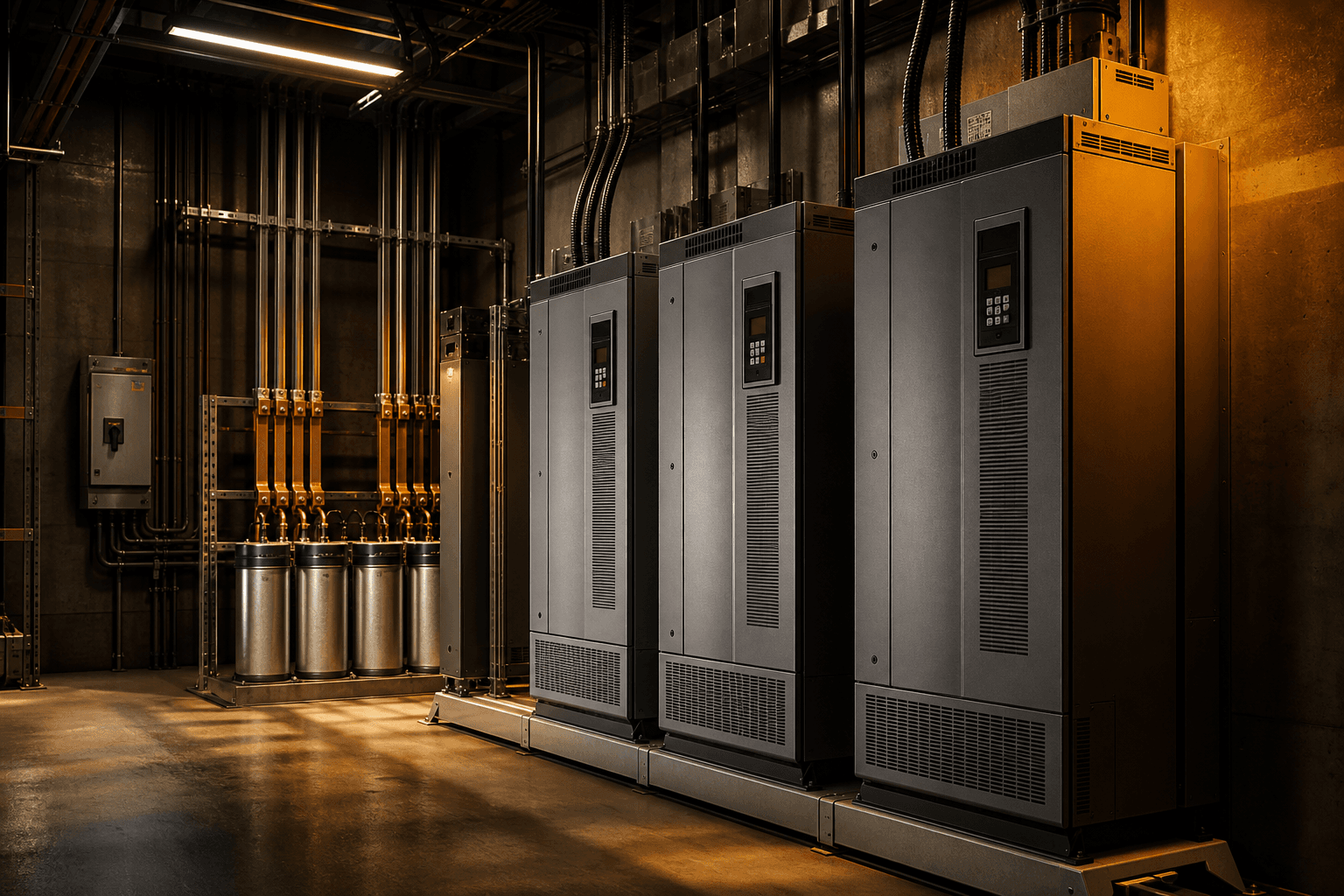
Transformer queues decide when you can energize. Demand response sells load flexibility. Microgrids decide who islands. SiC and GaN shrink drives and power supplies. What still shows up as mysterious trips, overheating neutrals, and failed commissioning after electrification is power quality: harmonics, voltage distortion, flicker, and weak ride-through at the plant bus.
Industrial power-quality engineering—measurement, filter design, and drive settings—is becoming CapEx-adjacent work whenever electrode boilers, large VFD populations, and fast DC loads land on aging distribution.
The industrial point is a bus that stays inside standards while process loads switch. A green electrification project that ignores THD is a reliability project in disguise.
When the new loads arrive and the old bus complains
A familiar pattern: add banks of VFDs or large rectifier loads; then transformers hum hotter, PLCs drop on notching, and the utility flags harmonic limits at the point of common coupling. Many industrial specs still reference IEEE 519-style harmonic current/voltage limits at the PCC; meeting them often needs measurement first, not a catalog filter bought from a brochure.
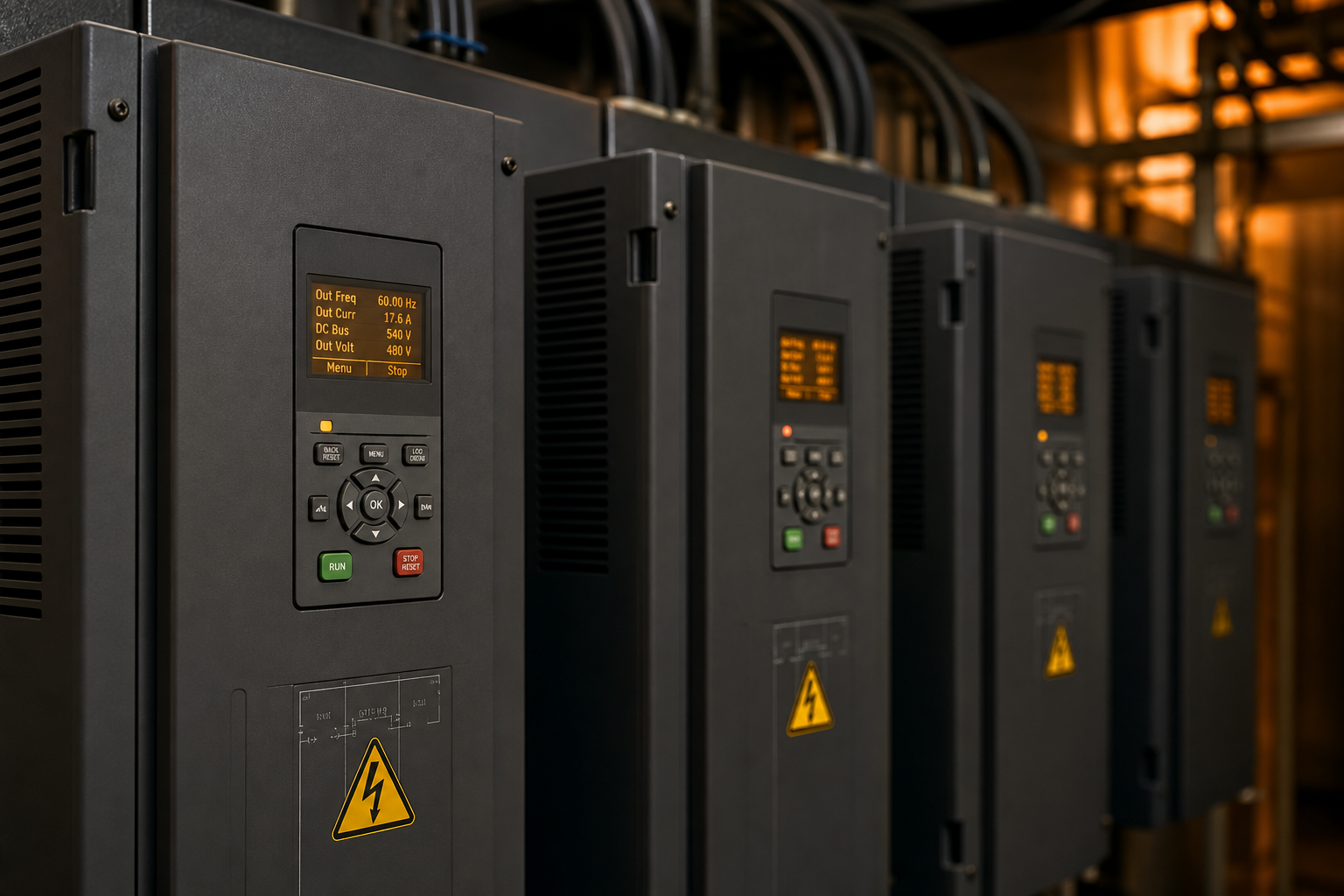
Drive density without a PQ plan is a common post-electrification surprise.
An anonymized food plant that electrified thermal loads saw nuisance trips on packaging lines until a PQ survey found voltage distortion peaking on the same feeder as a new drive cluster. Active filtering and a revised drive carrier strategy brought the bus back inside plant limits—without abandoning the electrification CapEx.
What power-quality work actually changes
- Baseline and event metering — Know THD, flicker, and sag history before blaming vendors.
- Mitigation matched to the spectrum — Passive/passive filters, reactors, multipulse, or load relocation.
- Ride-through and settings — Controls that survive sags without cascading scrap.
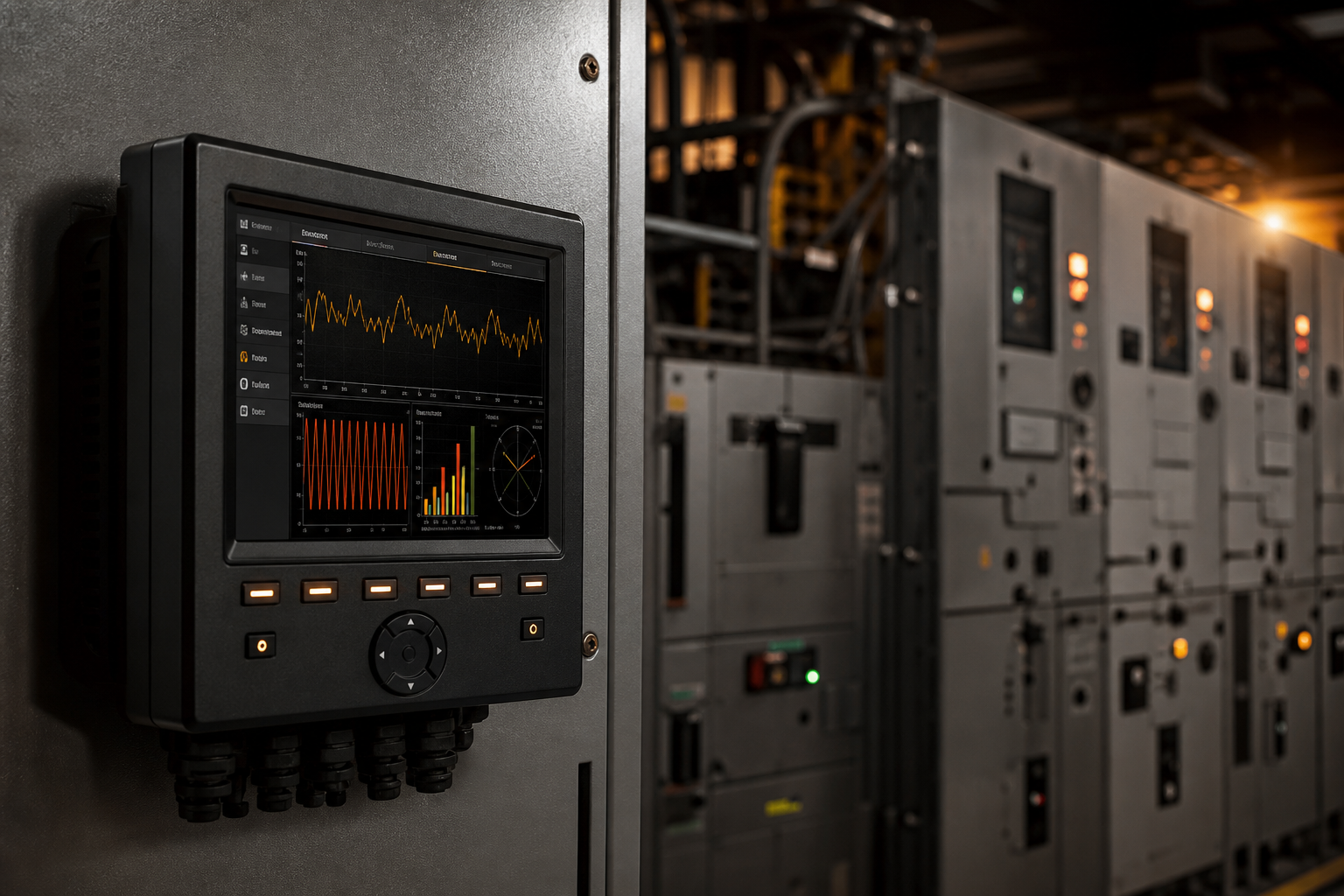
You cannot filter what you have not measured at the right point.
Failures that still look like “vendor problems”
Skipping a pre/post survey. Assuming the utility transformer upgrade alone fixes harmonics. Confusing PQ with demand-response enrollment or with microgrid island studies. Buying SiC drives for efficiency and ignoring the same feeder’s resonance risks.
This is not HV transformer lead-time procurement, not SST inside AI racks, not BESS peak-shave kWh, and not hydrogen process heat. Those choose other parts of the energy stack.
What to watch on the next electrification package
- PQ surveys in the same schedule as mechanical completion—not after the first mysterious trip.
- Whether utility interconnect studies include harmonic limits with teeth.
- Drive and boiler OEMs that publish recommended PQ envelopes for clustered installs.
Buyer checklist (short)
- PCC limits — Written into the interconnect or only assumed?
- Meter plan — Permanent PQ metering on critical buses?
- Filter ownership — Who maintains active filters after year two?
- Controls immunity — Documented ride-through for PLCs and robots?
Electrification buys cleaner process energy. Power quality decides whether that energy stays compatible with the plant that has to run it.