
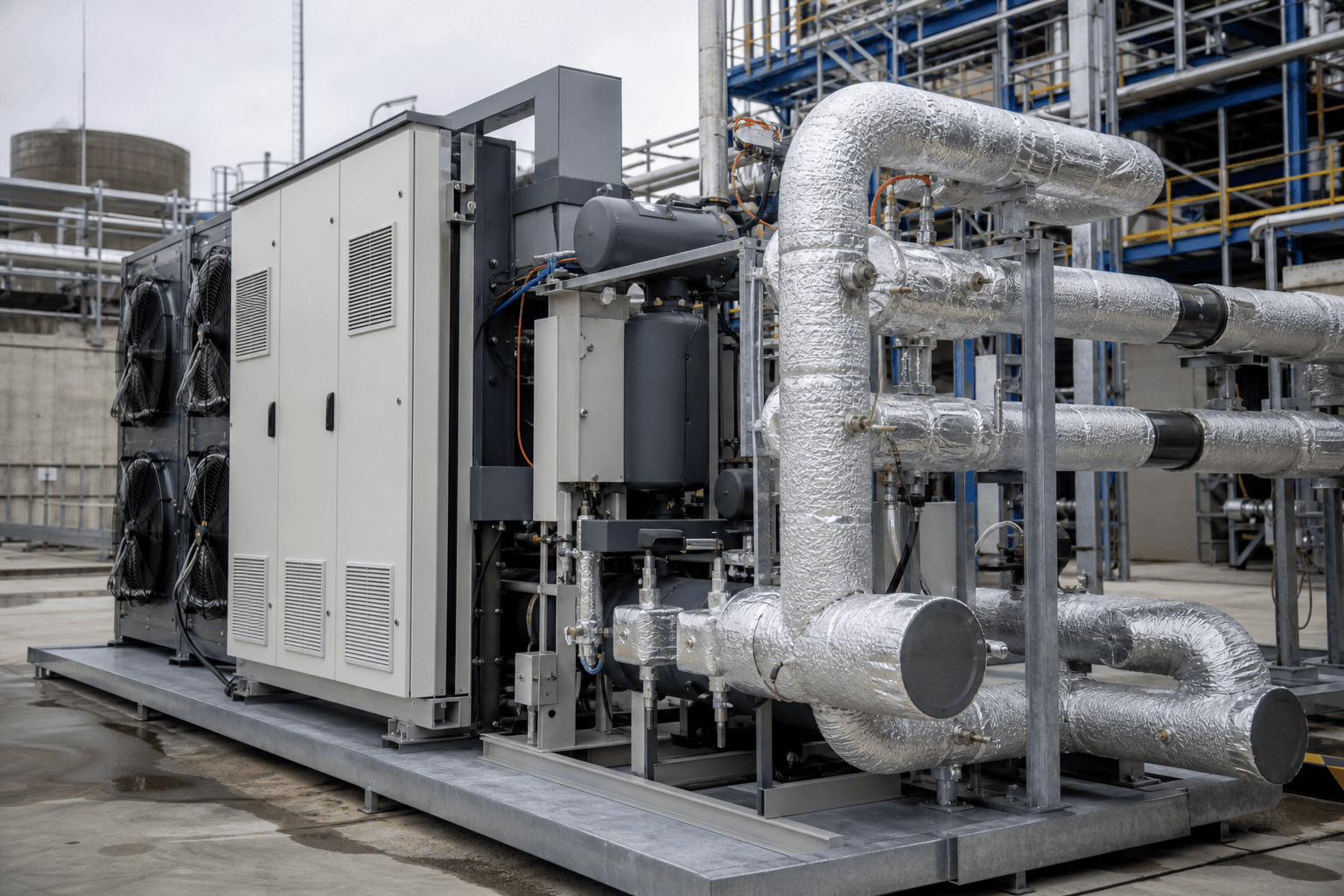
Hydrogen fights for kiln-level heat. SMRs and turbines fight for AI megawatts. Between them sits a large industrial band: warm process water, low-pressure steam, and drying loads that high-temperature heat pumps can lift from waste heat or ambient sources. Food, chemicals, paper, and district-coupled plants are piloting multi-megawatt units that cut gas burn without waiting for green H₂ corridors.
The industrial point is COP and uptime under dirty heat sources. A heat pump that cannot ride through fouling and part-load swings loses to the boiler it was meant to displace.
What industrial heat pumps change
- Electrified mid-heat — Duties too hot for simple heat recovery, too cool for H₂ drama.
- Waste-heat upgrade — Lifting condenser and exhaust streams into useful steam.
- Grid interaction — Flexible electric load that can follow tariffs and carbon signals.
What still blocks scale
Refrigerant rules, compressor lead times, and integration with legacy steam headers. Projects that ignore pinch analysis oversize toys. This is not flow LDES storage, not BESS peak-shaving, and not SiC motor drives.
What to watch next
- Which OEMs publish bankable COPs above 100–150°C supply temperatures.
- Measured gas displacement on multi-year plant campaigns, not lab skids.
- Whether utilities treat large heat pumps as controllable industrial demand.
Hydrogen owns the furnace story. Heat pumps try to own the steam story below it.