
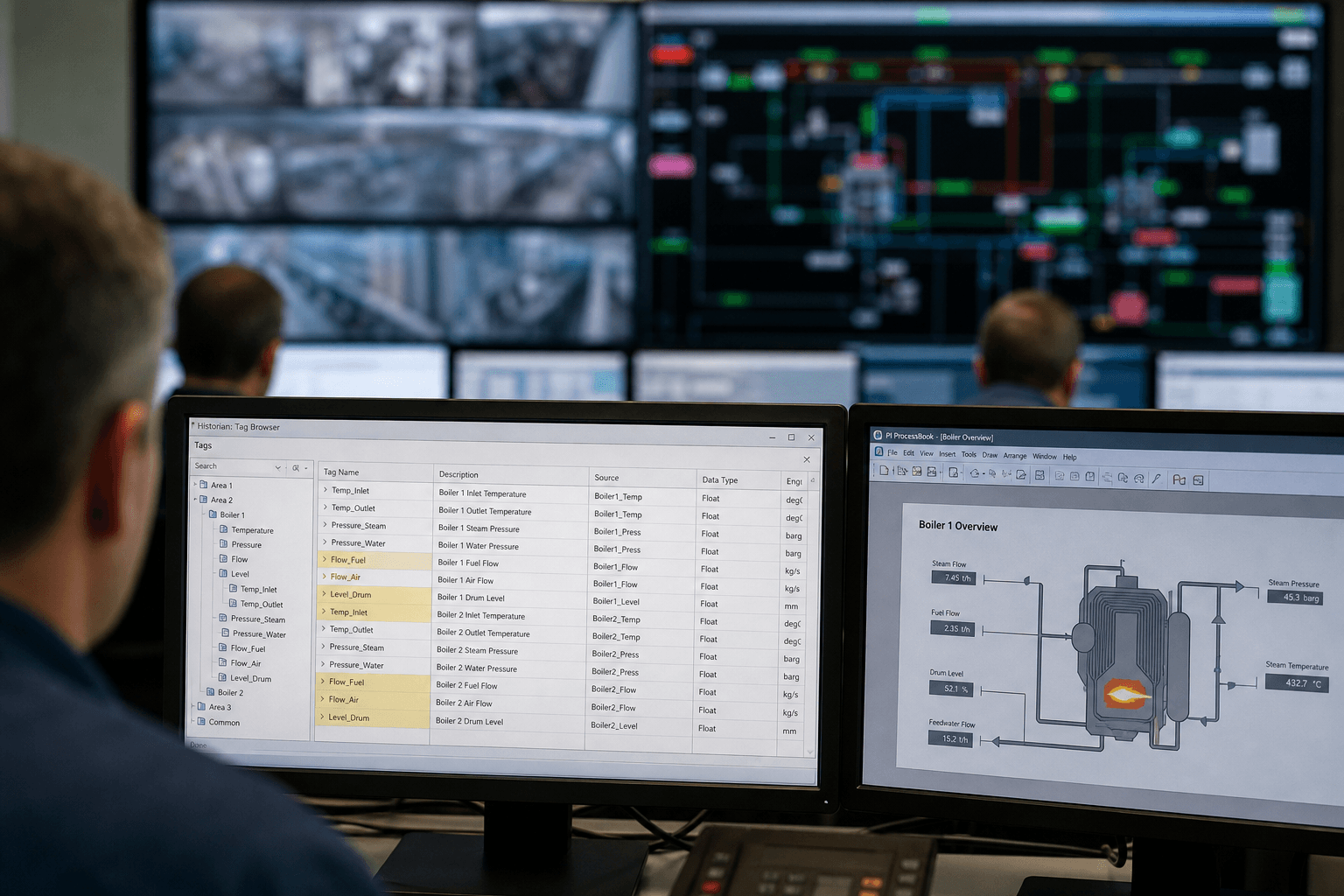
Historian tag-quality programs chase bad engineering units and flatlines. Compression traps catch models that detect deadbands, not process. A quieter poison sits in the namespace: aliases and collisions—two tags that once meant different things now point at the same address, or a “new” soft sensor reads an old spare point that operations renamed in a hurry. Feature stores and RAG-free ML pipelines happily ingest the familiar string. The plant changed. The label did not confess.
How alias collisions are born
| Pattern | What breaks downstream | | --- | --- | | Copy-paste tag with new description, old address | Model trains on wrong physical signal | | Spare point reused without retiring old name | Two features disagree in training, agree in fantasy | | Unit conversion in one path only | Same tag string, different scale by consumer | | Temporary swap left permanent | “TI-441” is now a pressure in everything but the P&ID |
None of this requires malice. It requires MoC that stops at the PLC and never reaches the analytics dictionary.
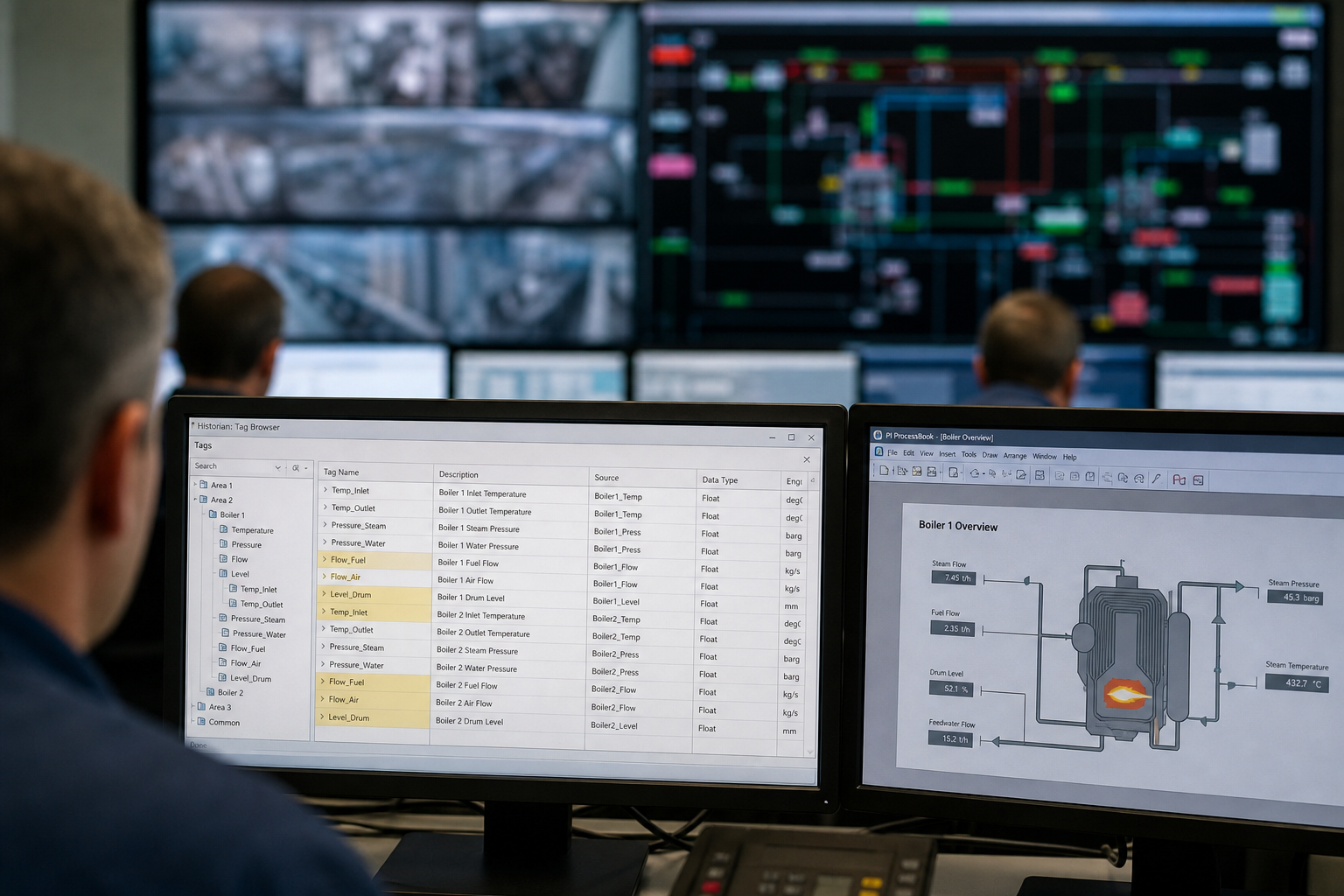
Familiar names are not identity.
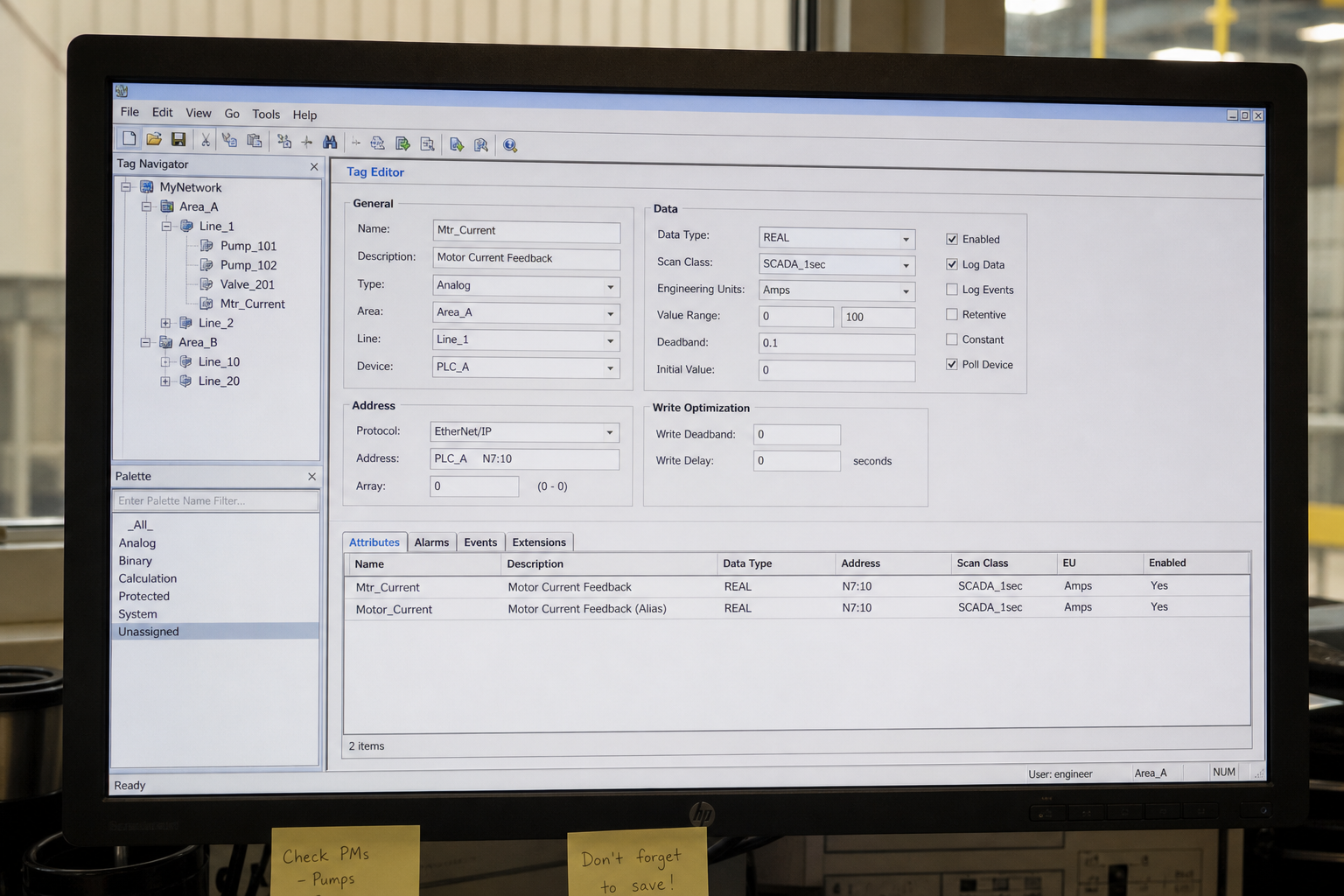
If two strings share an address, your feature store has a fork in the truth.
Controls that keep learning honest
- Treat tag rename/repoint as MoC that updates the analytics catalog in the same change package.
- Store address + browse path + engineering unit as the identity—not display name alone.
- Run collision audits: same address, multiple active tags; same name, multiple addresses.
- Freeze training manifests with resolved identities so retrains cannot silently pick the wrong twin.
- On model drift alerts, ask “did the tag move?” before “retrain harder.”
An anonymized soft-sensor project that looked brilliant in backtest failed on the line because the training tag had been redirected to a spare transmitter during a shutdown and never restored. The algorithm was fine. The noun was false.
Adjacent fences
Historian compression ML traps own false features from storage. Tag data-quality briefs own units and flatlines. Override telemetry owns human force labels. Semantic catalogs own meaning for agents. This page owns tag identity collisions as AI poison. Do not celebrate a model card and discover the signal moved under the same name.