
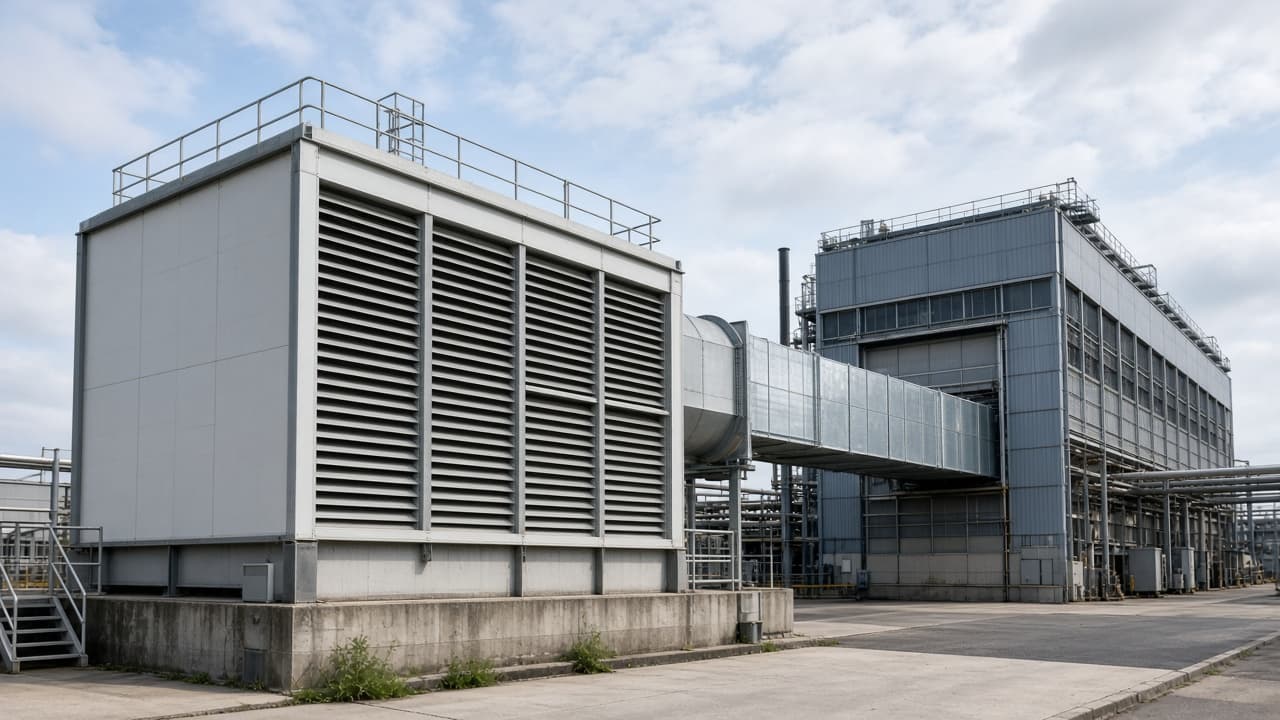
When a gas turbine loses output, the conversation often jumps to firing temperature, IGV schedule, or compressor washing. Sometimes the honest answer is still outside: the inlet filter house that has been climbing in differential pressure since the last dust season.
Cooling-tower gearbox oil and SCR ammonia slip are other energy notes. This one is inlet filtration, ΔP limits, and what the compressor actually breathes.
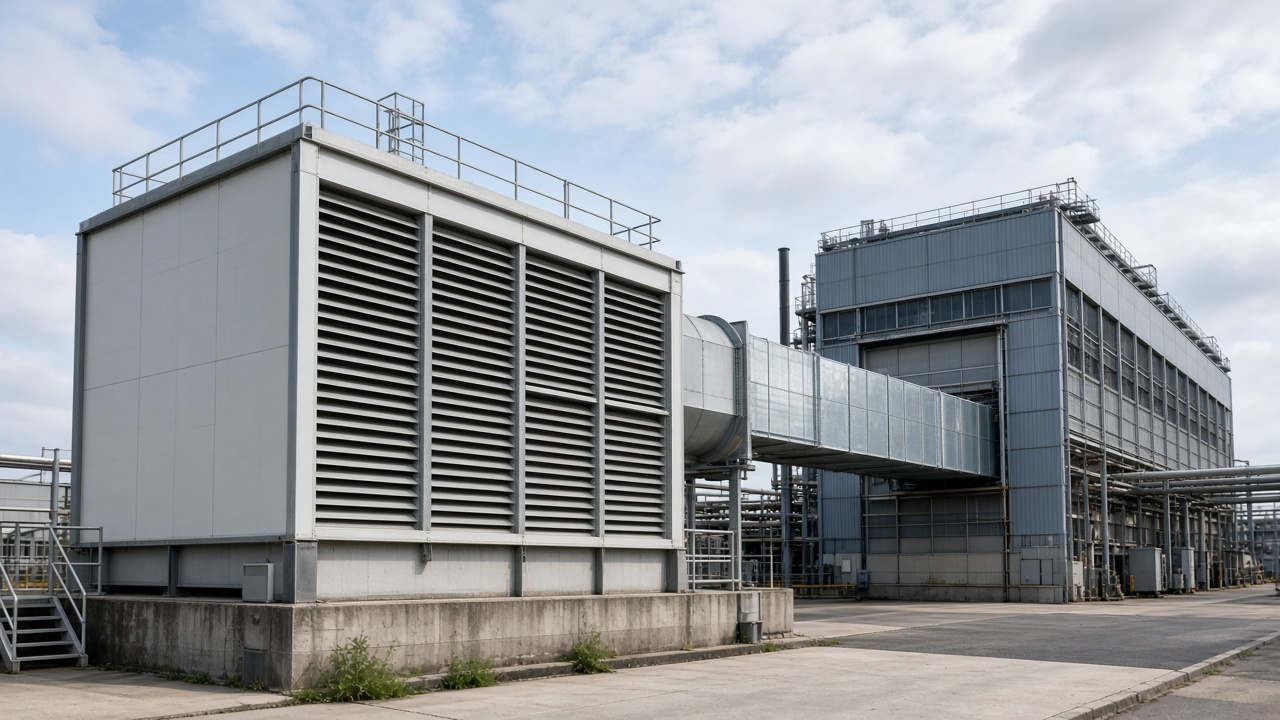
Filter houses are staged systems—weather louvers, prefilters, fine filters, sometimes pulse-clean or barrier final stages. Each stage has a dirty ΔP limit. Run past it and the compressor works harder for the same mass flow; run with torn media or bypassed panels and you trade ΔP for blade erosion and FOD. Neither failure mode shows up cleanly as a “turbine control” fault.
Inlet fogging and evaporative cooling add another constraint. Water quality, droplet size, and drain honesty matter; fog that freezes on filters or floods the duct is not free megawatts. Plants that enable fogging without watching filter ΔP and drain temperature invent outages that look electrical on the first pass.
Cartridge and panel changeouts should be scheduled from ΔP and inspection, not from a calendar alone. Photograph the dirty face—salt, cement dust, pollen, and construction debris leave different signatures. After changeout, reset the ΔP baseline and confirm no panel gaps. A filter house that “looks closed” can still leak dirty air around a warped frame.
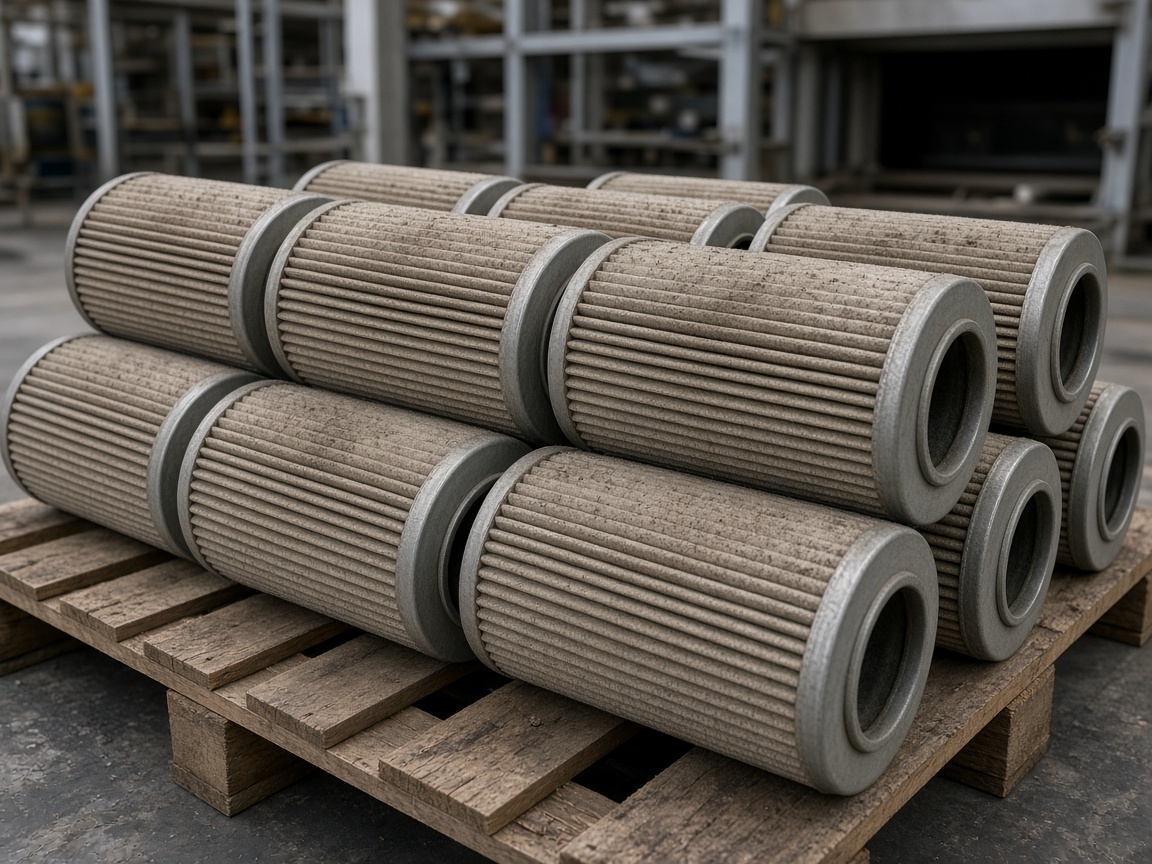
Compressor washes treat fouling that already arrived. Inlet filters decide how much dirt gets the chance. Treat the house as rotating equipment with a ΔP trend, not as a building attached to the turbine.