
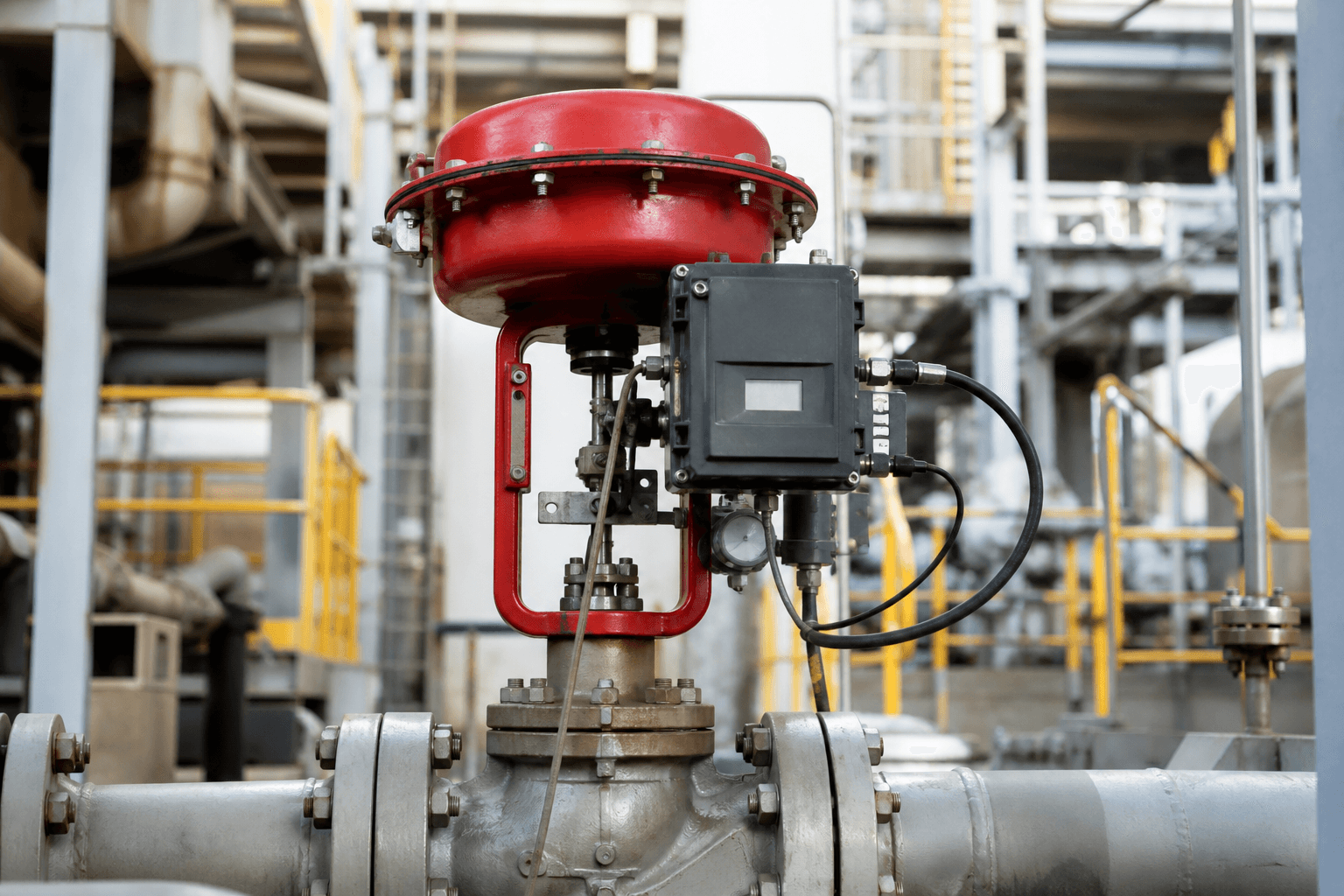
Emergency shutdown valves sit in the plant’s last honest seconds. Most of the year they do nothing visible. Then a trip demands full travel in a time window that was written into a safety case years ago. If the stem has gummed, the packing has seized, or the solenoid has been “temporarily” jumpered into a quiet life, the valve that looked green on the graphic will not finish the stroke that the SIL calculation assumed. Full stroke tests prove travel—and often force a process outage. Partial stroke testing (PST) exists because plants need field evidence between those outages without inventing a bypass culture.
SIS lifecycle digitalization owns binders and proof-test schedules as data. Electronic LOTO owns energy isolation. This brief owns the field motion honesty of ESD final elements: can the valve move a controlled fraction on command, leave a signature that matches the healthy family, and return to the safe-ready state without lying to the next trip?
What PST is actually asking
PST is not a marketing checkbox on a digital valve controller brochure. It is a controlled micro-demand:
- Command a limited travel (often 10–20% of stroke, device- and process-dependent).
- Capture position, pressure, or torque/time signature against a baseline family.
- Confirm return to the ready position and restore permissive logic without leftover overrides.
- Record pass/fail with serial, date, and reason codes that CMMS and SIS proof-test ledgers can find.
- Escalate sticky, slow, or asymmetric signatures into work orders—not into “retry until green.”
If your PST only prints “OK” with no curve and no genealogy, you bought theater.
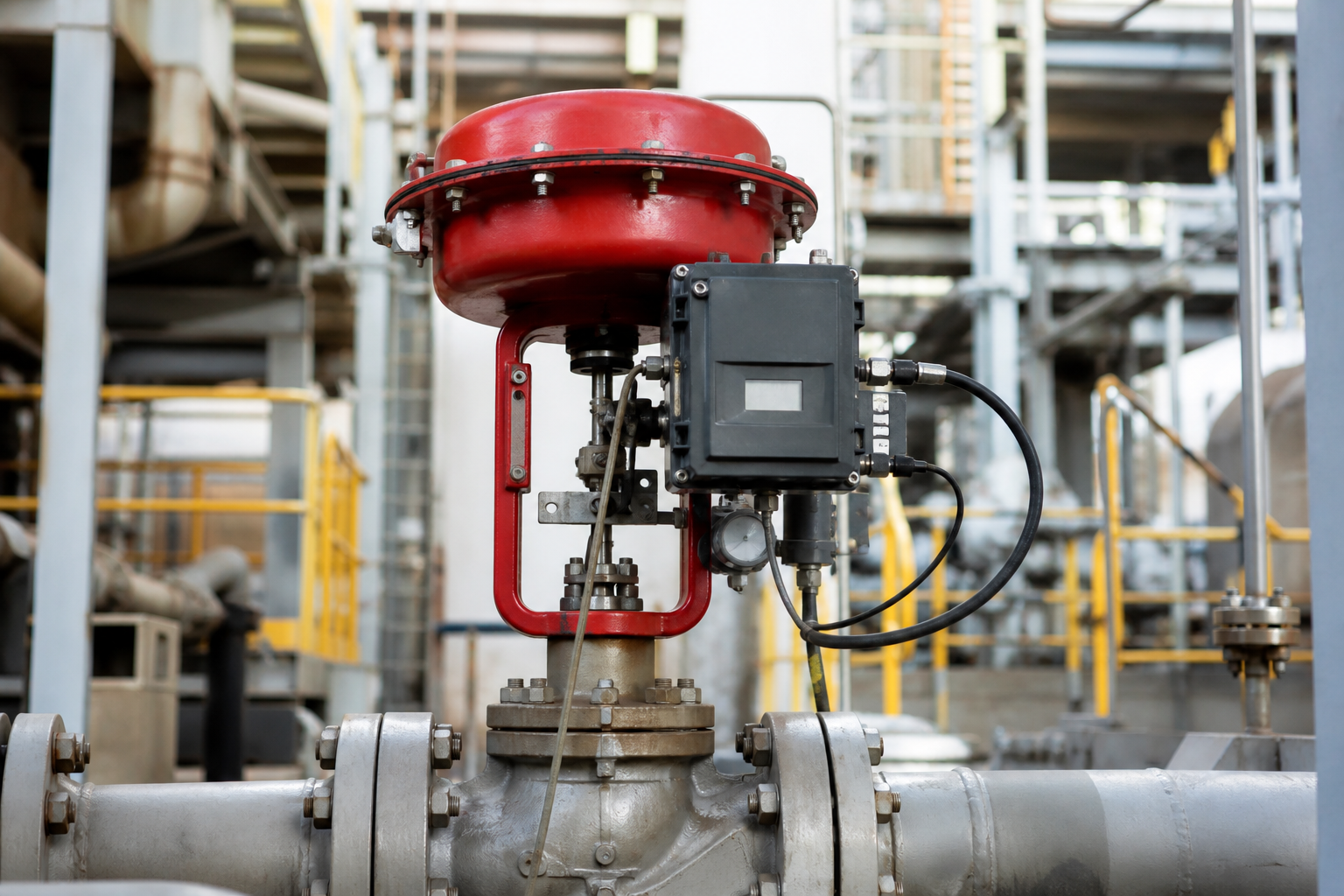
A valve that has not moved since the last TAR is a hope, not a proof.
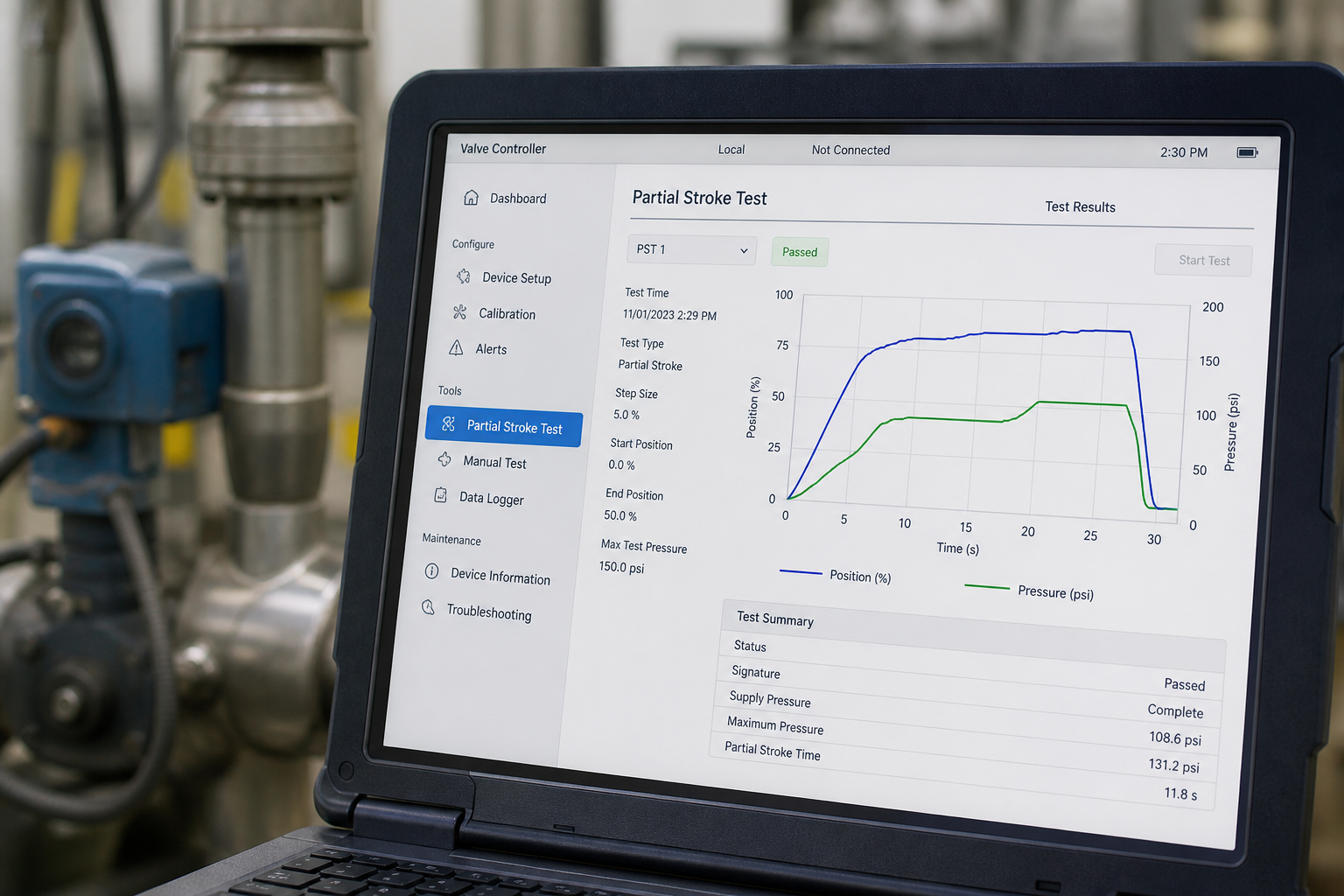
Signatures trend; single green LEDs do not.
Failure modes PST keeps exposing
| Field symptom | Often means | Bad plant response | | --- | --- | --- | | Slow initial breakaway | Packing friction, deposit, stem corrosion | Raise force, skip investigation | | Asymmetric travel vs return | Sticky seat, air path imbalance, positioner drift | “Still within time—ship it” | | Solenoid chatter / no motion | Coil heat, voltage drop, partial jumper history | Bypass to keep production | | Beautiful curve, wrong tag | Wrong final element tested | Celebrate false coverage | | PST deferred “until next outage” | Risk accepted without language | Silent erosion of the safety case |
An anonymized olefins unit ran quarterly PST on critical ESD valves and still found one actuator that passed the micro-travel while the full-stroke proof test at TAR showed late seating. The lesson was not that PST is useless—it was that PST is a family of evidence, not a substitute for the scheduled full demand. Plants that treat PST as a replacement for proof testing invent a new lie. Plants that treat PST as the interval honesty check between proof tests usually catch sticky seats before the trip does.
How to keep PST from becoming a bypass culture
- Written envelopes — Which valves, which travel %, which process windows, who can abort.
- No orphan overrides — Every force or inhibit opened for the test has a close-out step with a named owner.
- Signature baselines after overhaul, packing change, or actuator swap—not after “it looked fine.”
- Demand-mode honesty — De-energize-to-trip vs energize-to-trip changes what a partial move proves.
- Integration with MoC — Changing stroking air, solenoid brand, or packing recipe without re-baselining is a quiet SIL insult.
Adjacent fences
SIS/SIL digitalization owns lifecycle records and proof-test calendars as living data. Interlock bypass audits own temporary that became infrastructure. Alarm floods own operator attention during trips. Flare and relief measurement own what happens after the valve opens to a header. This page owns ESD final-element motion evidence via partial stroke. Do not digitize the SIL binder and leave the stem unmoved until the real demand.