
Industrial heat pumps reclaim mid-range duties. Thermal energy storage banks heat for hours. Hydrogen targets chemistry and very high temperature. Lithium BESS shaves electrical peaks. What still fills the gap for many steam headers is simple: convert surplus or contracted electricity straight into process steam without waiting for a heat-pump COP story to cover 180°C-plus loads.
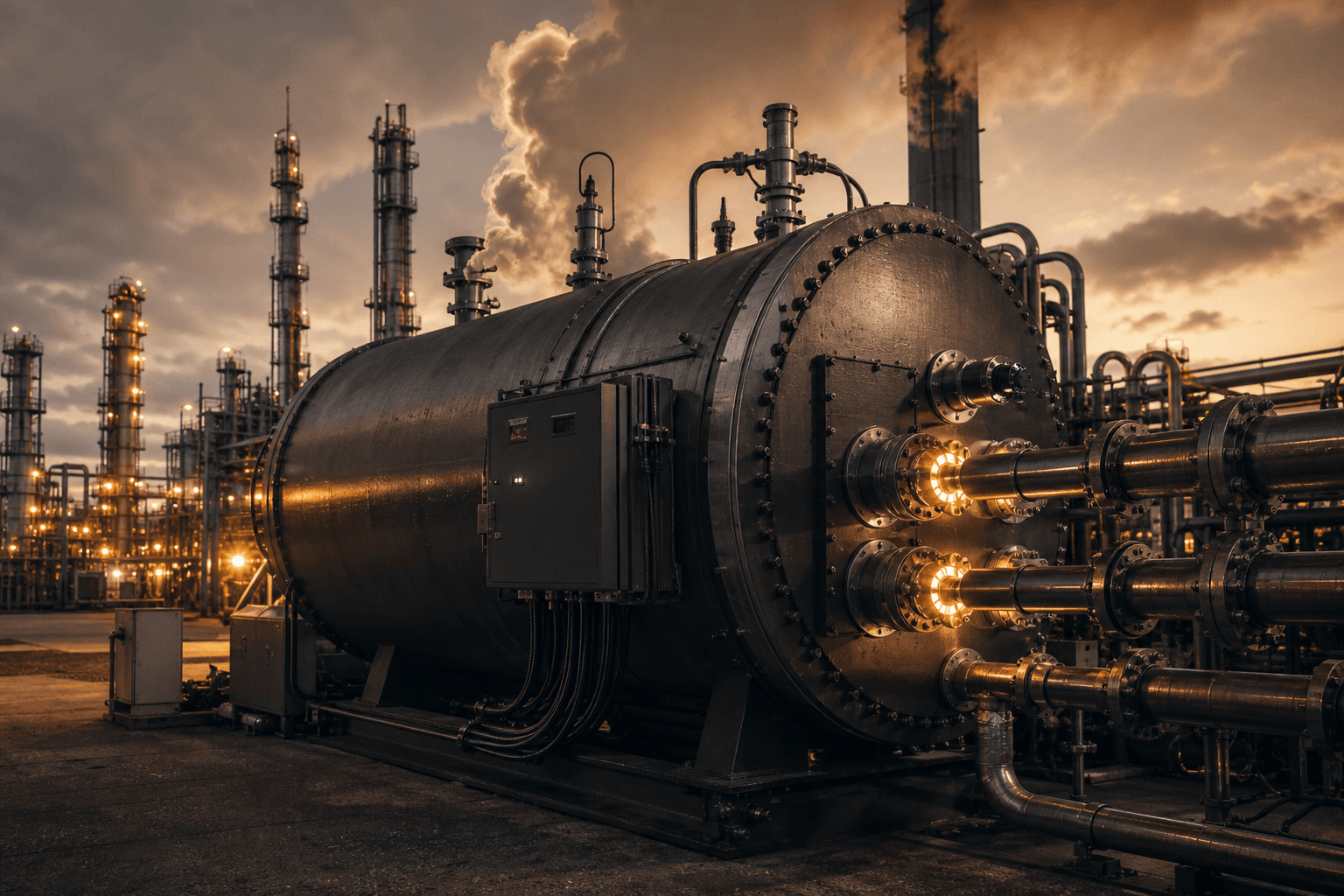
Electrode and immersion e-boilers are landing as operational steam assets—fast ramp, high temperature, and a clean CapEx line next to aging gas boilers.
The industrial point is steam tonnes on schedule at known kWh per tonne—not another electrification slogan.
What electrode boilers change
- Direct steam electrification — Bypass intermediate heat-pump temperature ceilings.
- Grid-flexible steam — Ramp with power price or curtailment signals.
- Hybrid boiler houses — Gas for firmness, electrodes for carbon and cost hours.
What still fails
Undersized electrical service sold as full boiler replacement. Ignoring water quality and electrode wear in continuous duty. This is not mid-range heat-pump COP optimization, not molten-salt TES, not hydrogen burner substitution, and not four-hour BESS peak-shave.
What to watch next
- Sites publishing steam cost vs gas hour-by-hour after electrode install.
- Utility interconnection and demand-charge design that makes e-steam viable.
- Hybrid controls that do not fight existing boiler sequencing.
Heat pumps lift efficiency. Electrode boilers lift temperature when the plant still needs real steam.