
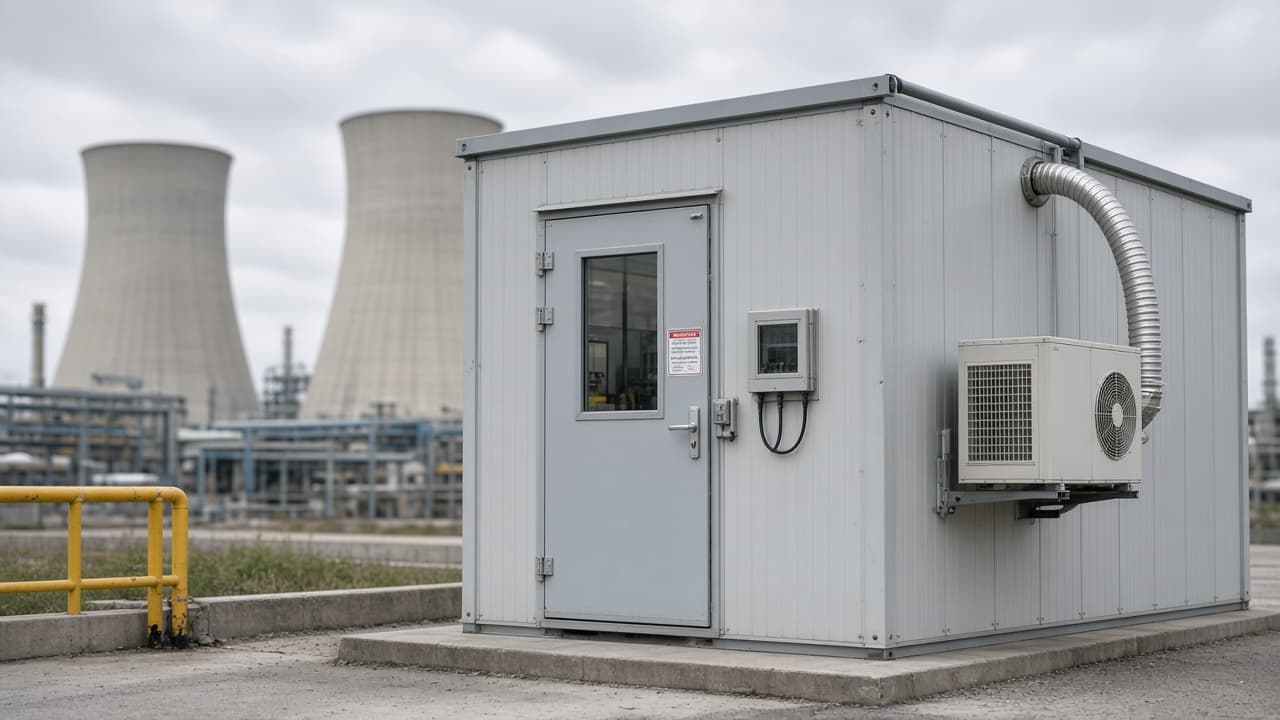
Plant teams spend good money on probes, heated umbilicals, and analyzer brands. Then they park the rack in a metal shelter whose air conditioner blows straight across the benches and whose door sits open during summer calibrations. By mid-afternoon the shelter thermometer has walked several degrees; the NOₓ or CO channel looks “soft,” and someone schedules a sensor replacement that will not fix a climate problem.
Sample-system honesty already owns wet filters, lag time, and probe location. Flare ultrasonic notes own another measurement family. This brief is the analyzer shelter as a controlled environment—temperature stability, HVAC airflow, and housekeeping that keep the instruments inside their rated envelope.
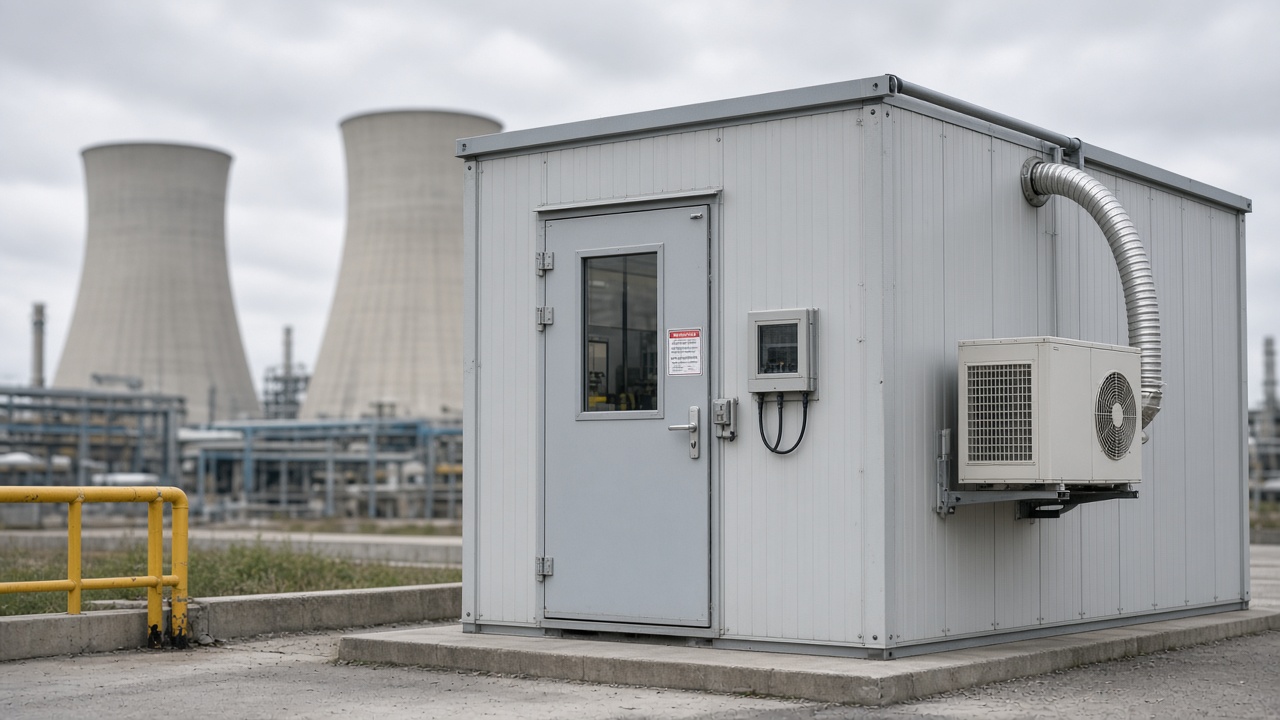
Trend shelter temperature next to the pollutant channels. A 24-hour standard deviation that routinely exceeds a couple of degrees is a maintenance ticket, not weather trivia. Keep supply air from dumping on analyzer cases; clogged HVAC filters are a monthly item for a reason. Confirm the sample conditioner, moisture slip sensor, and condensate drains still behave when ambient load peaks. After any shelter door left open for hours of work, re-check calibration status before the next reporting period. Dust on racks is not cosmetics—it is thermal and optical noise.
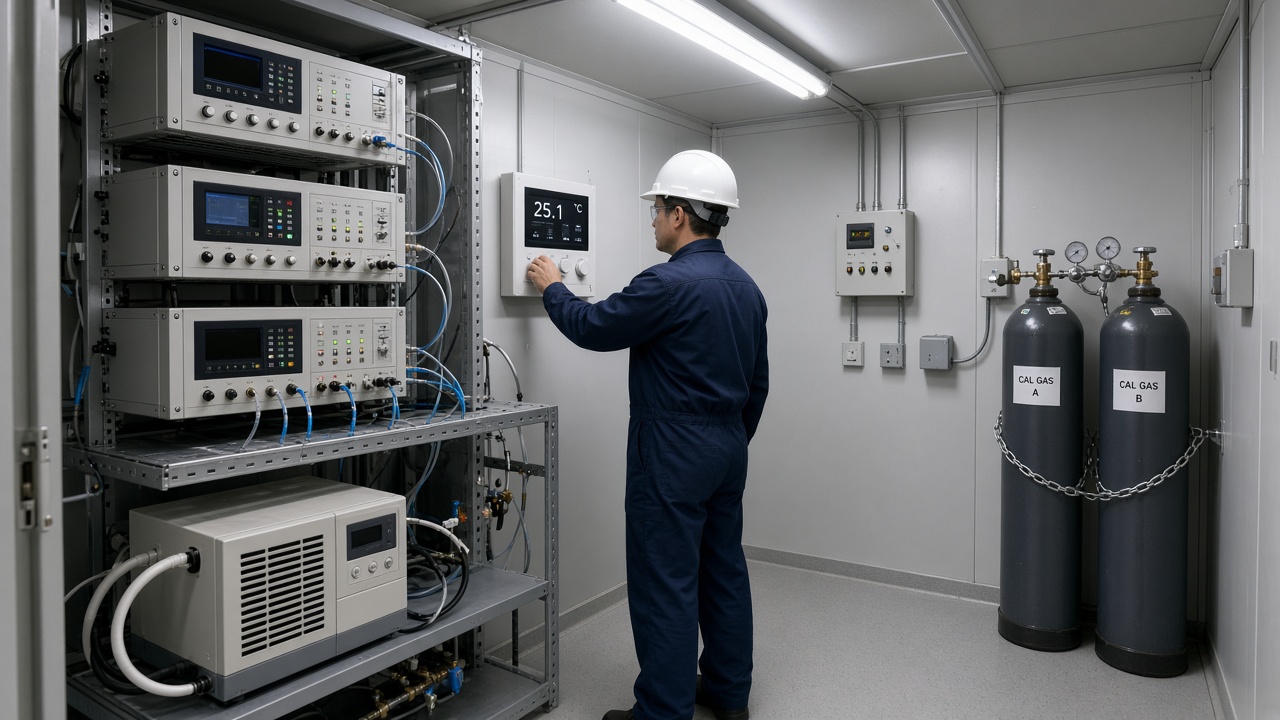
If the QA/QC plan only lists cylinder gases and RATA dates, add the room. A precise analyzer in an uncontrolled box reports the shelter as much as it reports the stack.