
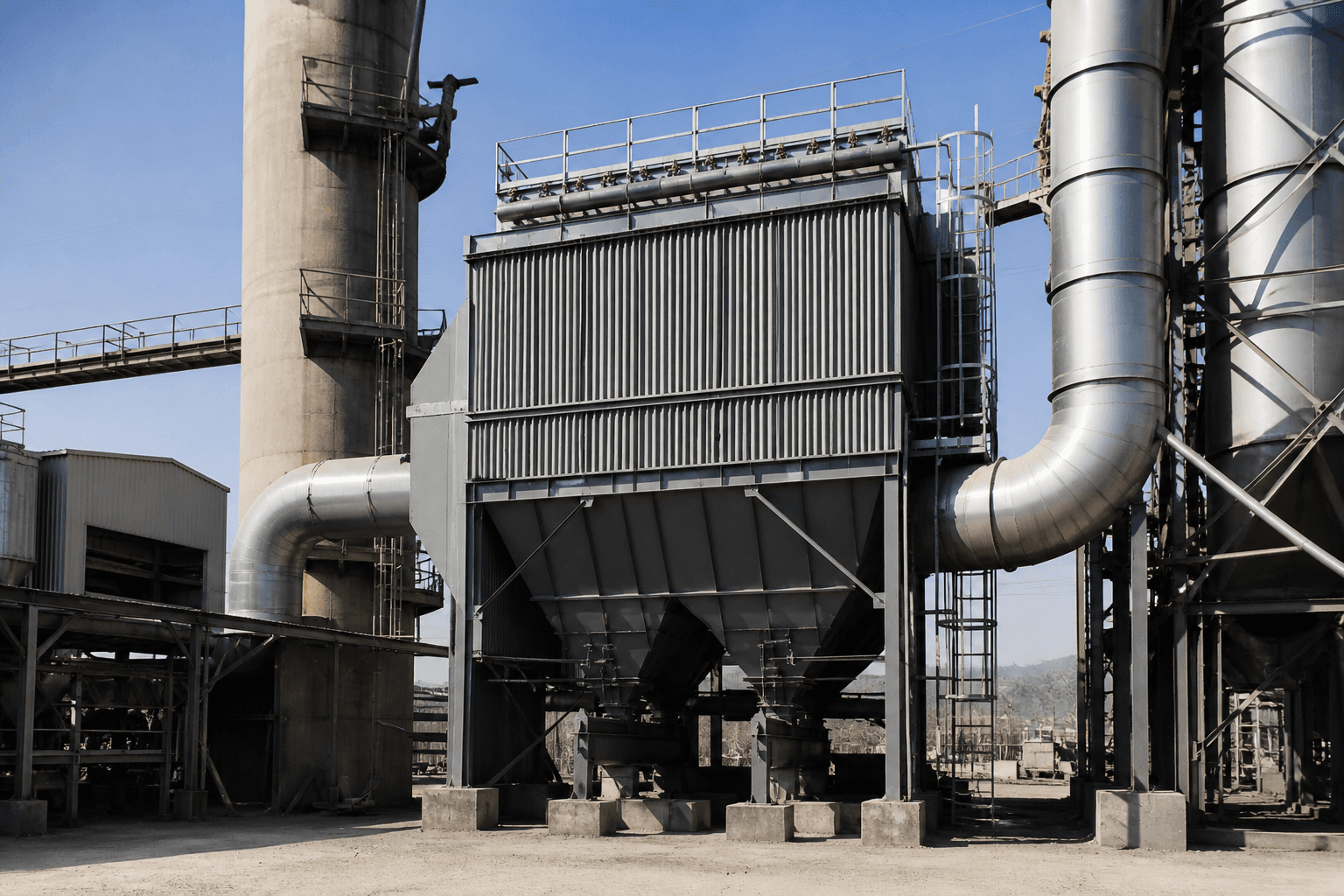
A pulse-jet baghouse looks like facilities furniture until differential pressure climbs, opacity spikes, and the process rate comes down to protect a permit. The failure is often not “bags are old.” It is cleaning that no longer matches the dust cake: timers drifted by row, diaphragms half-dead, wet compressed air blinding media, hoppers that re-entrain what pulses just knocked off.
RTO briefs own thermal VOC destruction. Compressed-air leak programs own utility waste. OGI owns hydrocarbon LDAR. This brief owns fabric filter cleaning as process control—because ΔP is a production constraint wearing an environmental badge.
What ΔP is allowed to mean
Rising differential pressure across a compartment can mean:
- Cake too thick (under-cleaning).
- Media blinded by moisture/oil (air quality).
- Bags worn or installed wrong (maintenance).
- Hoppers full so pulses recycle dust (discharge failure).
- Uneven cleaning so one quadrant carries the plant (timer/valve drift).
A single plant-average ΔP hides quadrant truth. Compartment instruments earn their keep.
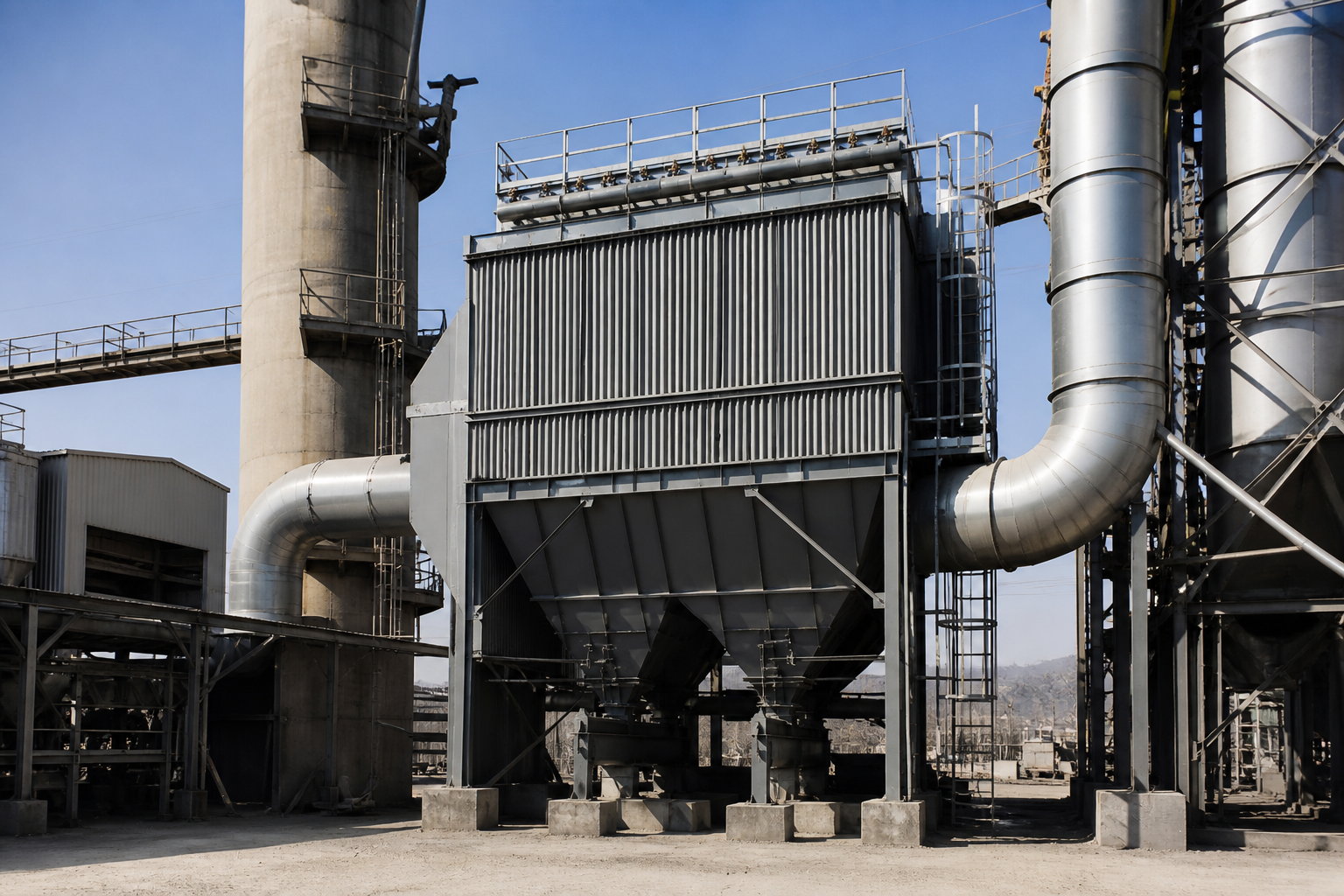
If the only trend is “baghouse OK,” you will meet opacity as a surprise.
Pulse trains are a recipe
| Control | Healthy | Sick | | --- | --- | --- | | On-demand vs fixed timer | Cleans to a ΔP band | Fixed pulse wastes air or under-cleans at peak load | | Valve/diaphragm health | Even row response | Silent dead valves; neighboring bags overworked | | Header pressure & dryness | Design psi, dry air | Wet air → blinded bags and ruined diaphragms | | Hopper discharge | Continuous removal | Level to bag line → re-entrainment abrasion |
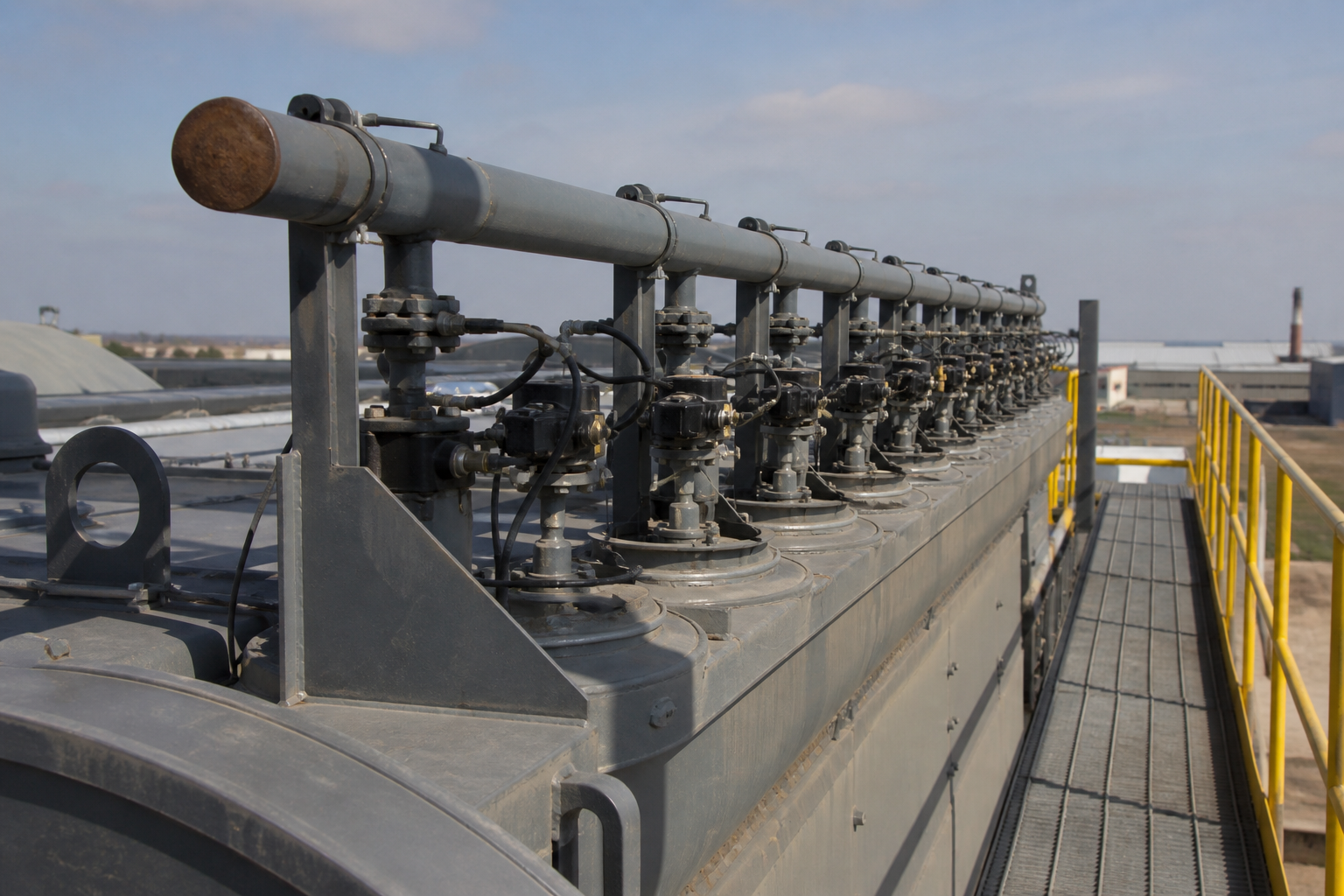
A valve that does not fire is not a spare—it is a future opacity event.
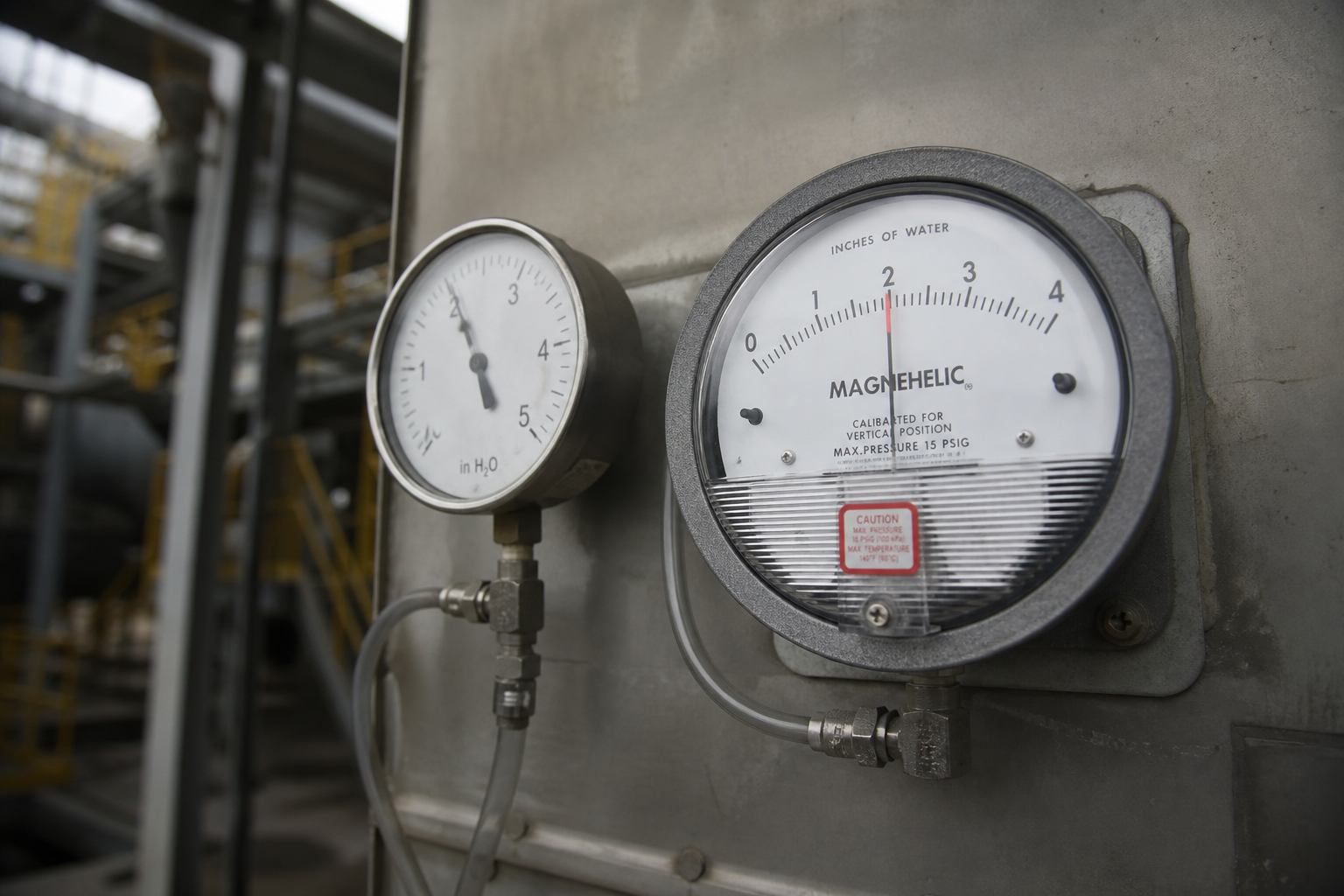
Compartment ΔP beats a single optimistic average.
An anonymized kiln week
A cement line cut feed three times in a quarter when compartment ΔP hit trip. Bags were blamed. The pulse controller had drifted: inlet rows under-cleaned, outlet rows over-pulsed. Opacity kissed the permit limit during the rush changeout. Connecting pulse timing, ΔP, and CEMS on one review page would have made the drift visible weeks earlier. The bags were victims, not the root.
Rules worth laminating
- Trend ΔP by compartment with pulse counts and header pressure on the same shift page.
- Treat compressed-air dryness for the pulse header as bag life insurance.
- Proof-test valve trains after controller work—same spirit as safety muting validation.
- Link opacity events to baghouse genealogy, not only to “weather.”
Adjacent fences
RTO sizing owns oxidizer thermal machines. Compressed-air leaks own kWh waste. Cooling-tower chemistry owns heat rejection water. This page owns baghouse cleaning integrity. Do not fund a CEMS upgrade and leave pulse timing as folklore.