
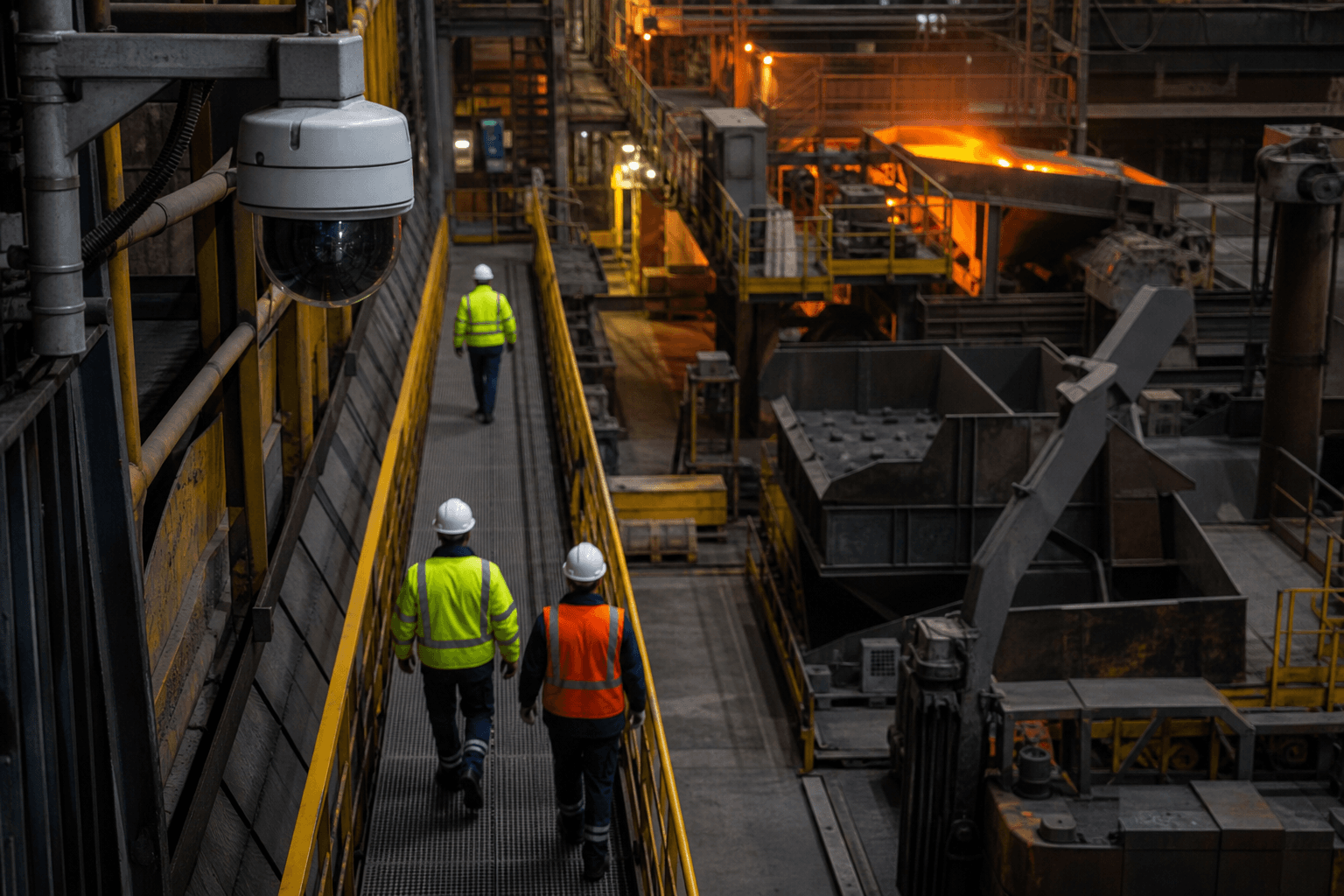
Vision quality catches surface defects. Synthetic data trains rare-defect models. Causal AI explains scrap holds. Soft sensors estimate process quality. What still leaves plants exposed is people: missing PPE, walking into robot cells, and exclusion-zone breaches that cameras could have flagged before a near miss became a report.
PPE and zone-compliance vision is landing as a safety operations stack—edge cameras, site-specific classes, and escalation to supervision without pretending to replace ISO cell design.
The industrial point is fewer serious incidents with audit trails. A dashboard of “PPE compliance %” that security ignores is theater.
What PPE vision changes
- Real-time PPE classes — Helmet, vest, glasses matched to zone rules.
- Exclusion-zone alerts — Intrusion into robot or high-voltage footprints.
- Evidence packs — Clips and timestamps for investigation, not only live sirens.
What still fails
Cloud-only analytics that violate plant privacy and latency rules. Models trained on clean demos that fail under dust, glare, and shift clothing mix. This is not part defect inspection, not synthetic data pipelines, not causal quality RCA, and not cobot ISO risk assessment itself.
What to watch next
- Sites that cut recordables without flooding false alarms.
- Whether works councils and insurers accept camera evidence regimes.
- Integration with access control and cell interlocks—not standalone TV walls.
Quality vision protects the product. PPE vision protects the people who make it.